مقدمة
Every commercial carrier operating in the US has to complete a Driver Vehicle Inspection Report, or DVIR, before and after each trip, under FMCSA rule 396.11. On paper, that sounds simple. In practice, many fleets still run this process on paper forms that get lost, delayed, or skipped, which leaves them exposed at the worst possible time: a roadside inspection or a compliance audit. FMCSA is also moving toward electronic DVIRs, making digital inspection records less of an upgrade and more of a direction the industry is already heading in.
التحديات
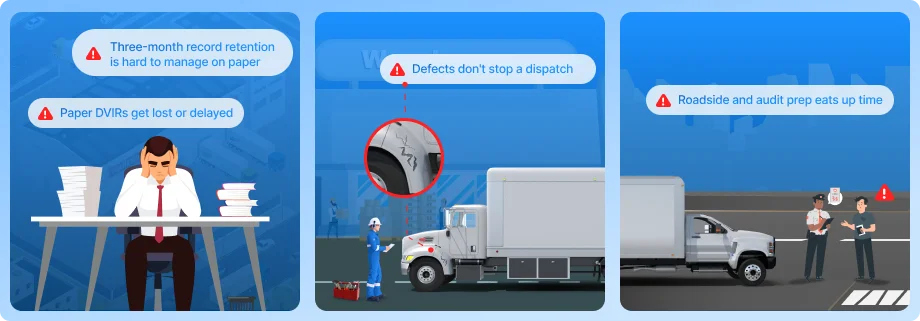
- Paper DVIRs get lost or delayed.
A defect noted on a paper form doesn’t reach a fleet manager until someone manually collects and reviews it, often after the vehicle is already on the road.
- No proof an inspection covered the required components.
FMCSA requires checks across brakes, steering, lights, tires, mirrors, coupling equipment, and safety gear. Paper checklists make it hard to prove every category was actually covered.
- Defects don’t stop a dispatch.
Under 396.11, a defect affecting safe operation must be repaired and certified before the vehicle runs again, but many fleets have no system-level stop that enforces this before a job starts.
- Three-month record retention is hard to manage on paper.
FMCSA requires DVIRs and repair certifications to be kept for at least three months, which is a real filing burden without a digital system.
- Roadside and audit prep eats up time.
Pulling together paper inspection history ahead of a DOT audit or a roadside check is slow and often incomplete.
حل
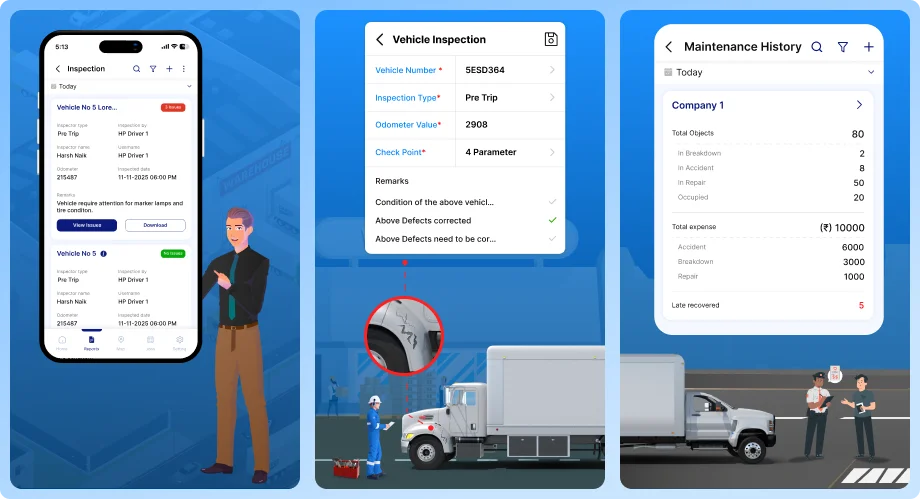
- Mobile inspections through the Driver App.
Drivers complete pre-trip and post-trip inspections on their phone or tablet, covering the FMCSA-required categories: brakes and air system, steering, lights and reflectors, tires and wheels, wipers, mirrors, coupling equipment, and safety and emergency equipment.
- Customizable checklists by vehicle type.
Fleet managers configure checklists to match power units and trailers separately, so each vehicle type is inspected against the right criteria.
- Defect capture with photos and comments.
Any item marked as a defect includes a photo and a note, giving fleet managers what they need to assess and certify a repair without seeing the vehicle in person.
- Real-time submission alerts.
The moment a driver submits an inspection, fleet managers are notified, with automatic alerts raised specifically for failed inspections, supporting the immediate-repair requirement under 396.11.
- Pre-job inspection approval.
A job can’t start until an authorized manager reviews and approves the inspection report, so a vehicle with an unresolved, safety-affecting defect can’t be dispatched by accident.
- Digital DVIR records with built-in retention.
Every inspection, including checklist results, photos, driver signature, and repair certification notes, is stored and downloadable as Excel or PDF, keeping records well past the three-month FMCSA minimum without manual filing.
النتائج المحققة
- انخفاض بنسبة 25-35% في عدد المركبات التي تم إرسالها بسبب عيوب لم يتم حلها وتؤثر على السلامةبمجرد تطبيق الموافقة المسبقة على الوظيفة
- انخفض وقت مراجعة التفتيش إلى النصف تقريبًامن جمع البيانات الورقية إلى تقديمها رقميًا في الوقت الفعلي
- تم تقليص مدة تدقيق وزارة النقل والتحضير للتفتيش على جانب الطريق من أيام إلى ساعات.، مع سجل رقمي كامل وقابل للاسترجاع لتقرير فحص المركبة (DVIR).
سجل كامل للمساءلة لكل عملية تفتيش، مع إرفاق الصور والتوقيعات والطوابع الزمنية بكل تقرير.
قوائم مراجعة مُطابقة لوحدات الطاقة والمقطورات بشكل منفصل، بما يتوافق مع متطلبات المادة 396.11 لكل منهما.
تعزيز مكانة الامتثال لمتطلبات إدارة سلامة النقل بالشاحنات الفيدرالية (FMCSA)، مدعومة بسجلات رقمية تفي بالفعل بتوجيهات قاعدة DVIR الإلكترونية الخاصة بالوكالة.