مقدمة
يجب نقل المواد الكيميائية الخطرة بحذر شديد. قد تحمل صهاريج النقل مواد قابلة للاشتعال أو سامة أو أكالة. وقد يؤدي خطأ بسيط في القيادة إلى عواقب وخيمة.
يحتاج مديرو أساطيل المركبات إلى معرفة ما يحدث خلال كل رحلة. عليهم رصد القيادة غير الآمنة، وإرهاق السائقين، وتغييرات المسار، وحوادث الطرق بسرعة. لكن بيانات نظام تحديد المواقع العالمي (GPS) وحدها لا تكفي لإظهار الصورة الكاملة.
وهنا يأتي دور Trakzee. فهي تجمع بيانات المركبات مع مقاطع الفيديو لمساعدة شركات النقل على تحديد المخاطر والتحقيق في الحوادث.
التحديات
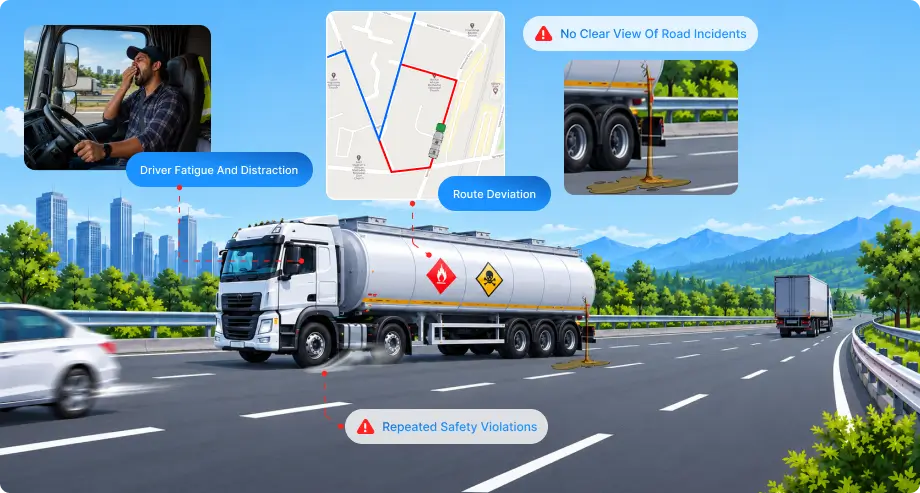
- إرهاق السائق وتشتت انتباهه: قد تُسبب الرحلات الطويلة التعب للسائقين. كما أن استخدام الهاتف وغيره من المشتتات قد يُلهيهم عن الطريق.
- القيادة غير الآمنة: السرعة الزائدة، والكبح المفاجئ، والتسارع المفاجئ، والانعطافات الحادة، كلها عوامل تجعل التحكم في ناقلة المواد الكيميائية الثقيلة أكثر صعوبة.
- انحراف المسار: قد يؤدي تغيير المسار أو التوقف غير المتوقع إلى تأخير التسليم، كما قد يثير مخاوف تتعلق بالسلامة والأمن.
- لا توجد رؤية واضحة لحوادث الطرق: يمكن لنظام تحديد المواقع العالمي (GPS) أن يحدد مكان وقوع الحادث، لكنه لا يستطيع تحديد ما حدث قبله.
- انتهاكات متكررة للسلامة: قد يكرر السائق تجاوز السرعة المحددة، أو الضغط المفاجئ على الفرامل، أو القيادة أثناء تشتت انتباهه. ويمكن التغاضي عن هذه الأنماط إذا لم يتم تتبع الأحداث ومراجعتها.
حل
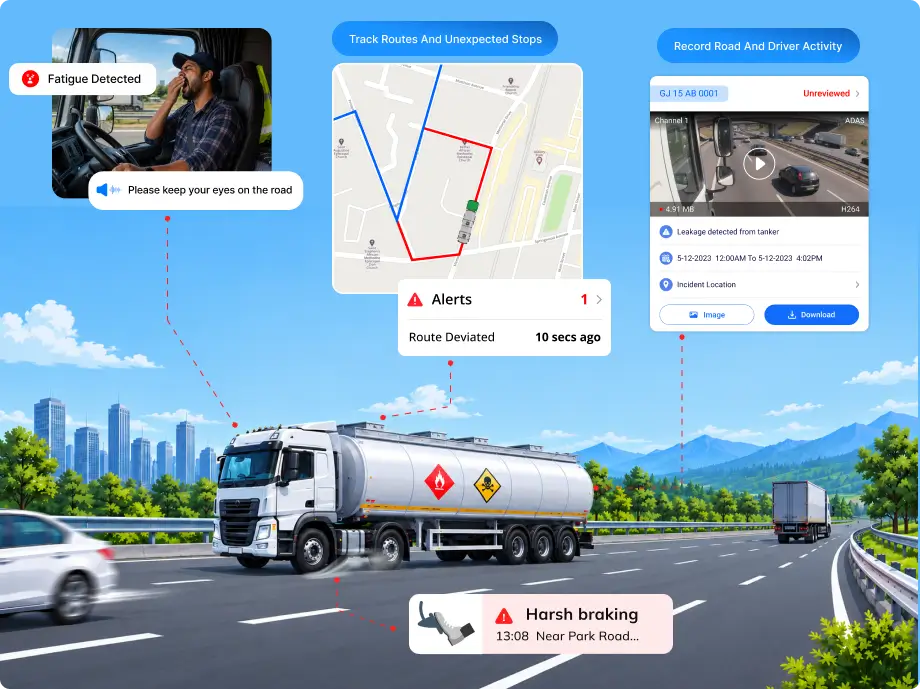
- الكشف عن إرهاق السائق وتشتت انتباهه: تستطيع الكاميرات المواجهة للسائق رصد علامات التعب، وتشتت الانتباه، واستخدام الهاتف. كما يمكن للتنبيهات تحذير السائق عند رصد سلوك غير آمن.
- مراقبة القيادة الخطرة: يستطيع النظام رصد السرعة الزائدة، والكبح المفاجئ، والتسارع المفاجئ، والانعطافات الحادة. ويمكن للمديرين مراجعة هذه الأحداث واتخاذ الإجراءات التصحيحية اللازمة.
- تتبع المسارات والتوقفات غير المتوقعة: تساعد أنظمة التتبع المباشر وتحديد المواقع الجغرافية المديرين على مراقبة مسار ناقلة النفط. ويمكن للتنبيهات تسليط الضوء على أي انحرافات عن المسار أو توقفات غير متوقعة.
- سجل نشاط الطريق والسائقين: تقوم الكاميرات الأمامية وكاميرات السائق بتسجيل ما يحدث حول المركبة. ويمكن للمديرين مراجعة التسجيلات عند وقوع حادثة تتعلق بالسلامة.
- مراجعة أنماط السلامة: يستطيع المديرون التحقق من حوادث السلامة حسب السائق والمركبة. وهذا يساعدهم على تحديد المشكلات المتكررة وتوفير تدريب مُركّز للسائقين.
نتائج
- كشف أسرع للمخاطر: يستطيع المديرون تحديد القيادة غير الآمنة والإرهاق وتشتت الانتباه في وقت مبكر.
- تحسين التحقيق في الحوادث: يوفر الفيديو رؤية واضحة لما حدث قبل وأثناء الحادث.
- تحسين سلوك السائق: يمكن استخدام أحداث القيادة الحقيقية لتدريب السائقين عملياً.
- تحسين التحكم في المسار: تساعد تنبيهات انحراف المسار والتوقف غير المتوقع المديرين على الاستجابة لحركة المركبات غير المعتادة.
- الأثر التوضيحي: من خلال المراقبة المنتظمة وتدريب السائقين، يمكن لأسطول الشركات أن يستهدف انخفاض بنسبة 20-40% في حوادث القيادة غير الآمنة المختارة بمرور الوقتهذا تقدير توضيحي وليس نتيجة عميل مُوثَّق لدى شركة أوفيزيو.