Picture a sales call. Your customer just added ten electric vans to their fleet. They’re excited until they realize their old tracking software wasn’t built for EVs at all. No battery data, no charging info, nothing.
This happens more and more as fleets go electric. And it’s a real opportunity for you, because customers are actively looking for software that actually understands EVs.
Grab a coffee and read what EV fleet management really covers here before we dive into the list.
Here are 12 features fleet owners are asking for right now and what to say when they do.
1. Live Battery Percentage and Range on the Map
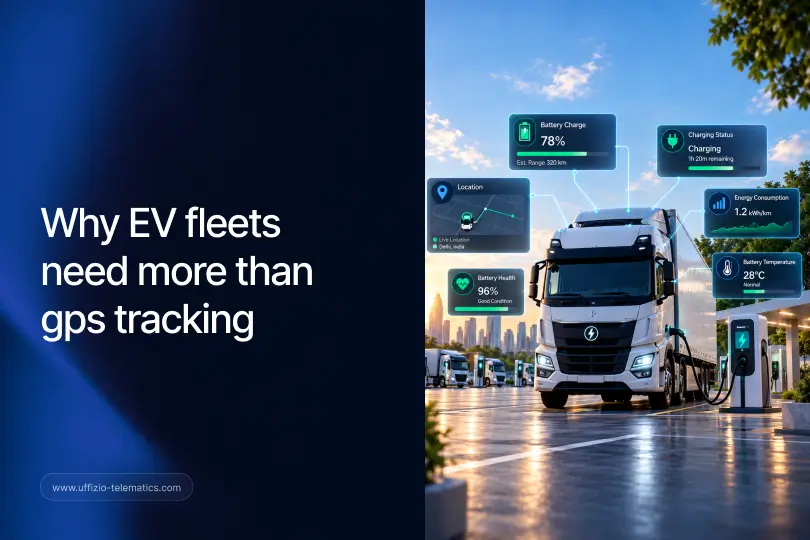
Fleet owners want to see battery level the same way they see location right on the map, in real time. No digging through menus, no separate app.
This one small view answers the question every EV fleet manager asks first: “how much charge is left, right now?”
2. Predicted Battery Level at the Destination
Knowing the current charge isn’t quite enough. Owners also want to know: will this vehicle still have charge left when it reaches its stop?
This feature does the math for them, factoring in the route ahead, so nobody sends out a van that won’t make it.
3. Nearby Charging Stations, With Connector Details
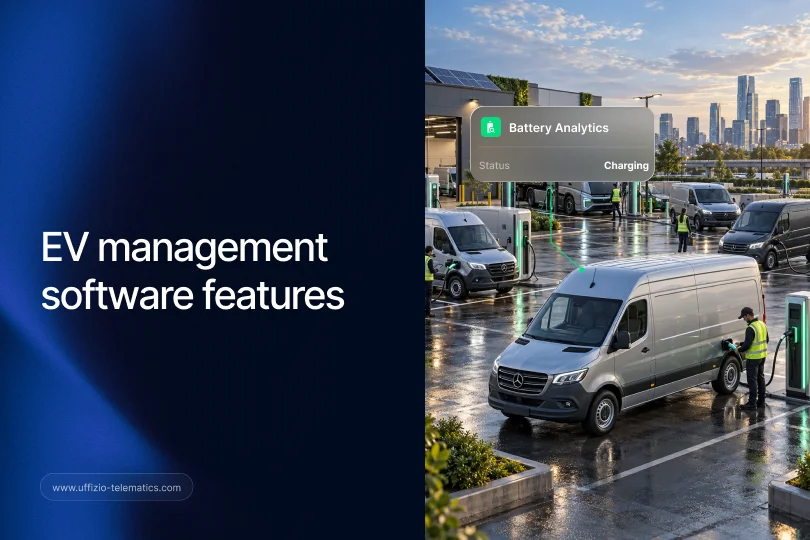
Range anxiety the worry about running out of charge with nowhere to plug in is the biggest EV fear fleet owners bring up. Showing nearby charging stations, along with the connector type each one uses, takes that fear off the table.
Drivers can find a compatible station before the battery gets low, not after.
4. Real-Time Energy Consumption Tracking
Every fleet owner wants to know where their money is going. This feature shows exactly how much energy each vehicle is using, as it happens.
That means no more guessing about electricity costs at the end of the month.
5. Efficiency Scoring for Every Vehicle and Trip
Not every driver handles an EV the same way. Some accelerate hard, others brake gently and it shows up in the electricity bill.
An efficiency score for each trip helps fleet owners spot which habits are costing them money, so they can coach drivers instead of just guessing.
6. Low-Battery Warnings, Before It Becomes a Problem
Nobody wants to find out a vehicle is nearly out of charge because it stopped moving. A low-battery warning flags it early enough to act reroute, recharge, or swap the vehicle out.
It’s a small alert that prevents a very inconvenient afternoon.
7. A Battery Health Score That’s Easy to Understand
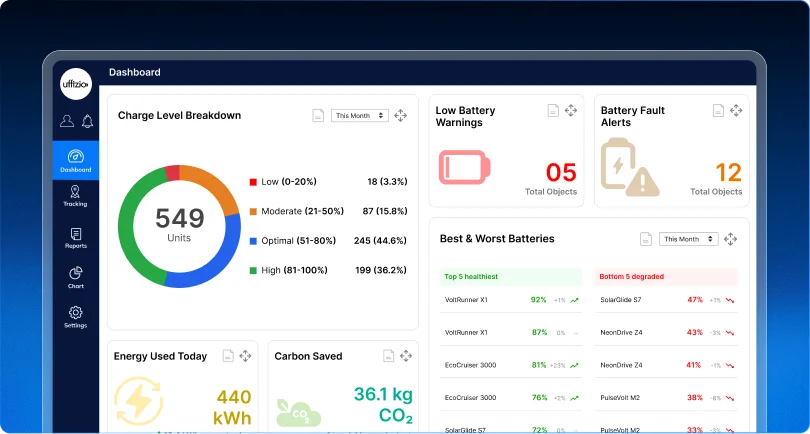
Every EV battery wears down slowly over time, and fleet owners want a simple way to track it one score, not a spreadsheet of numbers.
We actually wrote a whole guide on this one, since it comes up so often. Here’s what battery health monitoring means and why it matters.
8. Charging Cost and Cost-Per-Kilometre Tracking
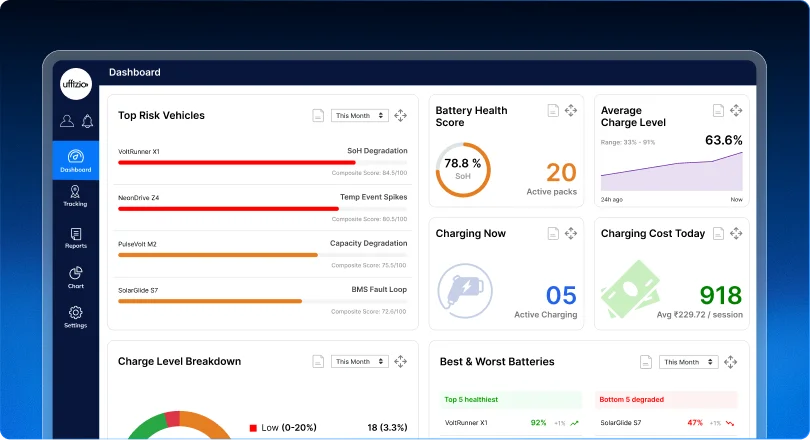
Fuel cost used to be simple math. Electricity cost isn’t, especially across different charging stations and rates. Fleet owners want software that works this out automatically.
Cost-per-kilometre turns all of that into one number they can compare, vehicle to vehicle.
9. Predictive Maintenance Alerts
Waiting for something to break is expensive. Fleet owners would rather get a heads-up that a battery or component is trending toward trouble, while there’s still time to fix it on their own schedule.
This is one of the easiest features to demo, because it directly answers “how do I avoid surprise repairs?”
10. Battery Fault and Temperature Warnings
Batteries don’t like extreme heat, and a fault rarely appears out of nowhere there are usually early signs. Fleet owners want those signs flagged immediately, not discovered later.
This kind of warning buys time to act before a small issue turns into a costly one.
11. A Full Set of Ready-Made EV Reports
Most EV fleets end up needing a separate battery management system just to get proper reporting. Fleet owners would much rather have it all built into the software they already use.
A complete set of EV reports covering battery health, charging, energy cost, efficiency, and more means one login instead of two systems to manage.
12. One Dashboard for the Whole EV Fleet
Finally, fleet owners want all of this in one place: average charge level, energy used today, charging cost, and battery status, for the entire fleet, on a single screen.
It’s the difference between checking ten vehicles one by one and understanding the whole fleet at a glance.
What This Means for You
Every feature on this list solves a real worry an EV fleet owner already has. That makes this an easy list to turn into a demo script pick the two or three that match what your prospect keeps mentioning, and show it live.

FAQ
What EV features do fleet owners ask about most?
Range and charging visibility come up first, almost every time. Cost tracking and battery health follow close behind, especially once a fleet has a few EVs on the road.
Do small fleets need all 12 of these features?
Not necessarily on day one, but even a fleet with just a handful of EVs benefits most from range visibility, charging station finding, and low-battery warnings early on.
Can this replace a separate EV battery management system?
Yes, for most fleets. A built-in reporting suite covering battery health, charging, and efficiency removes the need for a standalone battery system.
How do I pitch these features to a customer who’s new to EVs?
Start with the problem they already feel – running out of charge, or surprise repair costs – and show the one or two features that solve it directly, rather than listing all 12 at once.