GPS tracking can tell you where an electric vehicle is.
But can it tell you how much battery it has left, whether it needs charging, how much range is available, or whether the battery is performing normally?
Not on its own.
And that is the problem with treating an EV fleet like a traditional GPS-tracked fleet.
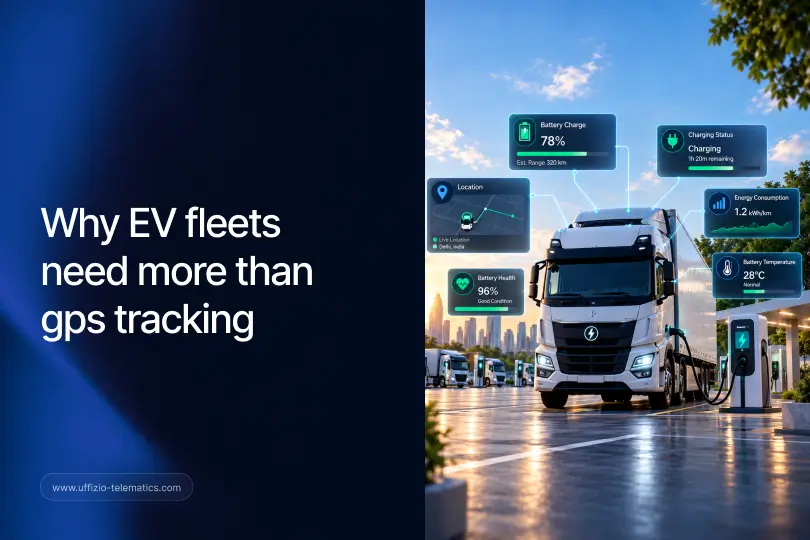
For an electric vehicle, location is only one part of the operational picture. Fleet managers also need visibility into battery charge, charging activity, energy consumption, battery temperature, range and battery health.
So, if you are managing or building solutions for EV fleets, the real question is no longer:
“Can I track my EV?”
It is:
“Can I understand and manage my EV?”
That is where EV telematics becomes important.
Why is GPS tracking not enough for EV fleets?
GPS tracking is still an important part of EV fleet management. It helps businesses monitor vehicle location, routes, stops, movement and trips.
But an electric vehicle has another system that needs to be monitored closely: the battery.
Imagine an electric delivery van halfway through its route.
The GPS dashboard shows that the van is moving normally.
But the fleet manager may also need to know:
- Is the battery charge enough to complete the route?
- How much range is left?
- Is the vehicle charging or not?
- How much energy has it consumed?
- Is the battery temperature normal?
- Is the battery showing any unusual behaviour?
- Will the vehicle be ready for its next assignment?
A GPS location alone cannot answer all of these questions.
That is why EV fleets need more than GPS tracking.
They need a combination of location intelligence + battery intelligence + operational visibility.
GPS tracking vs. EV telematics: What is the difference?
| GPS tracking | EV telematics |
| Shows where the vehicle is | Shows where the vehicle is and how it is performing |
| Tracks movement and routes | Tracks movement, battery and vehicle data |
| Shows stops and trips | Adds charging, energy and battery insights |
| Provides location visibility | Provides broader EV operational visibility |
| Focuses mainly on the vehicle’s location | Connects vehicle, battery and operational data |
The simplest way to look at it is:So, GPS tracking is a part of EV telematics, not the complete EV management solution.
What is EV telematics?
EV telematics combines GPS and vehicle tracking with data from the electric vehicle’s battery and other connected systems.
Depending on the vehicle and hardware being used, EV telematics can provide information such as:
- State of charge (SOC)
- Remaining range
- Battery health
- Battery temperature
- Charging status
- Charging activity
- Energy consumption
- Battery voltage and current
- Battery cycles
- Vehicle faults
- Vehicle location and movement
This gives fleet managers something that a basic tracking system cannot provide: context.
They can see not only where a vehicle is, but what is happening with the vehicle while it is there.
Why does battery visibility matter in EV fleet management?
This is where EV fleet management becomes different from conventional fleet management.
With a traditional vehicle, a fleet manager may be more focused on fuel level, mileage, engine performance and fuel consumption.
With an EV, the conversation changes.
The fleet manager needs to think about:
Battery → Range → Charging → Energy → Vehicle availability
These factors are closely connected.
For example, a vehicle with a low state of charge may be perfectly healthy and fully operational, but it may not be suitable for the next long-distance job.
Similarly, a vehicle may have enough charge but still need attention if its battery temperature or performance shows an unusual pattern.
Having this information available in one place helps managers make better operational decisions.
What EV data should fleet managers monitor?
Not every EV fleet needs to monitor every possible data point. But some information becomes particularly useful when managing electric vehicles at scale.
State of charge
State of charge, or SOC, tells you how much charge is available in the battery.
This is one of the most important metrics for EV fleet managers because it directly affects vehicle availability.
Remaining range
Battery percentage does not always tell the complete story.
Remaining range gives managers another way to understand whether a vehicle can complete its planned work.
Charging status
Fleet managers need to know whether a vehicle is:
- Not charging
- Charging
- Fully charged
- Waiting to charge
- Experiencing a charging issue
This can help them plan vehicle availability and avoid unnecessary downtime.
Battery temperature
Battery temperature can provide useful information about battery performance and potential issues.
Monitoring it can help fleet managers identify unusual conditions earlier.
Energy consumption
EVs replace fuel consumption with energy consumption.
Understanding how much energy a vehicle uses can help businesses identify differences in vehicle or driver performance and look for opportunities to improve efficiency.
Battery health
Battery performance can change over time.
Monitoring battery-related information can help fleet operators understand how their EVs are performing and make better long-term maintenance and replacement decisions.
Why is charging visibility important for fleet operations?
Charging is not simply an EV feature.
It is an operational activity.
Think about a fleet of electric delivery vehicles.
If several vehicles are not sufficiently charged before the morning shift, the problem can quickly become an operational one.
It may lead to:
- Delayed departures
- Vehicle reassignment
- Missed jobs
- Route changes
- Lower vehicle utilisation
With charging visibility, managers can identify these situations earlier.
This is why EV telematics should connect charging information with vehicle location and operational data.

Why EV telematics needs battery data
This is where the Battery Management System, or BMS, becomes important.
The BMS monitors important battery parameters and helps manage the battery’s operation.
When relevant BMS data is available to a telematics platform, businesses can get much deeper visibility into EV performance.
Instead of seeing only:
Vehicle → Location
the system can provide a much richer picture:
Vehicle → Location → Battery → Energy → Charging → Performance
For system integrators and resellers, this distinction matters because it changes what you can offer your customers.
You are no longer simply providing a way to locate their EVs.
You are providing a way to understand and manage them.
What should modern EV fleet management software offer?
If you are evaluating an EV telematics platform, live tracking should only be one part of your checklist.
Look for capabilities such as:
Real-time battery monitoring
The system should provide visibility into important battery parameters.
Charging insights
Managers should be able to understand charging status and activity.
Range visibility
Available range can help with vehicle assignment and route planning.
Battery health monitoring
Historical battery data can help identify changes in performance.
EV-specific alerts
Alerts can bring attention to important conditions such as low battery levels, unusual temperatures or charging events.
EV reporting and analytics
Historical information helps businesses understand trends rather than only viewing the current status.
Driver behaviour monitoring
Driving behaviour can influence energy consumption, making driver insights useful for EV efficiency.
Hardware and API integration
The platform should be flexible enough to connect with compatible EV hardware and other business systems.
What does this mean for system integrators and resellers?
This is where the shift from GPS tracking to EV telematics creates a real business opportunity.
A customer may initially approach you and say:
“I need GPS tracking for my electric vehicles.”
But once they understand what EV telematics can do, the requirement can become much broader.
They may want:
Tracking + Battery Monitoring + Charging + Energy Management + Reporting + Alerts
That gives system integrators and resellers more room to build a complete solution around the customer’s operation.
Instead of selling only a tracking device and software, you can become the technology partner helping the customer manage the entire EV fleet.
It also gives you room to grow with the customer
A customer may start with basic tracking.
Later, they may need battery monitoring.
Then they may want charging insights, advanced reports, driver monitoring or integrations.
A flexible telematics platform allows you to expand the solution as their requirements grow.
That can create a longer-term customer relationship rather than a one-time tracking sale.
How Uffizio can help you build EV fleet solutions
Uffizio takes EV fleet management beyond basic location tracking.
The platform can bring together vehicle location with EV-specific information such as battery status, state of charge, charging activity, energy-related data and other vehicle parameters, depending on the connected hardware.
This gives system integrators and resellers a broader technology foundation for building EV solutions.
Instead of offering customers:
“We can track your EVs.”
you can offer:
“We can help you monitor and manage your EV fleet.”
That difference matters.
It allows you to build solutions around the customer’s actual business requirements rather than limiting the conversation to GPS tracking.
Can EV telematics manage mixed fleets?
Yes, and this is becoming increasingly relevant.
Most businesses will not replace their entire fleet with EVs overnight.
For a period of time, they may operate a mix of:
- Electric cars
- Electric vans
- Electric buses
- Electric trucks
- Petrol vehicles
- Diesel vehicles
This means they need visibility across the complete fleet.
A flexible fleet management platform can provide common fleet-management capabilities across different vehicle types while also supporting EV-specific data for electric vehicles.
For system integrators, this can make it easier to support customers throughout their transition to electric mobility.
Where is EV fleet management heading?
The future of EV fleet management is moving beyond simple vehicle tracking.
The questions are becoming more specific.
Instead of asking:
“Where is the vehicle?”
fleet managers will increasingly ask:
“How much charge does it have?”
“How far can it go?”
“When will it be ready?”
“How efficiently is it using energy?”
“Is the battery performing normally?”
“Can it complete its next job?”
These questions require more than GPS coordinates.
They require connected EV data and software that can turn that data into useful operational information.
Frequently asked questions about EV telematics
Why do EV fleets need more than GPS tracking?
EV fleets need more than GPS tracking because location data alone does not provide enough information about battery charge, range, charging, energy consumption or battery health. EV telematics combines vehicle tracking with this additional data.
Is GPS tracking enough for electric vehicles?
GPS tracking is useful for monitoring an electric vehicle’s location and movement, but it does not provide the complete battery and energy picture needed for effective EV fleet management.
What is EV telematics?
EV telematics combines GPS tracking with electric-vehicle data such as battery status, state of charge, charging activity, range, energy consumption and battery health.
What EV data should fleet managers monitor?
Important EV data can include state of charge, remaining range, charging status, battery temperature, energy consumption, battery health and relevant battery or vehicle fault information.
Can GPS tracking software monitor EV batteries?
Basic GPS tracking software generally focuses on location. Battery monitoring requires access to relevant EV or BMS data through compatible vehicle hardware and software integrations.
Why is battery monitoring important for EV fleets?
Battery monitoring helps fleet managers understand vehicle readiness, charging needs and battery performance. It can also help identify unusual conditions earlier.
What should system integrators look for in EV fleet management software?
System integrators should look for battery monitoring, charging insights, EV-specific reporting, alerts, hardware compatibility, APIs, scalability and support for different vehicle types.
Can EV telematics support mixed fleets?
A flexible fleet management platform can support mixed fleets by providing common fleet-management features while also providing EV-specific battery and charging information for electric vehicles.
GPS tracking is only the beginning
Electric vehicles are changing what businesses need from fleet technology.
GPS tracking answers one important question:
“Where is my vehicle?”
EV telematics answers a much bigger set of questions:
“How is my vehicle performing, how much energy does it have, and is it ready for the next job?”
That is the shift from tracking EVs to managing EV fleets.
For system integrators and resellers, it is also a shift in opportunity.
Instead of selling only GPS tracking, you can build a more complete EV solution around location, battery, charging, energy and operational intelligence.