A fleet schedule may look perfect when the day starts. But real-world operations rarely stay that way.
A vehicle becomes unavailable. A customer adds a new request. A job takes longer than expected. A checkpoint needs to be added. A collection is missed. Or an urgent job suddenly needs to be fitted into an already busy schedule.
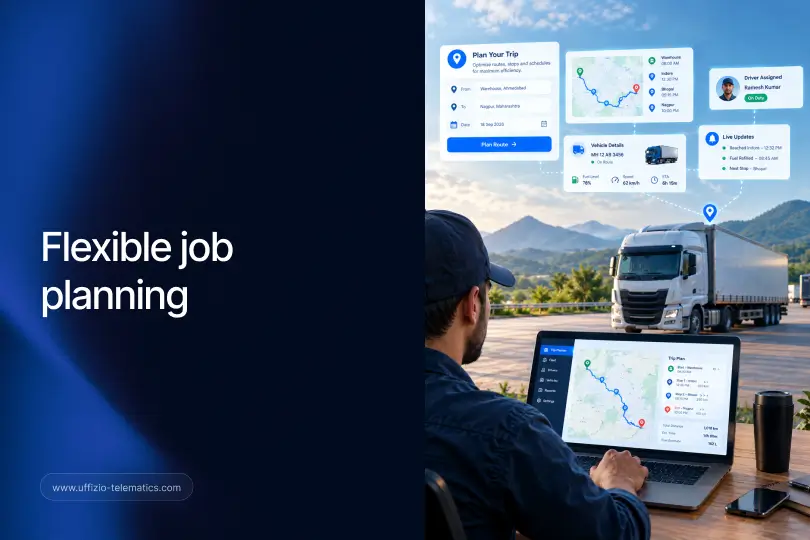
Flexible job planning is the ability to create, change, assign, and manage fleet jobs as these real-world situations occur without having to rebuild the entire plan from scratch.
For businesses managing deliveries, field service, waste collection, utilities, construction, or other mobile operations, this flexibility can make daily operations much easier to manage.
For system integrators and resellers, it also creates an opportunity to provide customers with a fleet management platform that can adapt to different workflows instead of forcing every business into the same process.
What is flexible job planning?
Flexible job planning means giving operations teams the ability to adjust jobs when circumstances change.
Instead of treating a job plan as something fixed, businesses can make changes to important elements such as:
- Vehicle or driver assignment
- Job timing
- Checkpoints
- Job sequence
- Priority
- Route
- Job scope
- Job status
For example, if a vehicle assigned to a delivery job becomes unavailable, the team should be able to assign another vehicle without cancelling and recreating the entire schedule.
In simple terms, flexible job planning connects the original plan with what is actually happening on the ground.
Quick answer: Why is flexible job planning important?
Flexible job planning helps businesses respond to operational changes without relying on constant manual rescheduling. It can reduce administrative work, improve resource utilization, and help teams keep jobs moving even when the original plan changes.
Why do fleet operations need flexible job scheduling?
Fleet operations are affected by things that cannot always be predicted.
Traffic can cause delays. Vehicles can require maintenance. Customers can change requirements. Drivers can become unavailable. A job can take longer than expected.
When software only supports rigid schedules, even a small change can create a chain of manual updates.
A planner may have to:
- Find another vehicle.
- Update the assignment.
- Change the job schedule.
- Inform the driver.
- Update checkpoints.
- Track whether the revised job was completed.
- Reconcile the changes later.
The bigger the fleet, the more difficult this becomes.
Flexible job scheduling reduces this dependency on manual coordination by allowing teams to adjust operations from the same system.
What happens when job planning is too rigid?
Rigid planning can create a gap between what was scheduled and what actually happens.
Imagine a waste collection company planning 100 collections for a day. One vehicle breaks down halfway through the route.
The problem is no longer just the unavailable vehicle.
The company now needs to decide:
- Which vehicle should take over?
- Which collections should be moved?
- Does the new vehicle have enough capacity?
- Should the route be changed?
- Are additional checkpoints required?
- What happens to collections that cannot be completed?
- How should the missed work be handled later?
If the software cannot accommodate these changes, the operations team may end up managing the situation through calls, spreadsheets, messages, and manual updates.
That is where flexible job management becomes valuable.
What should flexible job planning software allow businesses to change?
A flexible job planning system should allow businesses to make practical changes without disrupting the entire operation.
1. Change vehicle assignments
A business should be able to change the vehicle assigned to a job when circumstances require it.
This is particularly useful when vehicles are unavailable, maintenance issues occur, or workloads need to be redistributed.
2. Adjust job schedules
Jobs do not always start or finish at the planned time.
Flexible scheduling allows teams to adjust upcoming jobs based on delays, priorities, customer requirements, or operational capacity.
3. Add or modify checkpoints
Some jobs require multiple locations or checkpoints.
Businesses may need to add, remove, or modify checkpoints as the job progresses. The ability to make these changes helps the digital plan stay aligned with the actual job.
4. Change job priorities
An urgent customer request should not necessarily require rebuilding the entire day’s schedule.
Flexible job planning can help teams prioritize new or urgent work while keeping existing jobs visible.
5. Handle missed jobs
A missed job should not become a dead end.
The system should help teams identify missed work and create a follow-up plan instead of forcing them to manually recreate the job details.
6. Manage changes during operations
Planning should not stop once vehicles leave the depot.
Real-world operations continue to change throughout the day, so job management software should give authorized users the ability to make relevant changes while maintaining visibility of what is happening.
Is flexible job planning the same as poor planning?
No.
Flexibility does not mean businesses should stop planning.
In fact, good flexible job planning starts with a strong initial plan.
The difference is that the system recognizes that a plan is a starting point, not a guarantee of what will happen during the day.
A modern fleet operation needs both:
Good planning + the ability to adapt
Without planning, operations become chaotic.
Without flexibility, even a good plan can become difficult to manage when reality changes.
How does flexible job planning reduce manual work?
One of the biggest benefits is reducing the number of small operational tasks that teams have to manage manually.
Instead of maintaining separate spreadsheets or repeatedly communicating changes between planners, drivers, supervisors, and customers, job information can be managed from a centralized platform.
Automation can also help with activities such as:
- Job allocation
- Scheduling
- Job status updates
- Checkpoint management
- Monitoring
- Notifications
- Follow-up planning
The result is not simply fewer clicks.
It is less time spent coordinating changes and more time spent managing the operation.
How can Uffizio support flexible job planning?
Businesses looking for flexible job planning software need more than a calendar for assigning jobs. They need a platform that connects planning with fleet visibility and day-to-day operations.
Uffizio provides job management capabilities that help businesses plan, assign, monitor, and adapt jobs from a centralized fleet management platform.
With Uffizio, businesses can manage workflows around job scheduling, vehicle assignment, checkpoints, monitoring, and operational changes.
This becomes particularly useful when the original plan needs to change.
For example, Uffizio has introduced capabilities that support practical changes such as editing upcoming jobs and changing assigned vehicles before a job starts. Businesses can also work with multiple checkpoints and handle missed collections by creating new jobs based on missed work.
The idea is simple:
The software should adapt to the operation not force the operation to adapt to the software.
How does flexible job management help different industries?
The need for flexible planning is not limited to one type of fleet.
Logistics and delivery
Delivery schedules can change because of customer requests, vehicle availability, traffic, or delivery priorities.
Flexible job planning helps teams adjust assignments and schedules without losing visibility.
Field service
Technicians may need to handle urgent requests, extended service times, or additional customer locations.
The ability to adjust jobs helps field teams respond without rebuilding the entire day’s plan.
Waste management
Waste collection is a strong example of why real-world flexibility matters.
Missed collections, additional locations, vehicle changes, and changing routes can all affect the original plan.
Flexible job management allows operators to adapt while maintaining a record of the work.
Utilities
Utility teams often manage scheduled inspections, maintenance, service calls, and emergency work.
Flexible planning allows urgent tasks to be incorporated into existing operations.
Construction and mobile services
Vehicles and teams may move between locations based on changing project requirements.
Flexible job planning helps operations teams keep assignments and schedules aligned with changing site conditions.
What should system integrators look for in job planning software?
For system integrators and resellers, choosing a fleet management platform is not only about the number of features available.
The bigger question is:
Can the platform support different customer workflows without requiring a completely different system for every use case?
A flexible job management platform should ideally provide:
| Capability | Why it matters |
| Flexible scheduling | Allows jobs to change as operational needs change |
| Vehicle reassignment | Helps teams respond to vehicle availability |
| Checkpoint management | Supports jobs with changing locations |
| Real-time adjustments | Keeps the digital plan aligned with field operations |
| Missed-job handling | Helps businesses recover incomplete work |
| Job monitoring | Shows whether planned work is actually progressing |
| Role-based access | Gives the right users control over operational changes |
| Automation | Reduces repetitive planning and administrative work |
| Reporting | Helps businesses understand job completion and performance |
| Integrations | Allows the solution to fit into existing technology ecosystems |
This flexibility is especially important for system integrators because different customers can have very different operational processes.
A waste management company may need collection-based workflows.
A logistics company may need delivery and checkpoint workflows.
A field service company may need technician assignments and appointment-based jobs.
A scalable telematics platform should be flexible enough to support these differences.
Flexible planning is becoming a core part of modern fleet management
Fleet management is moving beyond simply answering:
“Where is my vehicle?”
Modern operations also need answers to questions such as:
- What jobs are assigned?
- Which jobs are in progress?
- What changed from the original plan?
- Which vehicle is handling the job?
- Which checkpoints have been completed?
- Which jobs were missed?
- What needs to be rescheduled?
- Where should resources be reassigned?
This is why job management is becoming an important part of broader fleet management software.
Vehicle tracking provides visibility into the fleet. Job management adds visibility into the work the fleet is performing.
And flexible job planning connects the two.
What does the future of fleet job planning look like?
The next step is likely to be more dynamic planning.
Instead of creating a schedule once and manually correcting it throughout the day, fleet management platforms can increasingly help businesses respond to changing conditions.
That could mean combining:
Real-time fleet data + job information + operational rules + automation