Introduction
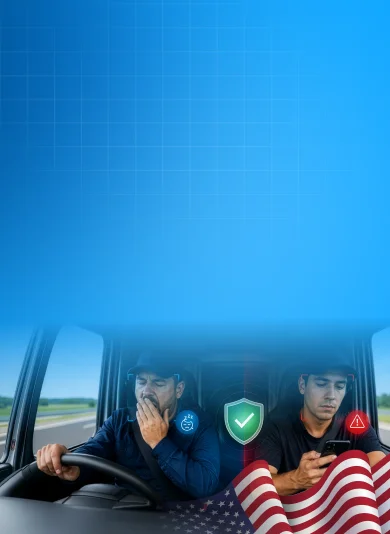
FMCSA sets a clear limit for truck drivers. They can drive 11 hours after 10 hours off duty. All of this must happen within a 14-hour window. After 8 hours of driving, they need a 30-minute break. On top of that, drivers can’t hold a phone while driving. These rules exist because tired or distracted drivers cause crashes. But knowing the rule is one thing. Catching a problem before it happens is another. A dispatcher can’t watch every driver’s eyes or hands at all times. That’s exactly where most fatigue and distraction problems slip through.
Challenges
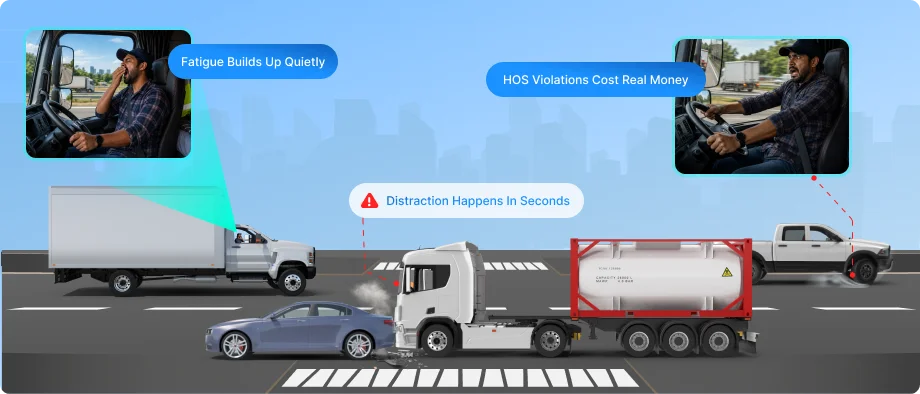
- Fatigue builds up quietly.
A driver can still be within their legal driving hours and still be very tired. HOS rules track time, not how alert a driver actually feels.
- Distraction happens in seconds.
The moment a driver reaches for a phone, it’s a violation. But without a camera watching, a fleet has no way to catch it, or prove it didn’t happen.
- HOS violations cost real money.
A logged violation can hurt a carrier’s safety score for 24 months. Falsified records can bring fines up to $16,000. Trusting drivers to self-report isn’t enough.
- Phone violations cost even more.
A handheld phone violation can cost the driver up to $2,750. If the company allowed it, the fine can go up to $11,000. Stopping the problem early is much cheaper than dealing with it after.
- No fast way to step in.
Even when a fatigue or distraction alert fires, many fleets have no way to reach the driver right away and fix the problem in the moment.
Solution
- Drowsiness detection on one dashboard.
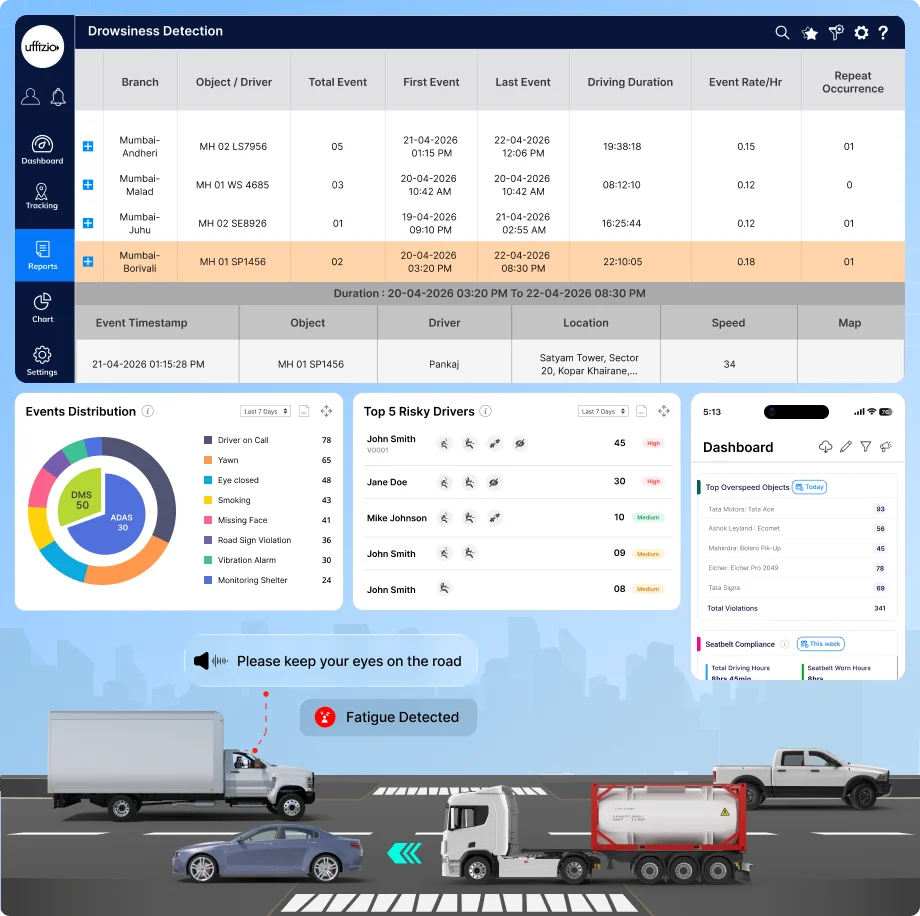
The Driver Safety Dashboard Widget shows drowsiness detection, fatigue trends, and risky trips, all in one place. Managers can spot a tired driver before it becomes a violation or a crash.
- Fleet-wide drowsiness reports.
The Drowsiness Detection Summary Report shows how often drowsiness happens, and which drivers it keeps happening with. This helps with coaching and with HOS compliance checks.
- Real-time fatigue and distraction alerts.
The Fatigue Alert Banner flags a driver based on eye-closing or how long they’ve been driving. Distracted Driving Detection flags phone use or looking away from the road. Both happen live, as it’s occurring.
- Seatbelt monitoring, live and in reports.
The Seatbelt Alert Pop-up flags a driver with no seatbelt on, right during the trip. The Seatbelt Compliance Widget and Report show the same data, but over time.
- Human detection on camera.
Human Detection Alerts fire when a person is seen on camera. An optional video link can be sent by SMS, email, or app, giving extra visibility around the cab.
- Talk to the driver right away.
Two-Way Audio lets a control room speak directly to the driver the moment an alert fires. SOS/Panic Button Status shows which vehicles need urgent help. The response isn’t just a flag on a screen, it’s an actual conversation.
Results Achieved
- 20–30% fewer fatigue-related safety events, once drowsiness detection and live alerts are turned on
- 15–25% fewer phone-related violations, once distraction detection and driver coaching work together
- Faster response time, from alert to driver contact, once two-way audio replaces waiting for a driver to call in
- Stronger records for FMCSA safety score reviews, backed by real drowsiness and distraction event history
- A clear evidence trail for seatbelt and distraction compliance, useful for safety audits and insurance reviews