Dumpers and tippers carry heavy, uneven loads every day. A shift in weight, an uneven surface, or a badly timed lift can tip a vehicle before the driver even realizes something is wrong. By the time the vehicle is at a dangerous angle, it’s often too late to react.
Most fleet tracking tools weren’t built with this risk in mind. They can tell you where a vehicle is and how fast it’s moving, but they say nothing about whether it’s about to tip over. That’s a real blind spot for fleets running construction, waste, or mining vehicles.
Uffizio has been closing gaps like this in Trakzee, its fleet tracking platform, one feature at a time. The latest one is built specifically for dumpers and tippers: tilt risk monitoring.
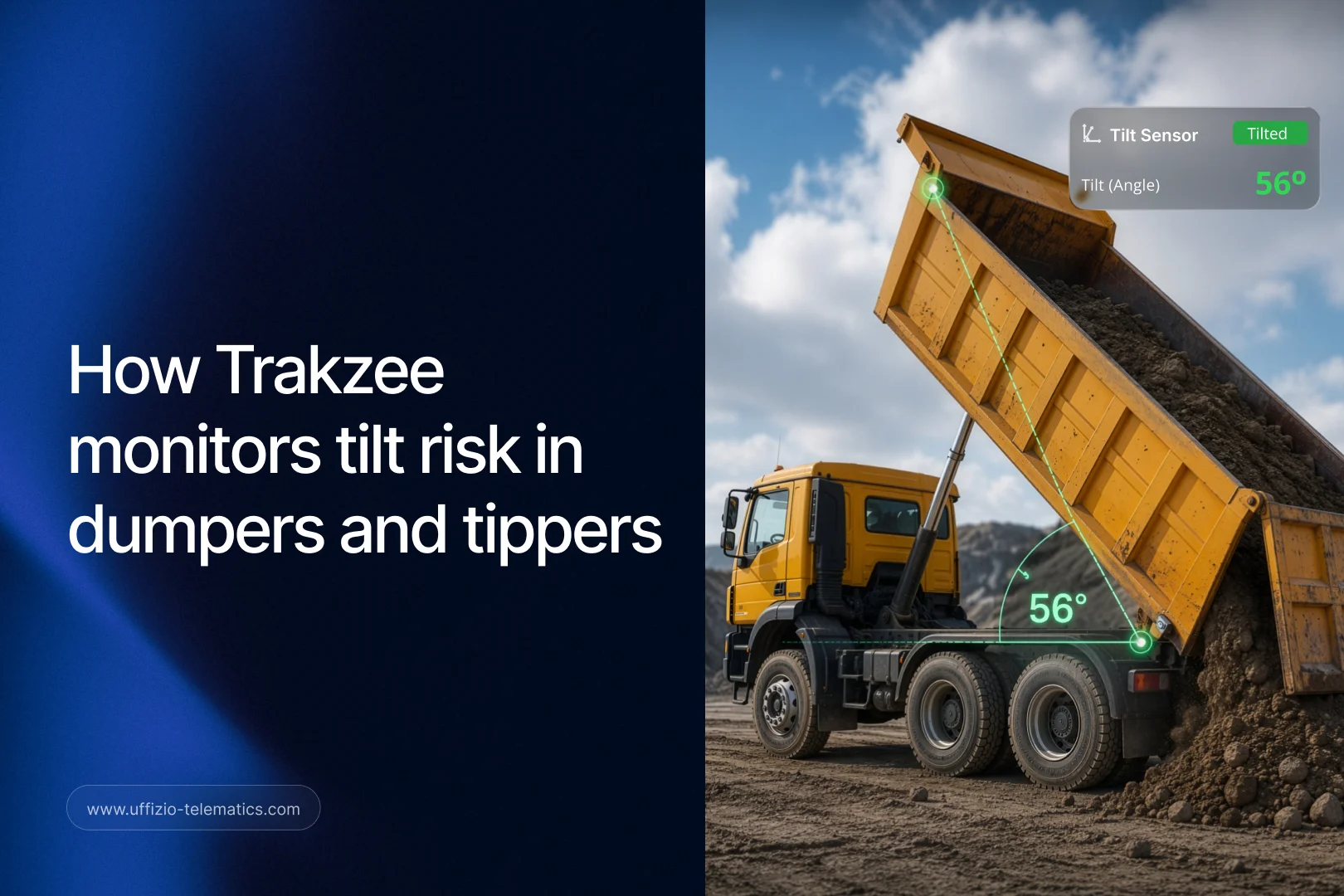
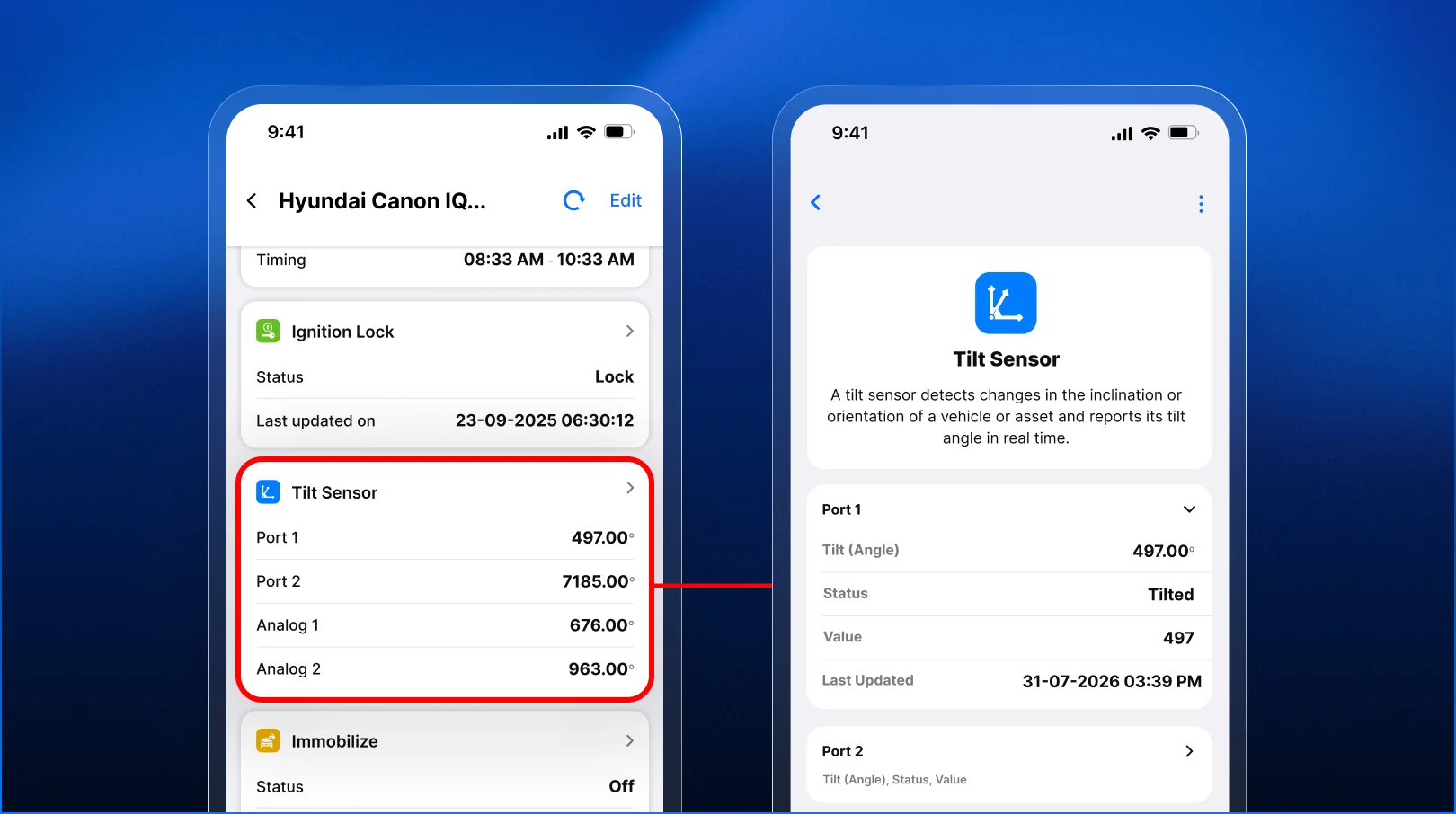
Uffizio Trakzee tracks tilt risk using a tilt sensor fitted to the vehicle. The sensor reports four states: flat, tilting, tilted, and critical. Each state is color-coded, so a fleet manager can spot a tipping risk immediately, without digging through raw numbers.
For system integrators working with construction or waste clients, and for resellers who sell into those industries, this is a feature that speaks directly to a risk their clients already worry about.
The Problem With Blind Spots in Tipper Operations
Tipping incidents don’t usually happen out of nowhere. They build up over small, missed warning signs: a load that’s slightly off-center, a site with uneven ground, or a lift angle that’s a little too aggressive.
A driver on site often can’t see or feel these warning signs early enough. The cab doesn’t always give a clear sense of how far the vehicle has tilted, especially during a lift or tip cycle.
Without a way to monitor this remotely, a fleet manager only finds out about a near-miss or an actual tip after the fact, usually from a damaged vehicle, an injury report, or a site incident review. That’s reactive safety management, not proactive.
This is the exact problem tilt monitoring is built to solve. It gives fleet managers a live, remote view of tilt risk, instead of waiting for something to go wrong first.
How Uffizio Trakzee Tracks Tilt Risk
The tilt sensor sits on the vehicle and continuously measures its angle. Trakzee translates that angle into one of four simple states.
Flat means the vehicle is level and operating normally. Tilting means the angle has started to shift beyond normal range, worth a glance but not yet urgent. Tilted means the angle has moved further, and it’s time to check in. Critical means the vehicle is at a dangerous angle and needs immediate attention.
Each of these states is color-coded in the Trakzee dashboard, so a fleet manager doesn’t need to interpret raw degree measurements. Green, yellow, orange, and red-style coding (depending on the exact scheme used) makes the risk level obvious at a glance, even across a large fleet.
This data also feeds into dedicated tilt reporting. A fleet manager can look back at tilt events over a day, a week, or a job, and see exactly when and where risk levels rose.
Why This Matters for Driver and Site Safety
Tipping incidents put drivers and anyone nearby at real risk. A vehicle that tips while loaded can cause injury, damage nearby structures or vehicles, and shut down a site while the incident is dealt with.
Tilt monitoring gives fleet managers a way to intervene before a small tilt becomes a full tip. If a vehicle moves into the “tilting” or “tilted” state, a manager can radio the driver, ask them to stop, and reassess the load or the ground conditions.
This kind of early intervention is hard to do without live data. A radio check-in based on a driver’s own sense of the vehicle’s angle isn’t as reliable as a sensor reading.
Over time, this also builds a safety record. Site managers and clients can point to tilt data as proof that a fleet is actively monitoring one of the most common tipper-related risks, not just hoping nothing goes wrong.
How Color-Coded Alerts Simplify Monitoring
One of the most practical parts of this feature is how simple it is to act on. A fleet manager overseeing dozens of vehicles doesn’t have time to read raw sensor data for each one.
Color coding removes that friction. A quick glance at the fleet view shows which vehicles are flat, which are tilting, and which need urgent attention. There’s no need to open a detailed report just to know something needs a second look.
This also matters for smaller teams or for sites where one supervisor is responsible for many vehicles at once. Simple visual signals mean risk monitoring doesn’t require a dedicated safety analyst watching a screen all day.
For system integrators, this simplicity is worth pointing out during a demo. Clients don’t need training on how to read sensor output. They just need to know what red, orange, and yellow mean, and act accordingly.
Who Should Consider This Feature
Tilt monitoring isn’t built for every vehicle type. It’s aimed squarely at fleets running dumpers, tippers, and similar vehicles where load shifting and lift angles are a daily part of the job.
Construction fleets are an obvious fit, especially on uneven or temporary sites where ground conditions change often. Waste management fleets running tipper trucks for bulk collection face similar risks, particularly during compaction or unloading. Mining and quarry operations, where vehicles regularly work on unstable or sloped terrain, are another strong match.
If a client’s fleet doesn’t include this vehicle type, this feature won’t be relevant to their setup. But for the clients who do run dumpers or tippers, it’s a feature worth raising early in a conversation, since it addresses a risk they’re likely already aware of and concerned about.
What This Means for Integrators and Resellers
For system integrators, tilt monitoring is a straightforward addition to a Trakzee deployment. It requires the tilt sensor hardware on the vehicle, and from there, the reporting and alerts are handled within the existing Trakzee dashboard. There’s no separate system to manage.
This also means it fits naturally into an existing Trakzee rollout. A client already using Trakzee for tracking and reporting can add tilt monitoring without switching tools or retraining staff from scratch.
For resellers, this is a genuinely differentiated talking point. Most general-purpose fleet tracking software has no answer for tipping risk at all. Being able to bring a feature built specifically for dumpers and tippers gives resellers a real edge with construction, waste, and mining clients, where this risk is a known, ongoing concern.
It’s also a good example of how a niche feature can open a bigger conversation. A client who initially asks about tilt monitoring is often a good candidate for a broader discussion about driver safety, compliance reporting, and fleet visibility.

Frequently Asked Questions
What vehicles benefit most from tilt monitoring? Dumpers, tippers, and similar vehicles that regularly shift load angle or operate on uneven ground benefit most. This includes construction, waste, and mining fleets.
What do the four tilt states mean? Flat means level and normal. Tilting means the angle has started to shift. Tilted means it has moved further and needs a check. Critical means the vehicle is at a dangerous angle and needs immediate attention.
Does tilt monitoring require extra hardware? Yes. A tilt sensor needs to be fitted to the vehicle. Once installed, tilt data appears directly in the Trakzee dashboard alongside other fleet data.
Can tilt data be reviewed after the fact, not just in real time? Yes. Trakzee includes dedicated tilt reporting, so fleet managers can review past tilt events by vehicle, day, or job.
Is this feature useful for fleets that don’t run dumpers or tippers? Not really. Tilt monitoring is built specifically for vehicles where load shifting and lift angle create a tipping risk, so it’s most valuable for that vehicle type.
Key Takeaway
Uffizio Trakzee’s tilt monitoring turns a risk that used to be invisible into something a fleet manager can see and act on in real time. For system integrators and resellers working with construction, waste, or mining clients, it’s a focused, easy-to-explain feature that addresses a safety concern those clients already care about.