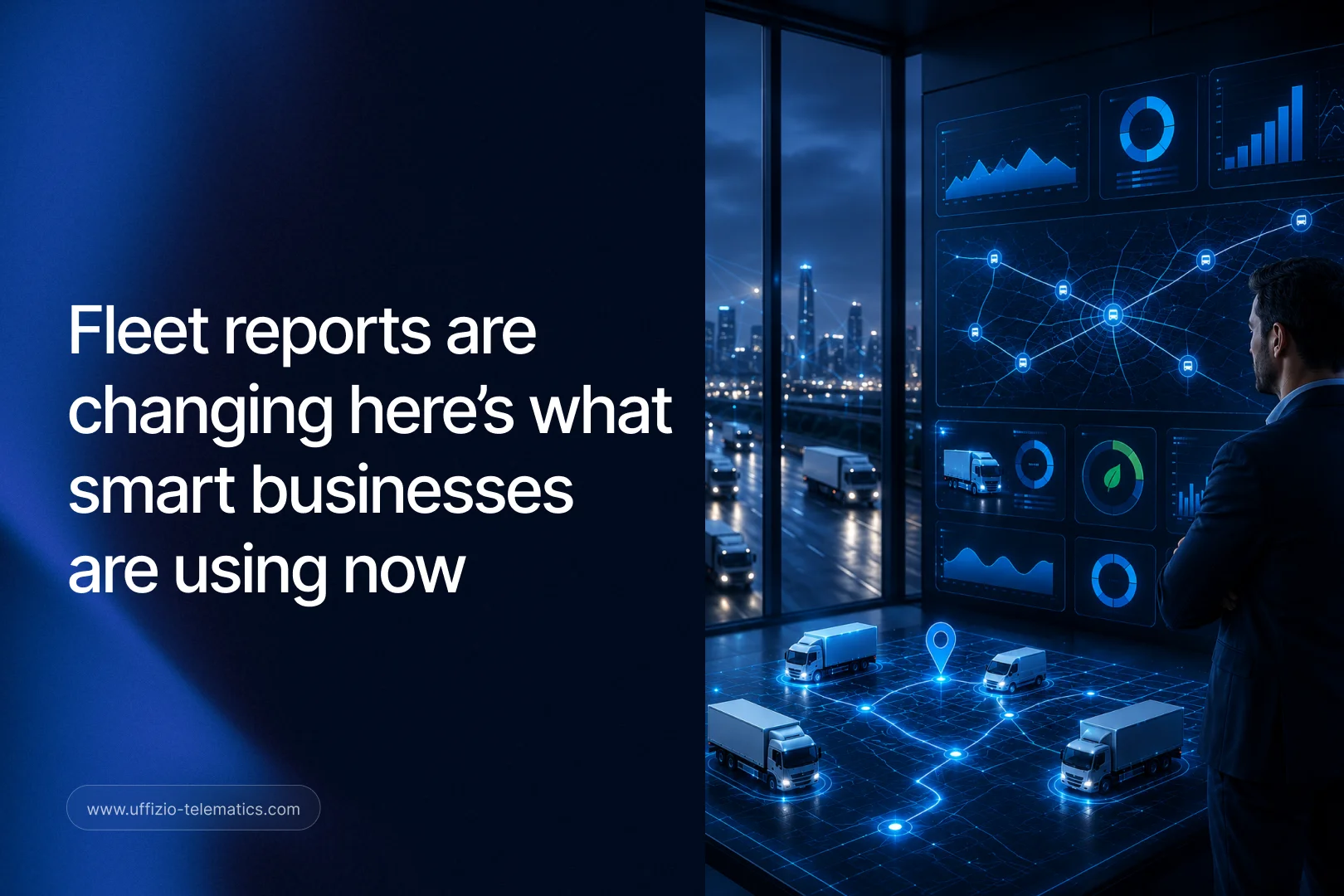
Si vous travaillez avec des données de flotte depuis suffisamment longtemps, vous avez probablement déjà été confronté à ce problème.
Les rapports continuent d'affluer — résumés de voyage, carnets de route, graphiques de vitesse — mais au lieu d'aider, ils commencent à submerger.
On voit des chiffres partout.
Mais la prochaine étape reste encore floue.
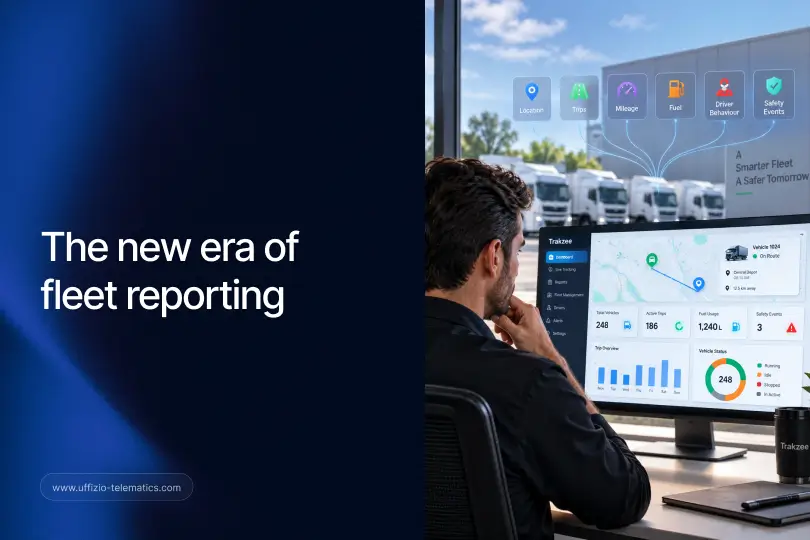
Le vrai problème, ce ne sont pas les données, c'est le manque de clarté. La plupart des rapports montrent ce qui s'est passémais pas Que faire ensuite ?Et c'est là que le reporting des flottes évolue discrètement.
Une façon plus intelligente de lire les données de flotte
Tous les rapports n'ont pas la même utilité. Un rapport de trajet analyse l'efficacité. Un historique de trajets retrace les déplacements. Un rapport de vitesse reflète le comportement de conduite.
Pourtant, depuis des années, ils sont traités de la même manière : avec des tableaux de bord statiques et des résumés génériques.
Aujourd'hui, la situation évolue. Les rapports tiennent davantage compte du contexte. Au lieu de répéter les mêmes informations partout, ils s'adaptent en fonction du problème que chaque rapport est censé résoudre.
En termes simples, ce qui change :
- Les analyses sont adaptées à l'objectif de chaque rapport.
- Les données sont filtrées pour ne montrer que ce qui compte vraiment.
- Les résultats sont de plus en plus orientés vers l'action.
Ce changement rend les rapports plus faciles à lire et beaucoup plus utiles.
À quoi ressemble un système de reporting moderne pour les flottes de véhicules ?
Le changement le plus important réside dans la manière dont les rapports sont communiqués. Ce ne sont plus de simples écrans surchargés de données, mais plutôt des explications guidées.
Au lieu de perdre du temps à chercher des solutions, les utilisateurs peuvent se concentrer directement sur les points à améliorer.
Caractéristiques clés du journalisme moderne :
- Des informations contextuelles pour chaque rapport
- Analyse automatisée sans intervention manuelle
- Identification claire des inefficacités
- Suggestions intégrées pour l'amélioration
- Réduction du bruit et meilleure clarté des données
Il s'agit moins d'analyser que de comprendre instantanément.

Comment cela se reflète dans les principaux rapports
Les récits de voyage deviennent plus instructifs.
Auparavant, les comptes rendus de voyage mettaient l'accent sur la distance et la durée. Désormais, ils mettent en lumière les écarts d'efficacité.
Ils permettent de les repérer plus facilement :
- Temps d'inactivité élevé par rapport au temps de fonctionnement
- Répartition inégale des trajets entre les véhicules
- Arrêts et retards fréquents
- problèmes de comportement au volant comme les excès de vitesse
Ils orientent également des améliorations telles que :
- Réduire le temps d'inactivité
- Équilibrer la charge de travail
- Améliorer ses habitudes de conduite
👉 Le résultat est simple : une meilleure utilisation et des performances de flotte améliorées.
L'histoire du voyage commence à raconter une histoire
L'historique des déplacements n'est plus seulement un journal de bord. Il révèle désormais comment la journée est utilisée de manière efficace.
Cela permet d'identifier :
- Arrêts fréquents et longs temps d'inactivité
- Mouvements courts ou fragmentés
- Sous-utilisation entre les trajets
- Modèles de mouvements irréguliers
Cela offre également des opportunités telles que :
- Réduire les pertes de temps pendant la journée
- Optimisation des itinéraires pour une circulation plus fluide
👉 Le résultat est une meilleure efficacité quotidienne et une planification opérationnelle améliorée.
Les rapports de vitesse vont au-delà des données de surface
Les rapports vitesse/distance deviennent plus stratégiques. Ils établissent désormais un lien entre les variations de vitesse et leur impact réel sur l'activité.
Ils mettent en avant :
- Gammes de vitesses dominantes au sein de la flotte
- Utilisation inégale des véhicules
- Unités sous-utilisées ou inactives
- L'utilisation excessive de certains véhicules
Ils découvrent également :
- Déséquilibre de charge de travail
- Risque de fatigue au volant
- Signaux de maintenance
Et suggérez des actions comme :
- Équilibrer l'utilisation de la flotte
- Amélioration des stratégies de déploiement
👉 Cela permet une conduite plus sûre et des opérations de flotte plus équilibrées.
Pourquoi ce changement crée de nouvelles opportunités
À mesure que les entreprises de gestion de flottes évoluent, leurs attentes vis-à-vis de la technologie augmentent.
Le simple suivi ne suffit plus. Il existe une demande manifeste pour des solutions qui simplifient les décisions et apportent une valeur ajoutée mesurable.
Cela ouvre de belles perspectives pour :
- Proposez davantage de solutions de flotte axées sur la valeur.
- Allez au-delà des rapports télématiques de base
- Les offres de poste comme outils de prise de décision
- Établir des relations clients plus solides et durables
- Augmenter la valeur globale de la solution et les marges
En bref, des reportages plus intelligents deviennent un facteur de différenciation clé.
Là où cela a un impact immédiat
Cette approche s'adapte sans difficulté à de nombreux secteurs d'activité.
- Logistique et transport
Améliore l'efficacité des trajets et réduit les retards. - Transport scolaire
Améliore la sécurité et réduit les temps d'inactivité inutiles - flottes de livraison et de dernier kilomètre
Optimise les itinéraires et minimise les temps d'attente.
L'impact est constant : une meilleure compréhension conduit à de meilleures décisions.
L'impact commercial de ce changement
Lorsque les rapports deviennent plus faciles à comprendre, les opérations s'améliorent naturellement.
- Permet de gagner du temps consacré à l'analyse manuelle
- Réduit les inefficacités opérationnelles
- Accélère la prise de décision
- Améliore l'utilisation de la flotte
- Améliore la qualité du service
- Augmente la satisfaction globale des clients
Il s'agit d'un passage direct d'une analyse exigeant beaucoup d'efforts à une action axée sur les résultats.
Vue d'ensemble : Où se dirige la technologie des flottes ?
Cette évolution façonne l'avenir des logiciels de gestion de flottes.
- Des rapports de flotte plus intelligents et plus intuitifs
- Des informations plus approfondies grâce à l'analyse de flottes par l'IA
- Réduction du travail manuel grâce à la génération de rapports automatisés
- Des rapports télématiques plus pertinents
La technologie des flottes évolue du simple suivi à l'analyse de données, ce qui représente un grand pas en avant.

En conclusion : Quand les rapports commencent à influencer les décisions
Les données relatives aux flottes ont toujours été un atout précieux.
Mais sa véritable valeur réside dans la facilité avec laquelle on peut agir.
À mesure que les rapports deviennent plus contextualisés et axés sur l'analyse, ils se transforment en quelque chose de bien plus précieux : un outil qui ne se contente pas de présenter des données, mais qui contribue à la prise de décision.
Et sur un marché concurrentiel, c'est précisément là que réside le véritable avantage.