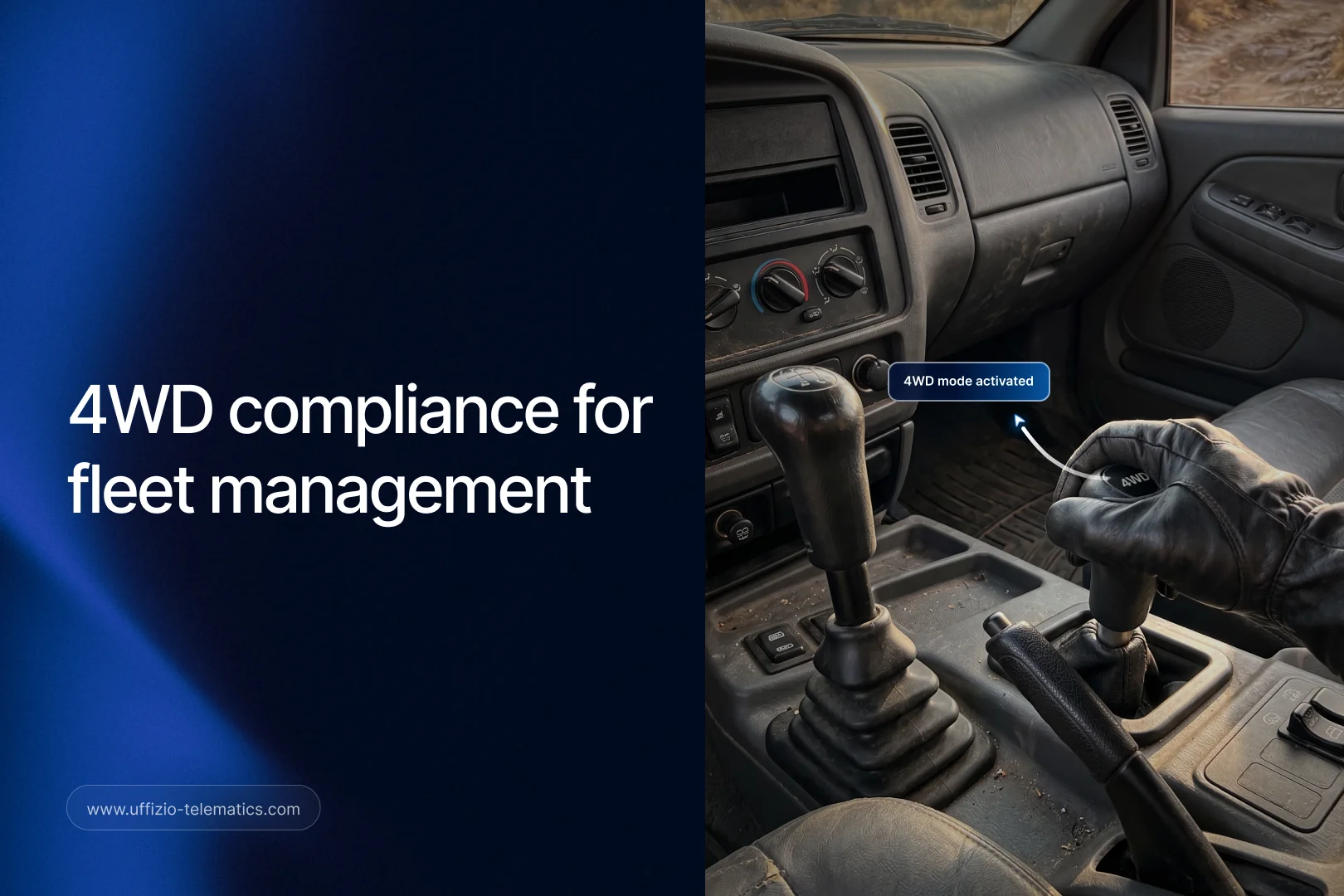
The rule is simple. Engage 4WD before entering the site.
But in a fleet of twenty, fifty, or a hundred vehicles spread across remote mining zones, quarry roads, and plantation tracks how do you actually verify that every driver follows it?
Where 4WD Compliance Actually Matters
Four-wheel drive engagement is not a preference in high-risk environments. It is a safety requirement.
On loose gravel, steep gradients, muddy plantation tracks, and unstable quarry surfaces, a vehicle without 4WD engaged has reduced traction and less control. That increases the risk of rollovers, skids, and accidents in environments where accidents are already costly.
Industries where this matters most:
Mining — Vehicles operating on unpaved haul roads, access tracks, and remote exploration zones must maintain traction at all times.
Quarrying — Steep gradients and loose surfaces demand 4WD for safe vehicle operation throughout the site.
Plantations — Agricultural vehicles working in muddy, uneven terrain particularly in palm oil, rubber, and timber operations require consistent 4WD use.
Construction — Off-road zones on large construction sites carry the same terrain risks as mining and quarry environments.
In all of these settings, 4WD compliance is part of operational policy. The challenge is enforcing it consistently.
The Problem with Manual Verification
Site managers cannot watch every vehicle enter every zone.
In a large fleet, a driver might skip engaging 4WD because it feels unnecessary for a short stretch. Or they forget in the rush of the shift. Or they simply assume the terrain does not require it.
By the time someone notices, the vehicle has already been operating non-compliantly or an incident has already occurred.
Manual checks work for small fleets with direct supervision. For larger fleets operating across wide, remote areas, manual verification is not realistic. It creates gaps. And gaps in safety compliance create risk.
How Trakzee Enforces 4WD Compliance Automatically
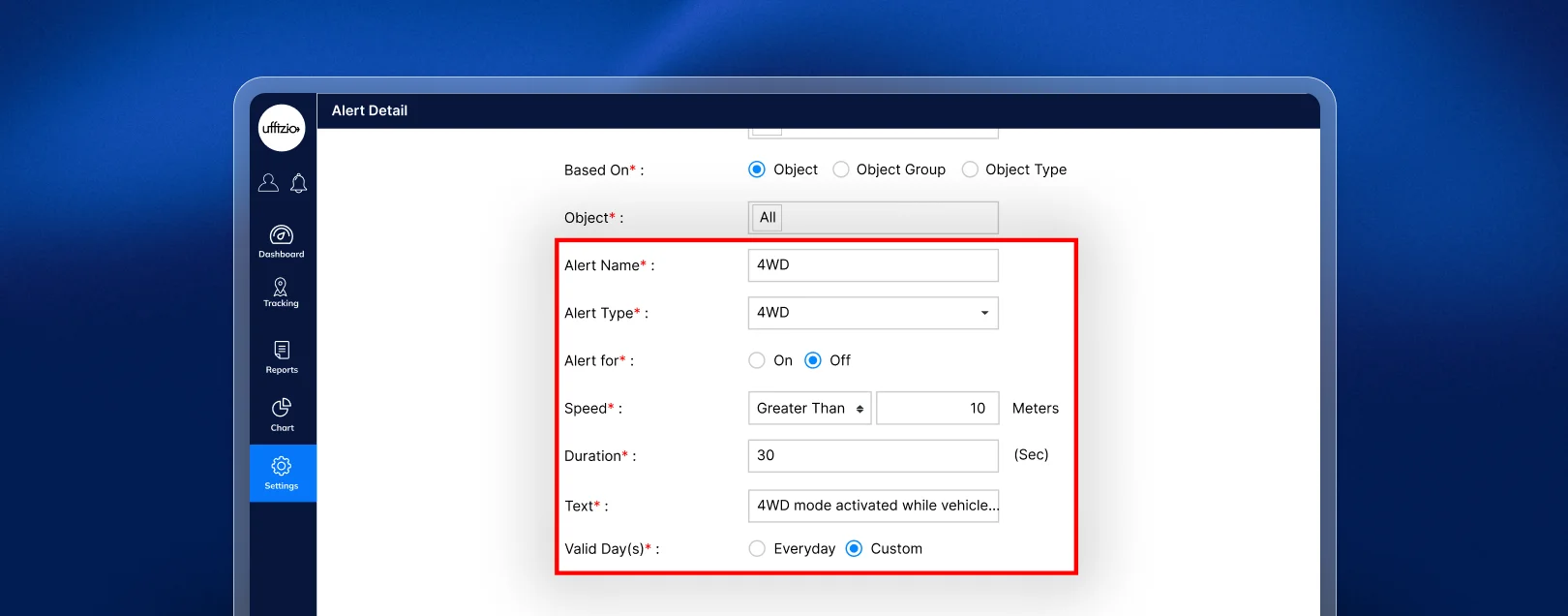
Trakzee now includes a dedicated 4WD compliance alert built specifically for fleets operating in terrain-sensitive zones.
Here is how it works:
Geofenced zones — You define the areas where 4WD engagement is required. These could be specific site entry points, haul roads, or entire operating zones.
Drive mode monitoring — The system monitors whether the vehicle’s 4WD mode is engaged after entering the designated zone.
Configurable alert window — You set a time threshold between 10 and 120 seconds. If 4WD is not engaged within that window, the system triggers an alert.
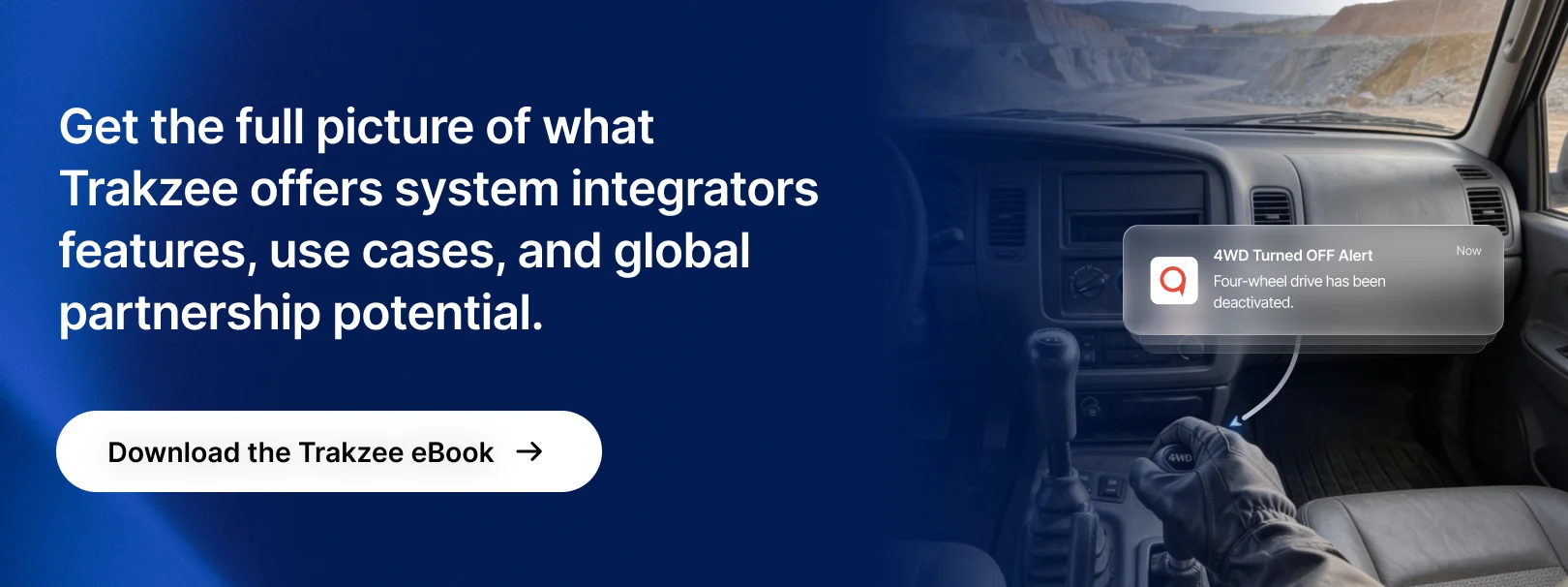
Instant notification — Alerts go out immediately via both web and mobile platforms. The right person is notified without delay.
No manual checking. No relying on driver self-reporting. The system monitors and alerts automatically.
How It Works in Practice
A vehicle enters a designated mining access road. The geofence boundary is crossed. The system starts the timer.
If the driver engages 4WD within the configured window, nothing happens. Compliance confirmed.
If the driver does not engage 4WD within the window, an alert fires. The fleet manager or site supervisor receives a notification instantly on web or mobile and can take corrective action.
The event is logged. The timeline is recorded. If an audit is ever required, the data is there.
Where This Is Already a Real Requirement
4WD compliance is not a theoretical concern. It is an active operational requirement across multiple regions and industries.
Australia — Mining sites in Western Australia, Queensland, and the Northern Territory enforce strict vehicle compliance standards. Major operators require 4WD-capable vehicles to meet site entry requirements. Non-compliance can result in restricted access or site-level penalties.
South Africa — Mining and quarry operations under South Africa’s strict safety framework maintain site-level vehicle policies that include terrain-appropriate drive mode requirements.
Southeast Asia — Plantation fleets in Indonesia, Malaysia, and the Philippines regularly operate across muddy, off-road terrain. 4WD use in these environments is standard operational practice for palm oil, rubber, and timber operations.
Middle East — Large-scale construction and infrastructure projects in Saudi Arabia, UAE, and Oman involve vehicles operating across desert and rough-terrain zones where 4WD is essential for safe operation.
Latin America — Mining operations in Chile, Peru, and Brazil cover extreme terrain. 4WD compliance is embedded in site safety protocols for vehicles operating in remote extraction zones.
For system integrators serving clients in any of these regions or industries, 4WD compliance monitoring is a feature with immediate, real-world relevance.
Why System Integrators Should Lead With This
Most fleet compliance tools cover speeding, harsh braking, and idling. Very few go as specific as drive mode monitoring in designated zones.
That specificity is your advantage.
When you are pitching to a mining company, a quarry operator, or a plantation fleet manager, generic compliance features are expected. A 4WD-specific alert tied to geofenced zones is something they have not seen before and something their safety team will immediately recognize as valuable.
Here is what this capability gives you to work with:
A niche but high-value selling point. Safety compliance in mining and quarrying is heavily scrutinized. A feature that directly addresses drive mode enforcement stands out in a tender or procurement conversation.
Reduced client liability. Automated monitoring creates a documented compliance record. That is valuable when clients face site audits or safety reviews.
Scalable across large fleets. The alert is configurable per zone and per fleet. It scales without adding manual overhead for your client’s operations team.
Cross-vertical applicability. Mining, quarry, construction, plantation the same feature applies across multiple verticals. One integration, multiple client types.
Compliance That Does Not Depend on Memory
The best safety policies are the ones that do not rely on drivers remembering to follow them.
4WD engagement should not be something a fleet manager has to chase. It should be something the system monitors and flags automatically, every time, across every vehicle.
Trakzee’s 4WD compliance alert makes that possible. It closes the gap between a policy written in a site manual and a policy that is actually enforced on the ground.
For system integrators building solutions for high-risk industries, that gap is exactly where your value lives.