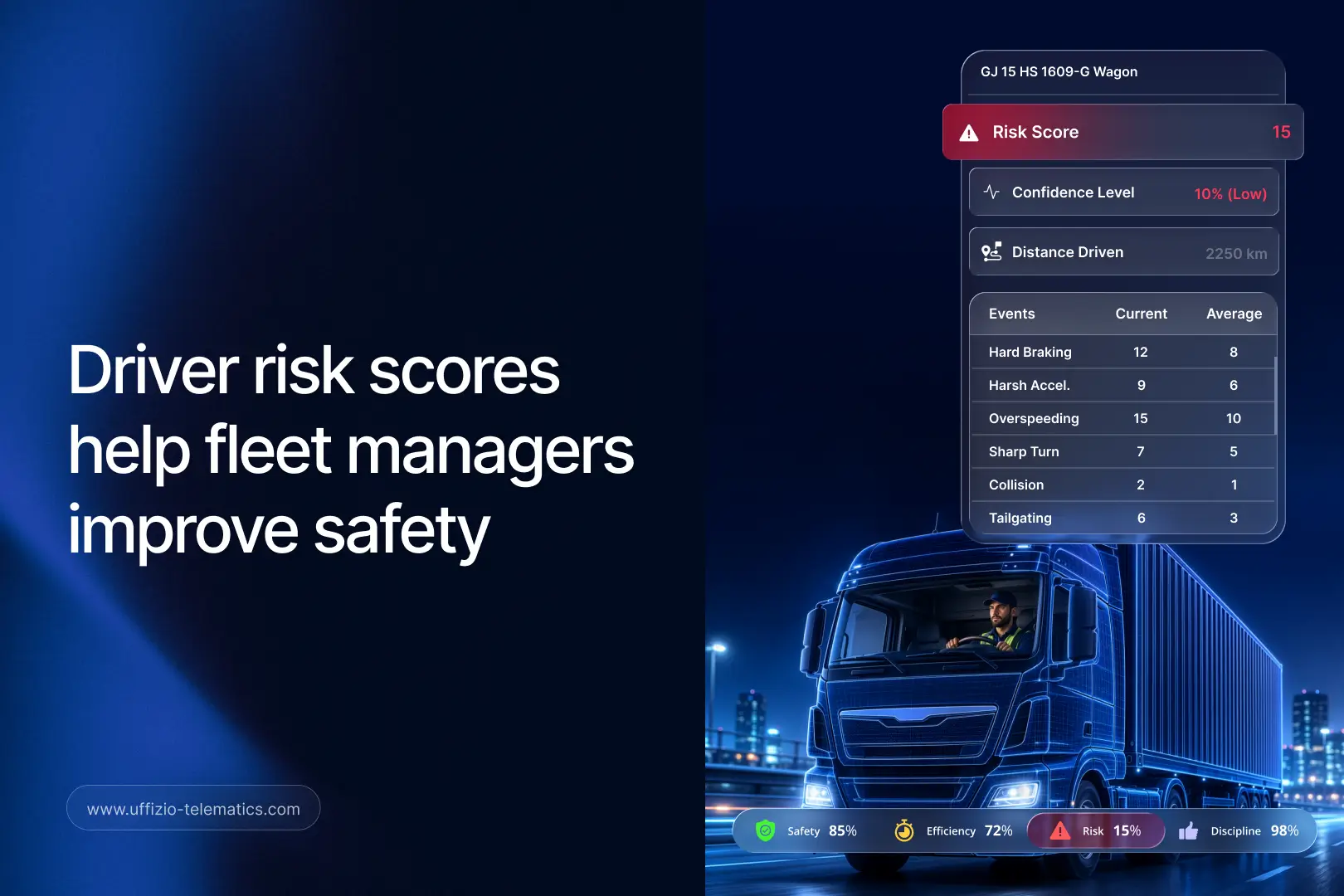
A driver risk score is a single, simple number that sums up how safely a person drives, based on things like harsh braking, speeding, and sharp turns. It helps fleet managers spot risky drivers before an accident happens, instead of finding out after. Uffizio calculates this score automatically from a vehicle’s existing tracking data, so fleet managers get a clear safety picture without any extra effort.
Two drivers cover the same route every day. One arrives smoothly, on time, no drama. The other slams the brakes twice a day and takes turns a little too fast.
For months, nobody notices. Then one day, the second driver is in an accident. The fleet owner is left asking the same question every time: “Could we have seen this coming?”
The honest answer is yes. This blog explains how driver risk scores catch these warning signs early, how Uffizio builds this into its fleet platform, and how you can use this story to help your clients prevent accidents instead of just reacting to them.
What a Driver Risk Score Actually Is
Think of a driver risk score like a report card, but instead of grading homework, it grades driving habits.
It looks at real driving events, like:
- Harsh braking
- Sudden acceleration
- Sharp or unsafe turns
- Speeding beyond set limits
Each of these gets tracked every time a vehicle is on the road. Add them up over time, and you get one simple score that tells a manager how risky a driver’s habits really are.
No manager needs to watch hours of video or read pages of logs. The score does that work for them.
Why This Matters More Than It Seems
Here’s the part most fleet owners don’t think about until it’s too late. Risky driving rarely causes trouble on the first try.
A driver who brakes hard once might just be reacting to traffic. A driver who brakes hard every single day is building toward a bigger problem. The risk isn’t in the one event. It’s in the pattern.
This is exactly why a single risk score matters so much. It turns a pattern that’s invisible day to day into something a manager can actually see and act on.
How Uffizio Turns Driving Data Into a Risk Score
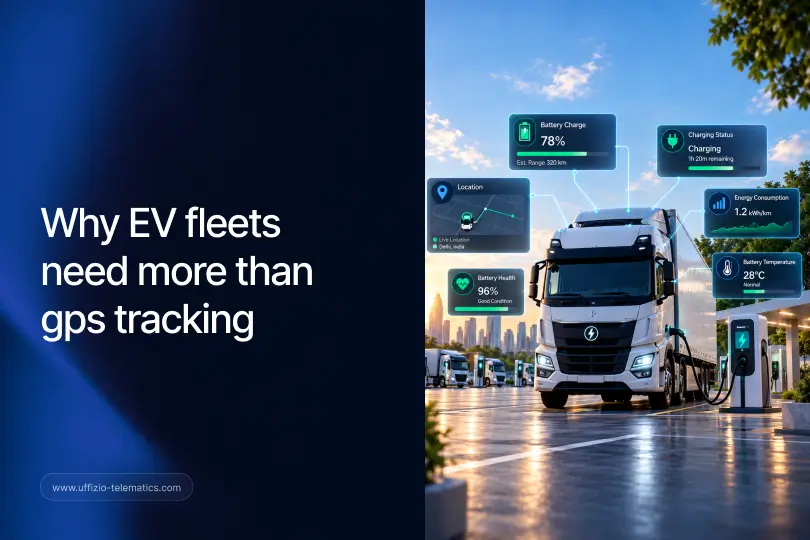
Uffizio’s fleet management platform, including Trakzee, already tracks the driving events that matter, harsh braking, speeding, sudden turns, and more, as part of normal vehicle monitoring.
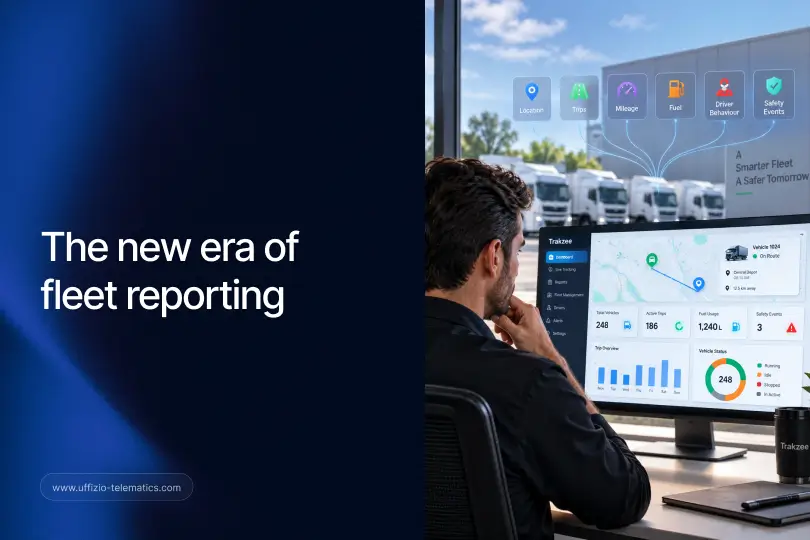
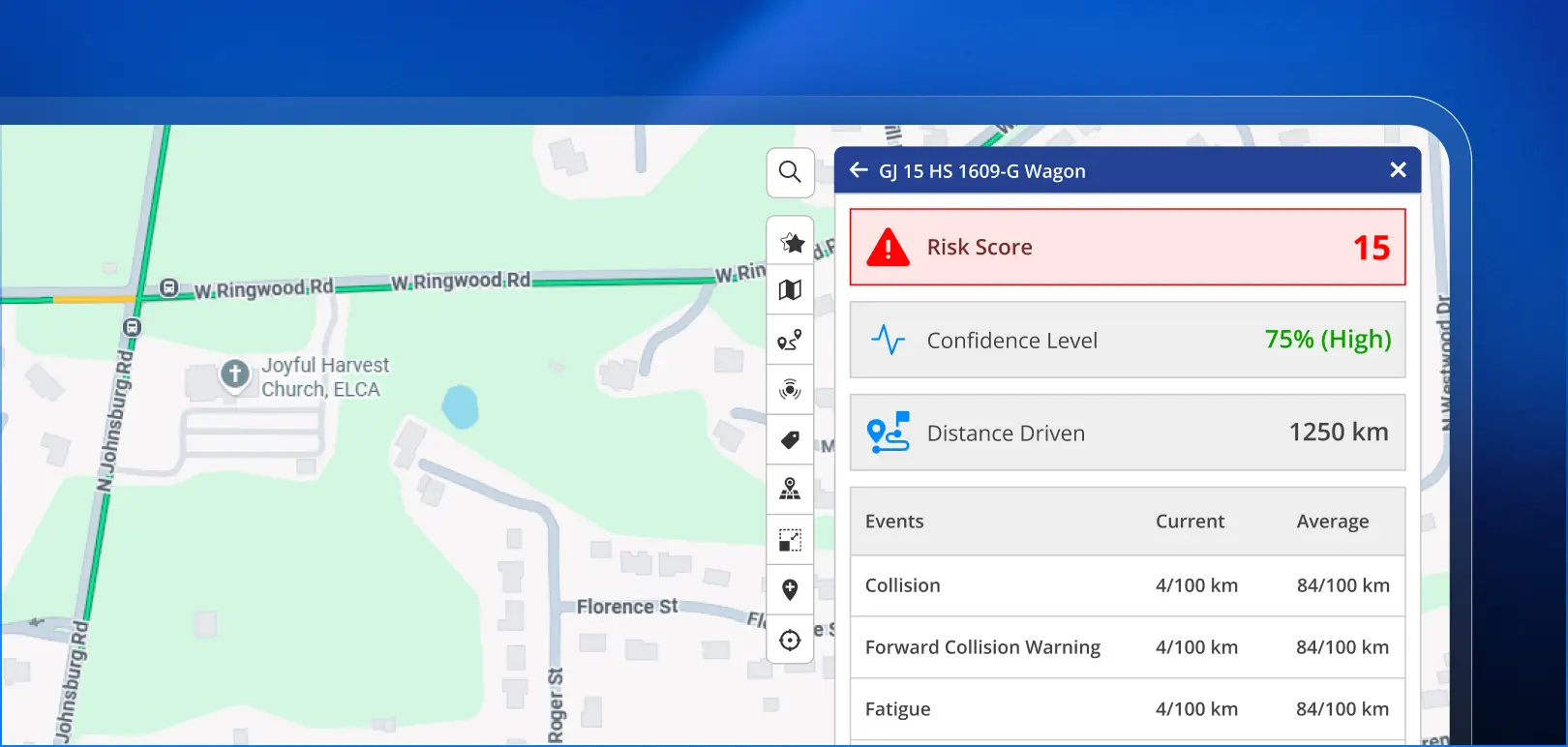
Instead of leaving that data buried in trip logs, Uffizio brings it together into one driver risk score that updates automatically. A manager doesn’t need to hunt for warning signs. Uffizio’s dashboard surfaces the riskiest drivers on its own, so attention goes where it’s needed most.
This is the same idea we talked about with fleet analytics: data a fleet already has, turned into something a manager can actually use.
What Fleet Managers Can Do With a Risk Score
Spot Risky Drivers Before an Accident
A rising risk score is a warning sign, not a punishment. Fleet managers can step in early with coaching or a quiet conversation, long before something serious happens.
Reward Safe Driving
A risk score works both ways. Drivers with consistently low scores are the ones doing everything right, and many fleet owners use this to recognize or reward their safest drivers.
Lower Insurance and Repair Costs
Fewer harsh events on the road usually means fewer accidents, fewer repairs, and in many cases, better insurance terms. Safety pays for itself here.
Build Trust With Clients and Regulators
For fleets working with cities, schools, or logistics clients, being able to show “our drivers are monitored and scored for safety” is a strong trust signal.
Why This Is an Easy Story for You to Tell
Most fleet owners already worry about driver safety. They just don’t have an easy way to measure it.
When you show a client Uffizio’s driver risk score instead of a stack of raw event logs, you’re giving them something they can actually act on. That’s a much stronger pitch than “we track your vehicles.”
It also opens a natural follow-up conversation: “Want to see which of your drivers need coaching this month?” That’s a conversation clients want to keep having, which means a relationship that keeps going after the first sale.
A Simple Way to Bring This Up in a Client Meeting
Ask a fleet owner: “If one of your drivers was quietly building bad habits behind the wheel, would you know before or after the accident?”
Most owners will admit they’d only know after. That’s your opening to show them how Uffizio’s driver risk score catches it before.
Key Takeaway
Risky driving rarely shows up as one big warning sign. It builds slowly, through small habits that are easy to miss. A driver risk score turns those small, invisible patterns into one clear number, and Uffizio calculates it automatically from data a fleet is already collecting. For you, it’s a simple, powerful way to help clients move from reacting to accidents to preventing them.
FAQ
What is a driver risk score?
A driver risk score is a single number that reflects how safely a person drives, based on events like harsh braking, speeding, and sharp turns. Uffizio calculates this automatically from a vehicle’s tracking data.
How is a driver risk score calculated?
It’s built from real driving events recorded during trips, such as sudden braking, fast acceleration, unsafe turns, and speeding. These events are combined into one overall score.
Can a driver risk score actually prevent accidents?
It can’t guarantee prevention, but it flags risky driving patterns early, giving fleet managers a chance to coach drivers before those habits lead to an accident.
Do fleet owners need extra hardware to get a driver risk score?
No. Uffizio calculates the risk score using data already collected by the fleet’s existing tracking system, so no additional hardware is required.
How can a driver risk score help with insurance costs?
Fewer harsh driving events generally mean fewer accidents and less vehicle damage, which can support better insurance terms and lower repair costs over time.