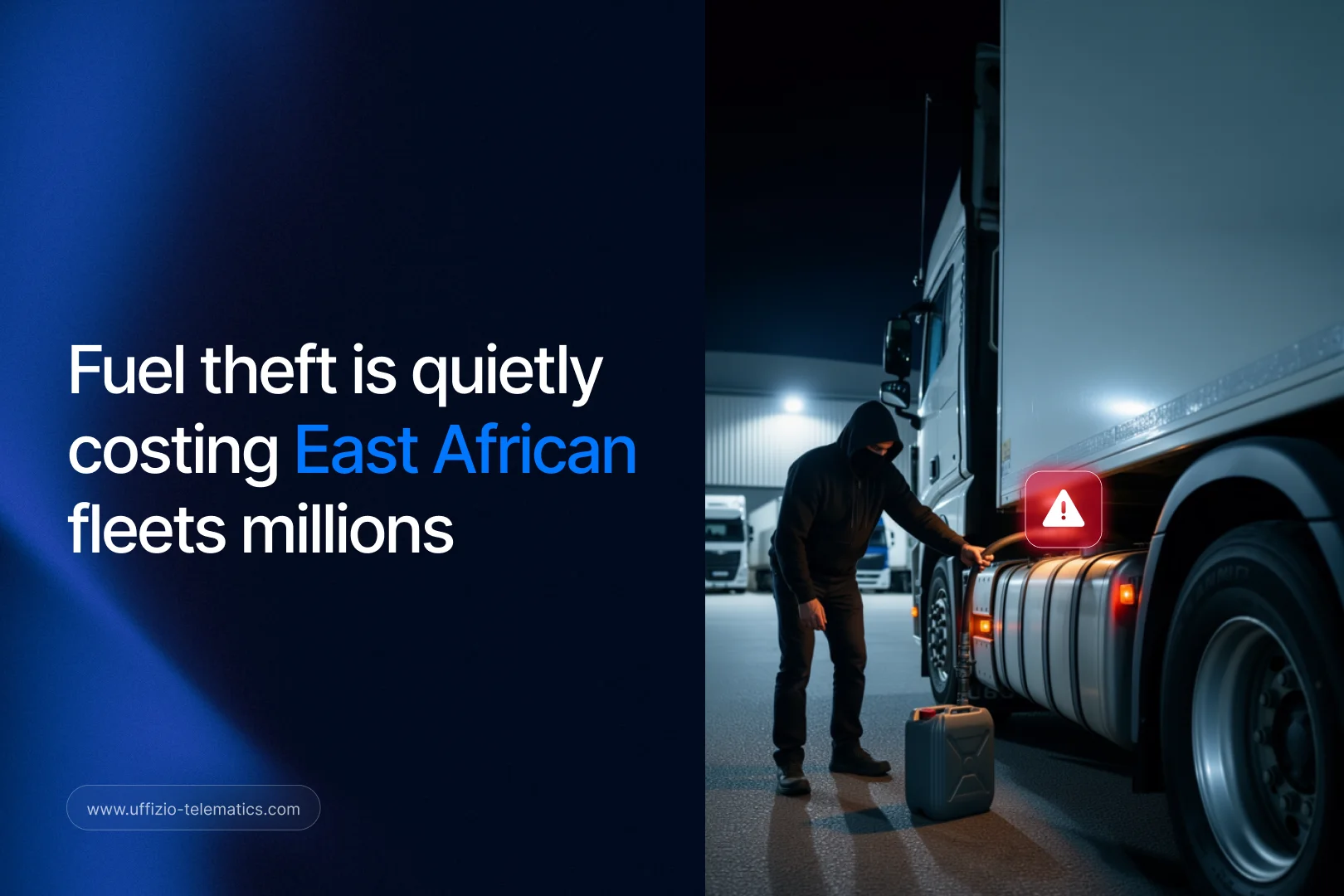
Em toda a África Oriental, o combustível tornou-se uma das maiores despesas operacionais para as empresas com frotas de veículos.
Quer se trate de um camião de logística a viajar entre cidades no Quénia, um veículo de mineração a operar na Tanzânia ou uma frota de construção a trabalhar no Uganda, o combustível afecta directamente a rentabilidade todos os dias.
Agora imagine perder combustível sem sequer se aperceber.
Infelizmente, isto já está a acontecer com muitas empresas de frotas de veículos em toda a África Oriental.
O roubo de combustível, o uso não autorizado de combustível, a drenagem oculta de combustível, o funcionamento excessivo em marcha lenta e o uso indevido de rotas estão a aumentar silenciosamente os custos operacionais para as empresas de transporte e de equipamentos pesados em toda a região.
E o maior desafio?
A maioria das empresas só se apercebe do problema quando os custos com o combustível se tornam excecionalmente elevados.
De acordo com vários relatórios do sector dos transportes e frotas em África, o roubo e o uso indevido de combustível continuam a ser grandes preocupações para os operadores de frotas comerciais. Em setores como a logística, a mineração e a construção civil — onde os veículos operam em rotas remotas e grandes áreas operacionais — a monitorização manual do combustível torna-se extremamente difícil.
É exactamente por isso que a detecção de roubo de combustível na África Oriental está a tornar-se uma prioridade crescente para as empresas de frotas modernas.
Hoje em dia, as empresas já não se limitam a pedir apenas:
“Quanto combustível abastecemos?”
Eles estão a perguntar:
“Para onde foi o combustível, afinal?”
E esta questão está a impulsionar as empresas para sistemas de monitorização de combustível mais inteligentes e soluções de segurança de combustível.
Porque é que o roubo de combustível é um problema grave na África Oriental?
O roubo de combustível nem sempre acontece de forma evidente.
- Por vezes acontece lentamente.
- Alguns litros foram consumidos durante as paragens.
- Abastecimento não autorizado.
- Longos períodos de inatividade.
- Veículos que utilizem rotas desnecessárias.
- Motoristas que operam veículos fora do horário de trabalho.
Individualmente, estes incidentes podem parecer pequenos.
Mas, ao longo de semanas e meses, as perdas tornam-se enormes.
Para as frotas logísticas que operam rotas diárias no leste de África, mesmo pequenas perdas de combustível podem reduzir significativamente as margens de lucro.
As empresas de mineração e construção enfrentam desafios ainda maiores, uma vez que os veículos operam frequentemente em áreas remotas onde a monitorização se torna difícil.
Sem a visibilidade adequada, as empresas têm dificuldade em responder a questões importantes como:
- Por que razão o consumo de combustível está a aumentar?
- Qual o veículo que está a perder combustível?
- O desperdício de combustível deve-se a roubo ou condução ineficiente?
- Os veículos estão a seguir as rotas designadas?
- Deixar o motor ligado ao ralenti aumenta o desperdício de combustível?
É aqui que a prevenção do roubo de combustível em frotas se torna essencial.
A transição do rastreamento manual de combustível para a monitorização inteligente de combustível.
Muitas empresas de gestão de frotas ainda dependem de:
- Registos manuais de combustível
- Relatórios do motorista
- Recibos de combustível
- rastreamento de folha de cálculo
O problema é que os processos manuais raramente oferecem visibilidade em tempo real.
Quando as discrepâncias são descobertas, as perdas já ocorreram.
Os modernos sistemas de monitorização de combustível resolvem este desafio, fornecendo aos operadores de frotas informações em tempo real sobre o consumo de combustível, os níveis de combustível e as atividades suspeitas relacionadas com o combustível.
Em vez de dependerem de suposições, as empresas podem agora tomar decisões utilizando dados de combustível em tempo real.
E para as frotas que operam em longas distâncias na África Oriental, esta visibilidade está a tornar-se extremamente valiosa.
O que é um Sistema de Monitorização de Combustível?
Um sistema de monitorização de combustível ajuda as empresas a acompanhar o consumo de combustível, os níveis de combustível, as atividades de abastecimento e os eventos de esvaziamento de combustível em tempo real.
O sistema utiliza o rastreamento por GPS, tecnologia telemática e sensores de combustível instalados no interior de veículos ou tanques.
Isto permite que os gestores de frota monitorizem:
- padrões de consumo de combustível
- Atividades de reabastecimento de combustível
- Quedas repentinas de combustível
- Drenagem não autorizada de combustível
- Tempo excessivo de ralenti
- Desvios de rota
- Tendências de eficiência de combustível
Em termos simples, as empresas obtêm uma visibilidade total de como o combustível está a ser utilizado em toda a frota.
E a visibilidade é o primeiro passo para a segurança energética.
A deteção de roubo de combustível ajuda as empresas a agir mais rapidamente.
Uma das maiores vantagens das soluções modernas de segurança de combustível é a deteção instantânea.
Imagine um camião estacionado à noite a apresentar, de repente, uma descida brusca do nível de combustível.
Sem um sistema de monitorização, ninguém consegue aperceber-se do problema até ao dia seguinte.
Mas, com os alertas de roubo de combustível e as notificações em tempo real, os gestores de frotas recebem atualizações imediatas sempre que ocorre alguma atividade suspeita relacionada com o combustível.
Isto permite que as empresas:
- Investigue os incidentes rapidamente.
- Reduzir o roubo repetido de combustível
- Melhorar a responsabilização
- Proteger os orçamentos operacionais
A visibilidade em tempo real muda tudo.
A monitorização do nível de combustível reduz as perdas ocultas.
O roubo de combustível nem sempre é dramático.
Por vezes, o combustível desaparece gradualmente devido a pequenos incidentes repetidos.
Por este motivo, a monitorização do nível de combustível é uma das funcionalidades mais importantes para as empresas de frotas na África Oriental.
A monitorização do nível de combustível auxilia os operadores:
- Comparar o abastecimento de combustível com o consumo real.
- Detetar quedas de combustível incomuns
- Identificar o consumo ineficiente de combustível
- Monitorize as tendências de consumo de combustível ao longo do tempo.
Para as empresas de logística que gerem vários veículos diariamente, isto ajuda a reduzir as perdas ocultas de combustível que muitas vezes passam despercebidas.
A deteção de fuga de combustível está a tornar-se essencial.
Em setores como a mineração e a construção civil, os incidentes de drenagem de combustíveis estão a tornar-se cada vez mais comuns.
Os veículos pesados operam frequentemente em locais isolados onde a supervisão é limitada.
Isto cria oportunidades para a extração não autorizada de combustível.
Os sistemas de deteção de consumo excessivo de combustível podem identificar:
- Diminuição repentina de combustível
- Padrões incomuns de remoção de combustível
- Furto de combustível durante o período de estacionamento
- Drenagem de combustível fora dos horários de funcionamento
Em vez de descobrir as perdas mais tarde, as empresas podem responder imediatamente.
E em setores com elevado consumo de combustível, isto pode representar uma poupança de milhares de dólares ao longo do tempo.
O consumo de combustível ao ralenti é outra despesa oculta.
Muitas empresas concentram-se apenas no roubo de combustível, mas ignoram outro problema grave: o funcionamento excessivo do motor ao ralenti.
Os veículos deixados em funcionamento sem necessidade consomem combustível sem gerar produtividade.
Na África Oriental, o funcionamento ocioso é comum durante os seguintes períodos:
- Carregamento e descarregamento
- Longas horas de espera
- Travões do motorista
- congestionamento de trânsito
- operações de estaleiro de obras
Com o tempo, o funcionamento ocioso desnecessário gera um desperdício significativo de combustível.
A análise de dados de combustível ajuda as empresas a compreender:
- Que veículos ficam mais tempo em ralenti?
- Quanto combustível é desperdiçado durante a marcha lenta?
- Que rotas geram maior tempo ocioso?
Isto ajuda os gestores de frotas a melhorar a eficiência do combustível e, ao mesmo tempo, a reduzir os custos operacionais.
Os desvios de rota também aumentam as perdas de combustível.
Quando os veículos se deslocam para rotas fora das rotas designadas, os custos com combustível aumentam naturalmente.
Por vezes, os desvios de rota ocorrem por razões operacionais.
Mas, noutros casos, alterações de rota não autorizadas podem indicar:
- utilização indevida de veículos
- Uso pessoal
- atividades de furto de combustível
- Operações não aprovadas
A monitorização dos desvios de rota ajuda as empresas a manter um melhor controlo operacional.
Combinado com o rastreamento por GPS e a monitorização de combustível, torna-se mais fácil identificar atividades suspeitas precocemente.
A integração do sensor de combustível melhora a precisão.
O controlo manual do consumo de combustível leva frequentemente a relatórios imprecisos.
É por isso que muitas empresas de frotas de veículos na África Oriental estão agora a adoptar a integração de sensores de combustível.
Os sensores de combustível fornecem dados precisos sobre o nível de combustível diretamente dos veículos ou dos tanques de armazenamento.
Isso melhora:
- Precisão da medição de combustível
- fiabilidade na detecção de roubo
- Transparência nos relatórios de combustível
- Visibilidade operacional
Para as empresas de mineração e construção que operam com máquinas caras, são essenciais dados precisos sobre o consumo de combustível.

Porque é que as frotas de logística, mineração e construção necessitam de maior segurança no abastecimento de combustível
Frotas Logísticas
Os veículos de logística percorrem diariamente longas distâncias, o que dificulta a monitorização do combustível sem recurso a tecnologia.
Os sistemas de monitorização de combustível ajudam as empresas de logística:
- Reduzir o roubo de combustível
- Melhorar a visibilidade da viagem
- Monitorar o comportamento do motorista
- Otimizar a eficiência de combustível
Operações de Mineração
As frotas mineiras consomem grandes quantidades de combustível quando operam em locais remotos.
Sem uma monitorização adequada, as perdas de combustível tornam-se difíceis de controlar.
Os sistemas de deteção de roubo de combustível ajudam as empresas de mineração a melhorar a prestação de contas e a transparência operacional.
Frotas de Construção
Os veículos de construção permanecem frequentemente ativos durante longos períodos de funcionamento.
O uso excessivo ao ralenti, a utilização não autorizada e o consumo excessivo de combustível podem aumentar significativamente os custos do projeto.
As soluções de segurança de combustível ajudam as empresas de construção a reduzir as perdas desnecessárias de combustível e a melhorar a utilização dos equipamentos.
Por que isso é importante para integradores de sistemas e revendedores?
A procura por sistemas de monitorização de combustível na África Oriental está a crescer rapidamente.
As empresas estão a procurar ativamente soluções que as possam ajudar:
- Reduzir os gastos com combustível
- Melhorar a visibilidade operacional
- Prevenir roubos
- Otimizar a eficiência da frota
Para os integradores de sistemas e revendedores, isto cria uma forte oportunidade de negócio.
A oferta de soluções de prevenção de roubo de combustível permite aos fornecedores de tecnologia:
- Alargar a oferta de soluções
- Crie receita recorrente
- Entre em setores de elevada procura
- Entregar valor mensurável ao cliente
E como o combustível impacta diretamente a rentabilidade, as empresas estão mais dispostas a investir em soluções que proporcionem poupanças de custos visíveis.
Os problemas reais de frotas exigem visibilidade em tempo real.
Muitos gestores de frotas ainda se baseiam em suposições na gestão de combustível.
Mas as premissas não impedem as perdas de combustível.
A visibilidade em tempo real sim.
Em toda a África Oriental, as empresas já estão a utilizar sistemas de monitorização de combustível para:
- Detete o roubo de combustível mais rapidamente
- Reduzir o uso indevido de combustível
- Melhorar a responsabilização dos condutores
- Monitorize a eficiência do combustível.
- Custos operacionais mais baixos
O resultado não é apenas uma melhor gestão do combustível, mas também um maior controlo operacional.
O futuro da segurança energética na África Oriental
Os preços dos combustíveis continuam a flutuar nos mercados globais e regionais.
Ao mesmo tempo, os custos operacionais estão a aumentar para as empresas de transporte, mineração e construção.
Isto significa que a eficiência e a segurança do combustível se tornarão ainda mais importantes nos próximos anos.
As empresas já não se podem dar ao luxo de gerir o combustível às cegas.
Na África Oriental, os modernos sistemas de detecção de roubo de combustível estão a ajudar as empresas a adoptar operações mais inteligentes e baseadas em dados, onde cada litro de combustível é monitorizado com mais atenção.
Empresas como a Uffizio estão a ajudar os gestores de frotas a melhorar a visibilidade do consumo de combustível através de tecnologias inteligentes de monitorização de frotas, concebidas para os desafios operacionais modernos.
Porque, no final de contas, a segurança do combustível não se resume apenas a prevenir roubos.
Trata-se de proteger a rentabilidade, melhorar a eficiência e construir operações de frota mais inteligentes.
Pronto para melhorar a segurança de combustível em toda a sua frota?
Se os seus clientes procuram reduzir o desperdício de combustível, melhorar a visibilidade operacional e aumentar a eficiência da frota, agora é o momento certo para implementar soluções de monitorização de combustível mais inteligentes.