Role-based access control means giving each person in a fleet system only the access their job needs, nothing more, nothing less. A driver sees their own trips. A dispatcher sees active jobs. An owner sees everything. Uffizio builds this into its fleet platform, so every person logging in sees exactly what they need, and nothing they shouldn’t.
A dispatcher once logged into a fleet system and accidentally changed a setting meant only for the owner. Nothing terrible happened, but it easily could have. Routes got confused for a day, and nobody could figure out why until someone finally checked the settings history.
This is a common story, and it’s completely avoidable. This blog explains what role-based access control actually means, why it matters for fleet software, and how Uffizio uses it to keep things simple and safe for everyone who logs in.
What Role-Based Access Control Actually Means
Let’s define this in plain terms. Role-based access control, often shortened to “RBAC” in technical documents, simply means: different people get different levels of access, based on their job.
Think of it like keys to a building. A driver gets a key to their own vehicle. A dispatcher gets a key to the dispatch office. Only the owner gets the master key to every room. Nobody gets more access than their role actually needs.
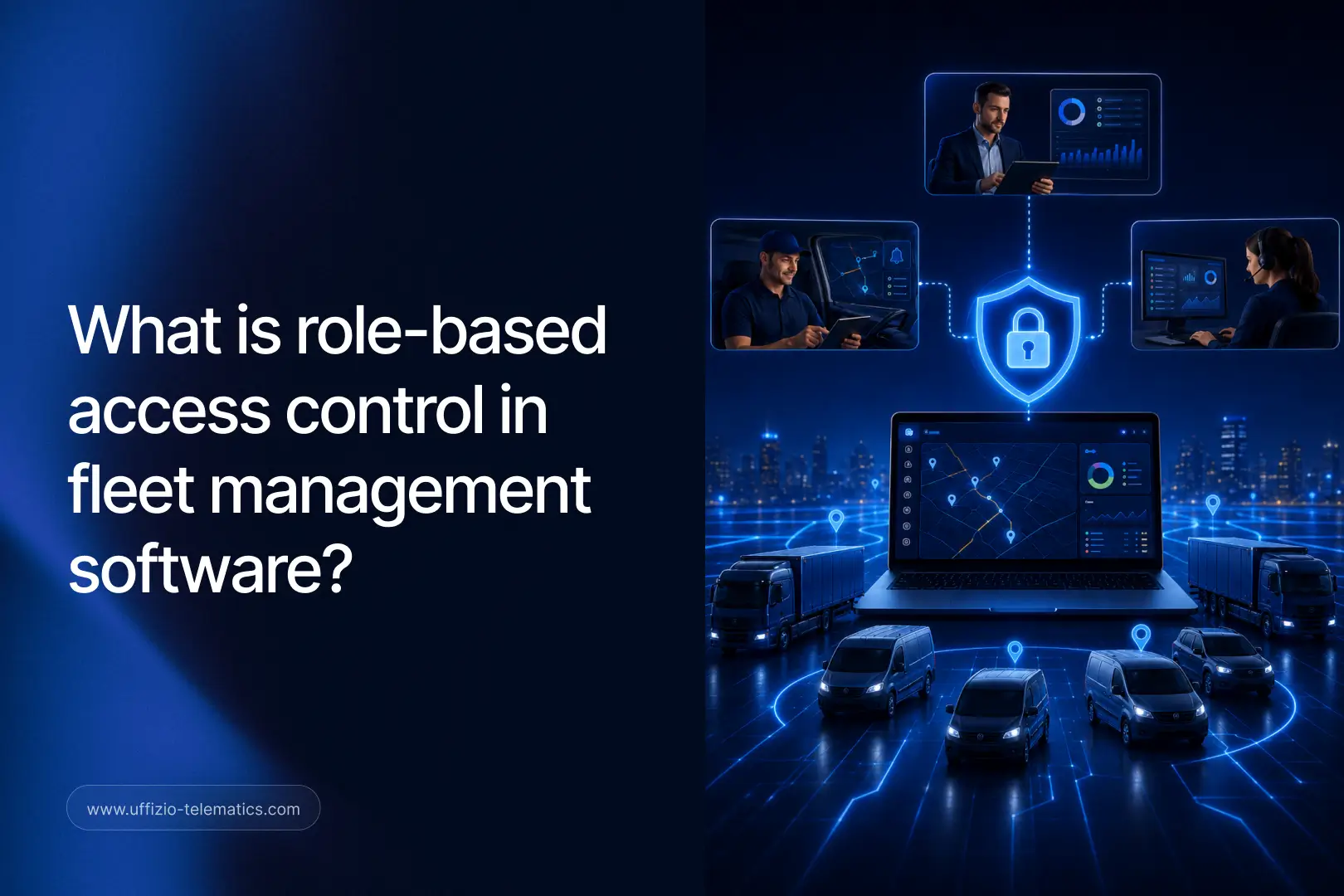
In fleet software, this usually breaks down into a few common roles:
- Drivers: see their own trips, routes, and alerts
- Dispatchers: assign jobs and monitor active vehicles
- Managers: view reports, performance data, and team activity
- Owners or admins: control every setting, user, and system-wide option
Why This Matters More Than People Expect
Here’s the problem it solves. Without proper access levels, everyone logging into a fleet system can see and touch everything, whether they need to or not.
This creates two kinds of trouble. First, accidental mistakes, like a dispatcher changing a setting they didn’t mean to touch. Second, real security risk, since sensitive information like driver personal details or company-wide reports ends up visible to people who never needed to see it.
Fleet businesses working with cities, schools, or regulated clients often face specific requirements around who can see what. Role-based access control isn’t just convenient. It’s often necessary for compliance.
How Uffizio Uses Role-Based Access Control
Uffizio’s platform is built with role-based access control from the ground up, across Trakzee and Smart Waste alike. Each person who logs in, whether a driver, dispatcher, manager, or owner, sees a version of the system shaped around their actual job.
This means a fleet owner doesn’t need to worry about a new dispatcher accidentally seeing financial reports, or a driver stumbling into settings meant for admins. Uffizio handles that separation automatically, based on the role assigned.

What This Means for Fleet Clients Day to Day
Fewer Accidental Mistakes
When people only see what their role needs, there’s simply less room to accidentally change or break something important.
Better Data Privacy
Sensitive information, like driver personal details or company financials, stays visible only to the people who actually need it.
Easier Onboarding for New Staff
New hires can be given the right role from day one, without a manager needing to manually decide what they should or shouldn’t see every time.
Stronger Compliance Standing
For fleets working with regulated clients, being able to show that access is properly controlled by role is often a real requirement, not just a nice-to-have.
Why This Is a Useful Story for You to Tell
Most fleet owners have never thought about access control until something goes wrong. That makes this a great topic to bring up proactively, before a mistake happens rather than after.
When you explain role-based access control simply, using the “different keys for different people” idea, and then show how Uffizio handles it automatically, you’re offering peace of mind that’s easy to understand and easy to say yes to.
A Simple Way to Bring This Up in a Client Meeting
Ask a fleet owner: “Right now, if a new dispatcher logged in, could they accidentally see or change something they shouldn’t?”
Many owners haven’t actually checked. That’s your opening to explain how Uffizio’s role-based access keeps everyone in their own lane, automatically.
Key Takeaway
Role-based access control simply means giving each person the access their job actually needs, nothing more. Uffizio builds this into its fleet platform automatically, so drivers, dispatchers, managers, and owners each see exactly what’s relevant to them. For you, it’s a simple, easy-to-explain feature that addresses a risk most fleet owners haven’t even thought to ask about yet.
FAQ
What is role-based access control in fleet management software?
It’s a system that gives each person only the access their job needs, such as a driver seeing their own trips or an owner seeing everything. Uffizio builds this in automatically across its platform.
What roles are typically set up in fleet software?
Common roles include drivers, dispatchers, managers, and owners or admins, each with a different level of access matched to their responsibilities.
Why does role-based access control matter for fleet businesses?
It reduces accidental mistakes, protects sensitive data like driver details and financial reports, and often supports compliance requirements for regulated clients.
Does setting up role-based access control take a lot of technical work?
No. In Uffizio’s platform, roles are assigned during setup, and the system handles what each person sees automatically from there.
Can access levels be changed later if someone’s role changes?
Yes. Roles and permissions can be updated whenever a person’s responsibilities change, without needing to rebuild the whole account.