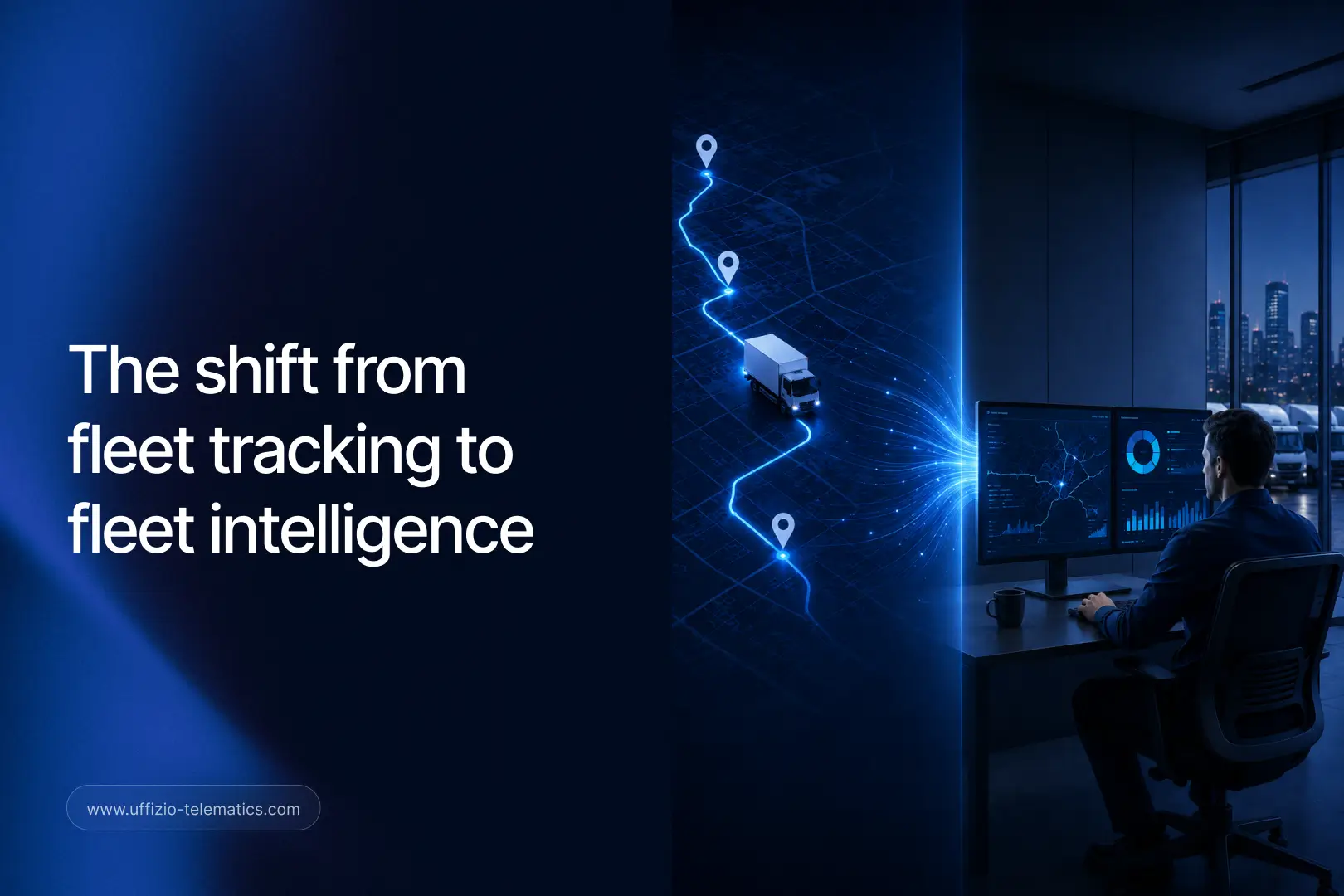
Fleet intelligence is the next stage after fleet tracking and fleet analytics. It’s not just knowing where a vehicle is, or even having charts about what happened. It’s a system that combines location, driving behaviour, EV data, and safety patterns to actively flag risks and support decisions before problems happen. Uffizio is building its platform around this exact idea, connecting tracking, analytics, and prediction into one system instead of three separate tools.
Every industry goes through the same three stages. First, you just want to see what’s happening. Then, you want to understand it. Eventually, you want the system to help you act on it, sometimes before you even ask.
Fleet management is right in the middle of that journey. Tracking told fleet owners where their vehicles were. Analytics told them what happened and why. Now, the next stage is starting to take shape: a system that connects all of it and starts working alongside the fleet manager, not just reporting to them.
This blog walks through that shift, why it’s happening now, and how Uffizio is building toward it.
Stage One: Fleet Tracking
Fleet tracking is where most fleet technology started, and it’s still the foundation. It answers one simple question: where is this vehicle right now?
For a long time, that alone was impressive. Today, it’s simply expected. We covered this shift in detail in why fleet analytics is becoming more important than basic GPS tracking, but the short version is this: location tracking is now a baseline feature, not a competitive advantage.
Stage Two: Fleet Analytics
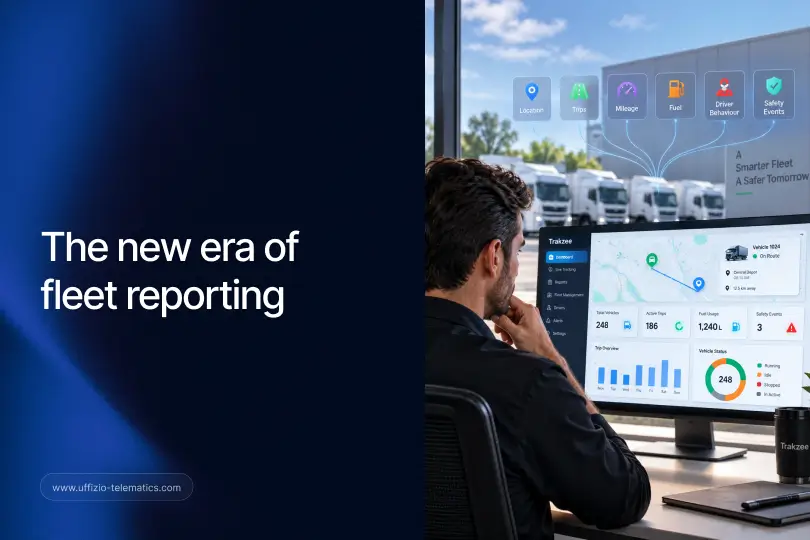
Fleet analytics is the second stage, and it’s where a lot of fleets are today. Instead of just seeing a vehicle on a map, managers get charts and trends: which routes are inefficient, which vehicles cost too much to run, which weeks had the most missed jobs.
This stage answers “what happened, and why.” It’s a big step up from tracking alone, but it still mostly looks backward. Analytics explains the past. It doesn’t yet act on the future.
Stage Three: Fleet Intelligence
This is where things are heading now, and where Uffizio is actively building. Fleet intelligence takes everything from tracking and analytics, and adds a forward-looking layer: spotting patterns early, flagging risk before it becomes a real problem, and connecting different types of data that used to live separately.
A few examples of what this looks like in practice:
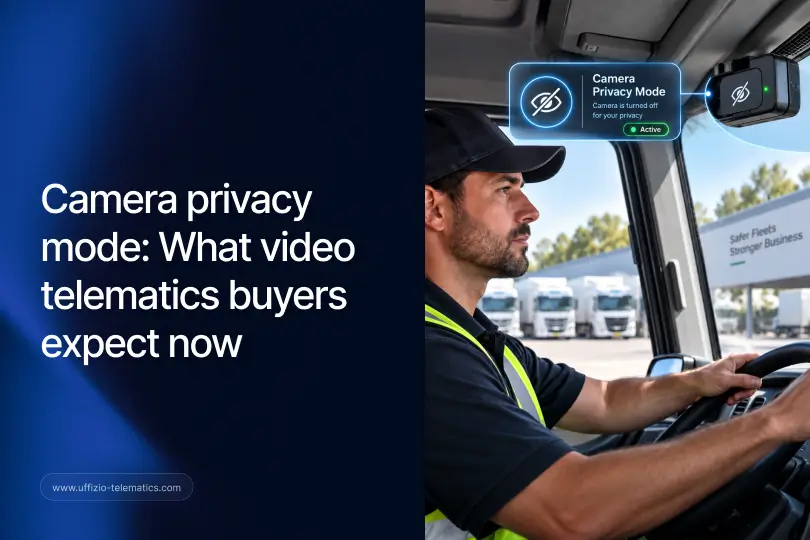
- Driver risk scoring, which turns ongoing driving behaviour into an early warning system rather than an after-the-fact report. We covered this in detail in how driver risk scores help fleet managers improve safety.
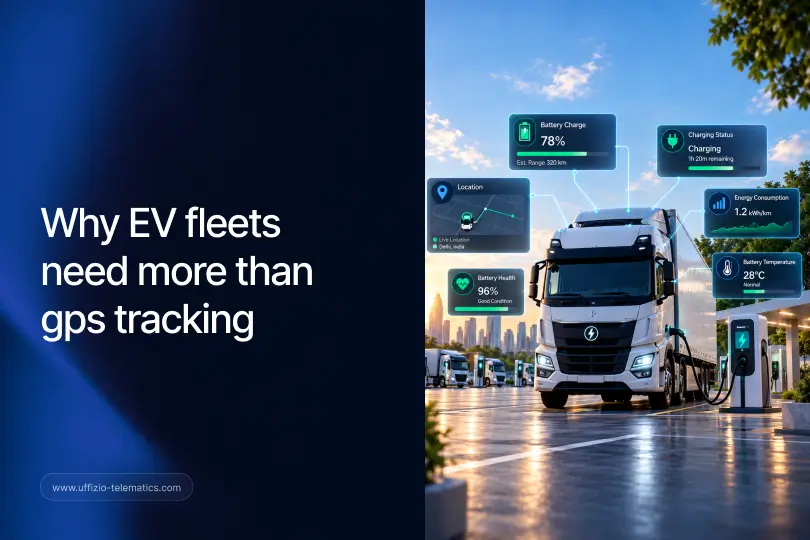
- EV fleet intelligence, which combines battery health, charging patterns, and route data so fleet owners understand their electric vehicles instead of just watching a battery icon. See what is EV fleet intelligence for the full picture.
- Behaviour-driven safety programs, where ongoing driving data feeds coaching, training, and recognition instead of sitting in a report nobody reads.
None of these are just “dashboards with more charts.” They’re systems that connect information and point managers toward action, before something goes wrong rather than after.
Why This Shift Is Happening Now
A few things are pushing this forward at the same time. Fleets are getting more complex, with electric vehicles, mixed vehicle types, and larger operations than before. Manual review of every report simply doesn’t scale anymore.
At the same time, the data fleets generate has grown far beyond what any manager can review manually. The only way to use it well is to have a system that connects it and surfaces what matters, instead of leaving a person to dig through everything themselves.
What This Means for You as an Integrator
This shift gives you a much bigger story to tell than “we track your vehicles” or even “we show you reports.” You can walk a client through where the industry is heading, and show them a platform, Uffizio, that’s already built for where things are going instead of where things used to be.
It also means client relationships get deeper. A client who adopts fleet intelligence isn’t just buying a tracking tool. They’re building an ongoing system that grows more useful over time, which naturally supports longer, stickier client relationships for you.

A Simple Way to Bring This Up in a Client Meeting
Ask a fleet owner: “Right now, does your system just show you information, or does it actually help you catch problems before they happen?”
Most fleets are still stuck at “just shows information.” That’s your opening to introduce fleet intelligence, and Uffizio’s approach to it, as the next step forward.
Key Takeaway
Fleet tracking told owners where their vehicles were. Fleet analytics told them what happened and why. Fleet intelligence, the stage Uffizio is building toward, connects tracking, analytics, driver behaviour, and EV data into one system that helps managers catch problems early instead of just reading about them later. For you, this bigger story is a strong way to position Uffizio as ahead of where the market is heading.
FAQ
What is fleet intelligence?
Fleet intelligence is the stage after fleet tracking and fleet analytics. It combines location, driving behaviour, EV data, and safety patterns into one system that helps flag risks and support decisions before problems happen. Uffizio builds its platform around this idea.
How is fleet intelligence different from fleet analytics?
Fleet analytics mainly explains what already happened, using charts and reports. Fleet intelligence adds a forward-looking layer, connecting different data types to flag risks early and support decisions, not just explain the past.
Is fleet intelligence only relevant for large fleets?
No. Any fleet generating tracking, behaviour, or EV data can benefit, since fleet intelligence is about connecting and acting on data a fleet already has, regardless of size.
Does Uffizio offer fleet intelligence as a separate product?
Fleet intelligence is built into Uffizio’s platform as a connected approach, rather than a separate add-on, bringing tracking, analytics, driver behaviour, and EV data together in one system.
Why should system integrators care about this shift?
It gives integrators a bigger, more forward-looking story to tell clients, moving conversations beyond basic tracking toward long-term, higher-value relationships built around Uffizio’s fleet intelligence approach.