Fleet analytics turns a fleet’s existing tracking data, like location, trips, fuel, and idle time, into simple charts and trends. This helps managers spot problems early, compare vehicles and routes fairly, and prove results to their boss or client, without digging through raw reports. Uffizio builds this directly into its fleet management platform, so managers get these insights without needing a separate analytics tool.
A fleet manager once told us he could see every vehicle on a map, all day long. But when his boss asked “why did fuel costs jump this month?”, he had no answer.
That’s the gap a lot of fleet owners live in. They have data: location, trips, fuel, idle time. What they don’t have is a clear way to turn that data into a decision.
This is where fleet analytics comes in, and it’s one of the easiest value stories you can tell a client. This blog breaks down what fleet analytics actually does, how Uffizio approaches it, and how you can use it to win more conversations with fleet owners.
What Fleet Analytics Really Means
Fleet analytics means taking the data a tracking system already collects, and turning it into charts, trends, and summaries a manager can actually use.
Instead of scrolling through raw trip logs, a manager sees a chart showing which vehicles are idling too much. Instead of guessing why a route takes longer some days, they see a pattern by day of the week.
It’s not about collecting more data. Most fleets already have enough. It’s about making that data easy to read and easy to act on. Uffizio’s fleet management platform builds this thinking into its dashboards, so the data a fleet already generates gets turned into decisions, not just numbers on a screen.
The Problem With Data Nobody Looks At
Here’s a pattern we see often. A fleet owner installs a tracking system, gets excited for a month, and then stops checking it.
Why? Because raw reports are tiring to read. Rows and rows of numbers don’t tell a story. Without a story, there’s no reason to open the report every day.
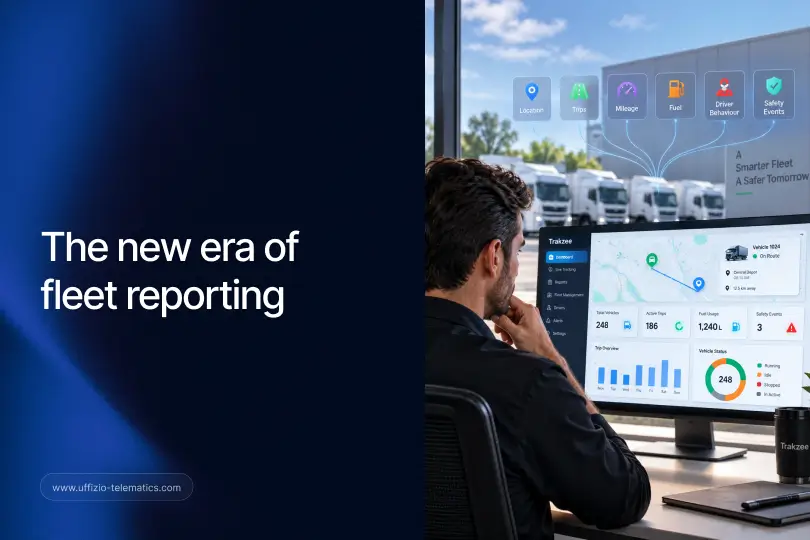
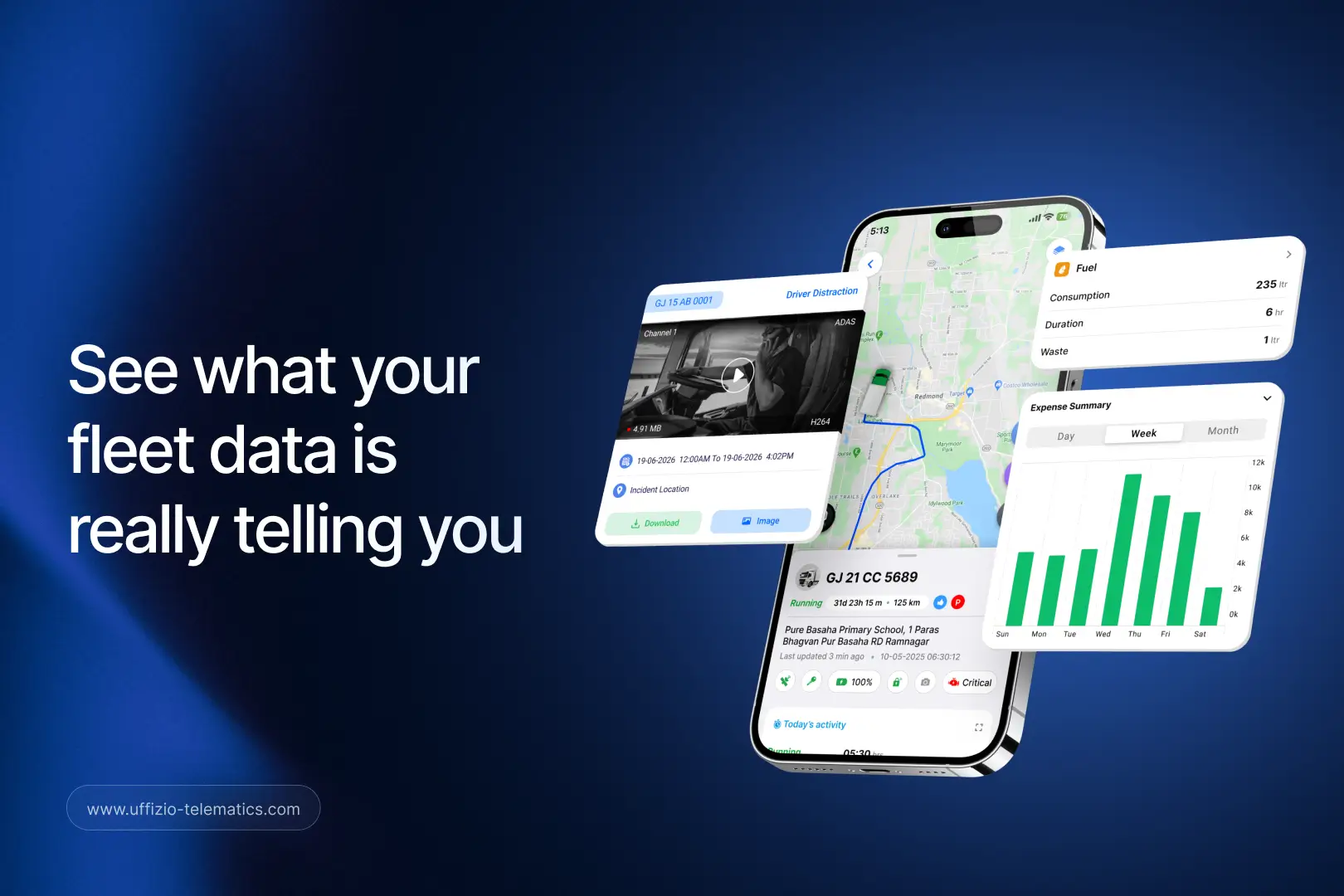
This is exactly the problem analytics solves. A chart showing job completion trends over the last 30 days tells a story in one glance. A manager doesn’t need to dig. They just need to look. This is why Uffizio designs its reporting around charts and dashboards first, with the detailed data available underneath for anyone who wants to dig deeper.
Three Ways Analytics Changes Day-to-Day Decisions
Spotting Problems Before They Grow
A single missed trip doesn’t look like much on its own. But a chart showing missed trips rising over three weeks is a clear warning sign.
Analytics helps managers catch small problems early, before they turn into client complaints or lost contracts.
Comparing Performance Across Vehicles or Routes
Which vehicle costs the most to run? Which route takes longer than it should? Without analytics, these are guesses. With analytics, they’re answers backed by real numbers.
This kind of comparison helps managers make fair, confident calls, like which vehicle to retire or which route to redesign.
Proving Results to Bosses and Clients
Fleet managers often answer to someone else: a business owner, a city official, or a client. Charts and summary numbers make it easy to show progress without a long explanation.
A simple chart saying “efficiency improved from 78% to 89% this month” does more than a paragraph ever could.
How Uffizio Builds Analytics Into Fleet Management
Uffizio’s platform, including Trakzee for vehicle fleets and Smart Waste for municipal collection, includes ready-made charts and dashboards for the questions managers ask most often: job completion trends, missed trip patterns, and vehicle-wise performance comparisons.
The goal behind Uffizio’s approach is simple: a manager should be able to open a dashboard and understand what happened, without needing to be a data expert. That’s the same story you can carry into a client meeting.
Why This Matters for You as an Integrator
Here’s the honest truth: most fleet owners don’t ask for “analytics” by name. They ask questions like “why does this keep happening?” or “how do I know if this is actually working?”
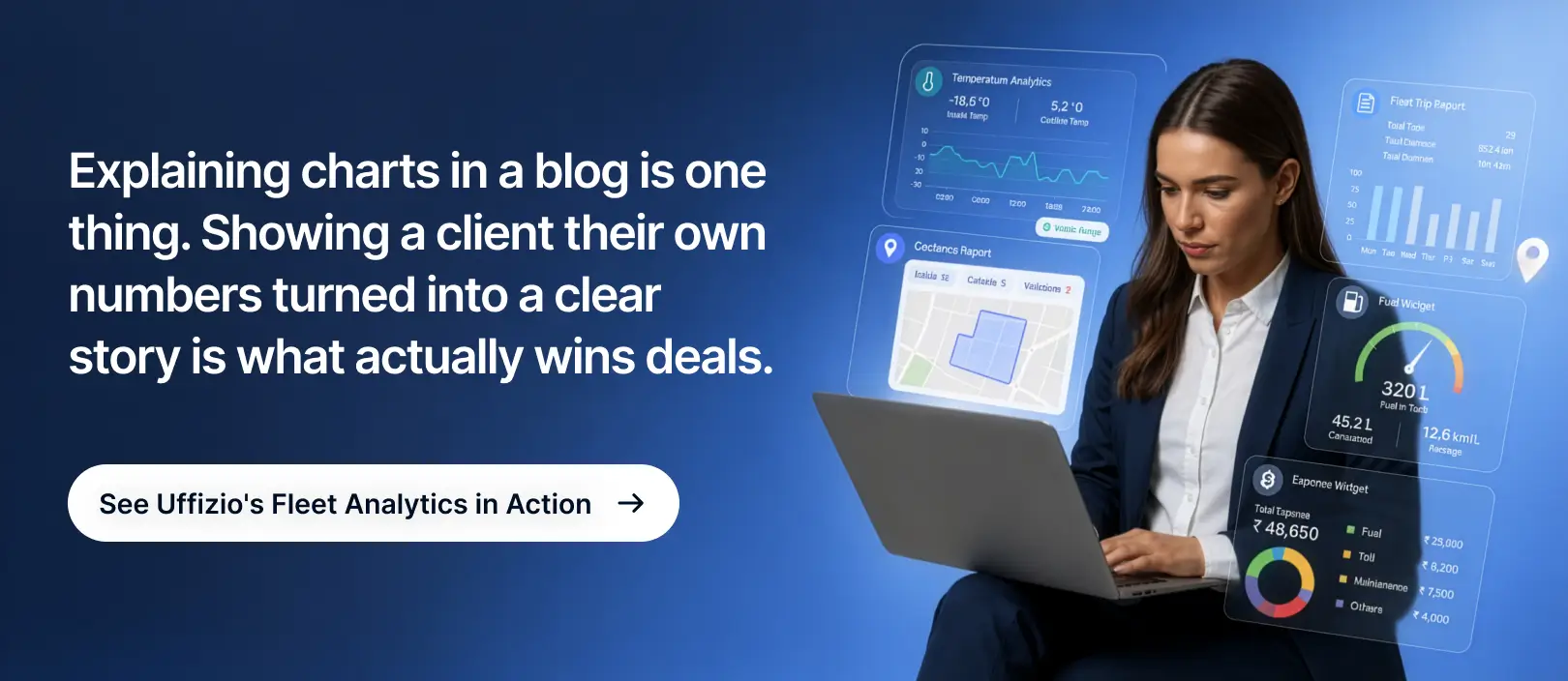
Analytics is your answer to both. When you show a client a simple chart from Uffizio’s dashboard instead of a raw report, you’re not just selling software. You’re selling clarity.
This also gives you a natural way to stay in touch with clients after the sale. Regular check-ins built around “let’s look at your numbers this month” keep the relationship alive and open the door to upsells.
A Simple Way to Bring This Up in a Client Meeting
Skip the word “analytics” if the client seems unfamiliar with it. Instead, ask: “Right now, if I asked you which vehicle costs you the most to run, could you answer in ten seconds?”
Most can’t. That’s your opening to show them a chart, powered by Uffizio, that answers it instantly.
Key Takeaway
Fleet owners don’t need more data. They need a clear way to understand the data they already have. Uffizio’s fleet analytics turns raw numbers into simple charts and trends that help managers catch problems early, compare performance fairly, and prove results to whoever they answer to. For you, it’s a strong, easy story to tell in almost any fleet client conversation.

FAQ
What is fleet analytics?
Fleet analytics is the use of a fleet’s existing tracking data, like location, trips, fuel, and idle time, turned into charts and summaries that are easy to read and act on. Uffizio’s fleet management platform includes this as a built-in feature, not a separate add-on.
How is fleet analytics different from regular tracking reports?
Regular reports show raw data in rows and numbers. Analytics turns that same data into visual trends and comparisons, making it faster to understand and easier to act on.
Do fleet owners need to collect new data to use analytics?
No. Most fleets already collect enough data through their tracking system. Analytics simply organizes and presents that data in a clearer way. Uffizio uses the data a fleet is already generating to build its dashboards.
How can fleet analytics help retain clients after the sale?
Regular check-ins built around reviewing performance charts keep the relationship active, show ongoing value, and create natural opportunities to offer additional features.
What’s a simple way to explain fleet analytics to a client who isn’t familiar with the term?
Ask them a direct question, like whether they could quickly identify their most expensive vehicle to run. Their answer usually shows the value instantly, and a quick look at Uffizio’s dashboard gives them that answer on the spot.