Once considered an optional feature, GPS tracking system has now emerged as a global standard and in many cases, a legal requirement. Governments around the world are enforcing new laws that mandate GPS tracking for commercial, public, and sensitive-use vehicles.
This shift is driven by the need to improve road safety, enhance regulatory oversight, reduce operational inefficiencies, and protect assets. And it’s not limited to one region or sector — industries across logistics, construction, public transport, and hazardous goods are already seeing the value and necessity of GPS tracking software in their daily operations.
This guide breaks down where these mandates apply, what they require, and how to position compliance as a reason for your customers to buy not just a box to check.
Why governments are mandating GPS tracking
Four forces are driving this shift. Each one gives you a different angle to sell with.
- Road safety enforcement. Authorities track vehicle speed, route compliance, and incidents in real time. Sell this as risk reduction for your customer’s fleet.
- Regulatory compliance. Governments need accurate data for audits, tax checks, and work-hour rules. Sell this as audit-readiness.
- Theft and misuse prevention. Real-time visibility and immobilization stop unauthorized use. Sell this as asset protection.
- Environmental reporting. Fuel use, idling, and emissions tracking support sustainability rules. Sell this as ESG compliance, a growing ask from enterprise fleet buyers.
Each of these is a conversation starter with a different type of customer. Use whichever one matches the deal in front of you.
GPS tracking regulations by country
Here’s what your customers are required to do, market by market. Use this table in proposals to show you understand their specific compliance burden.
| Country / Region | Regulation | What It Requires | Who It Affects |
|---|---|---|---|
| India | AIS 140 | GPS device with panic button and cloud connectivity | School buses, taxis, emergency vehicles, public transport |
| USA | FMCSA ELD Mandate | Electronic Logging Devices to record driving hours digitally | Commercial motor carriers |
| UAE | School Transport Mandate | GPS tracking with real-time access for parents and authorities | School transportation providers |
| Indonesia | Smart Taxation & Fleet Monitoring | GPS tracking linked to route permits and e-taxation systems | Logistics fleets |
| European Union | Digital Tachograph + GPS | GPS-enabled tachographs to enforce driver work-hour limits | Cross-border commercial fleets |
 Industry use cases: Who’s benefiting from GPS tracking?
1. Logistics and supply chain
- Real-time vehicle monitoring across regions
- Route optimization based on traffic and delivery time
- Load security and fleet coordination
Result: On-time deliveries, lower fuel usage, and complete shipment visibility.
2. Public transport & School fleets
- Live tracking of buses and schedules
- Geofencing for sensitive pick-up and drop zones
- Panic button alerts and compliance with safety mandates
Result: Safer, trackable transit for passengers and regulatory adherence.
3. Construction and Heavy equipment
- Monitoring asset movement on remote sites
- Preventing theft of equipment and fuel
- Scheduling usage hours for optimized deployment
Result: Higher equipment utilization, lower downtime, and theft prevention.
4. Waste management
- Verifying task completion with route and bin-level tracking
- Reducing fuel waste with optimized collection routes
- Real-time alerts for skipped or missed service points
Result: Efficient city-wide coverage and accountability for municipal contracts.
5. Oil, Gas, and Hazardous Goods Transport
- Real-time alerts for route deviations or unauthorized stops
- Monitoring sensitive cargo with temperature or pressure sensors
- Emergency support integration with control centers
Result: Increased safety and regulatory compliance for high-risk cargo.
Key features of modern GPS tracking system
GPS tracking system has evolved into a complete operational platform that supports every aspect of fleet management. It’s no longer limited to just tracking vehicle location — it’s about creating a smart ecosystem that simplifies monitoring, enhances safety, improves efficiency, and ensures compliance with regulatory standards. From real-time tracking to detailed reports and specialized modules, each feature plays a critical role in making fleet operations more streamlined, responsive, and data-driven.
1. Live Tracking
Live tracking is the heart of any GPS tracking solution. It allows fleet operators to monitor the exact location of every vehicle in real time, ensuring complete visibility across routes and trip progress. This feature not only helps in improving response times but also provides crucial information like vehicle status, speed, movement history, and stoppages — making it easier for businesses to manage on-road assets with precision.
2. Interactive dashboards
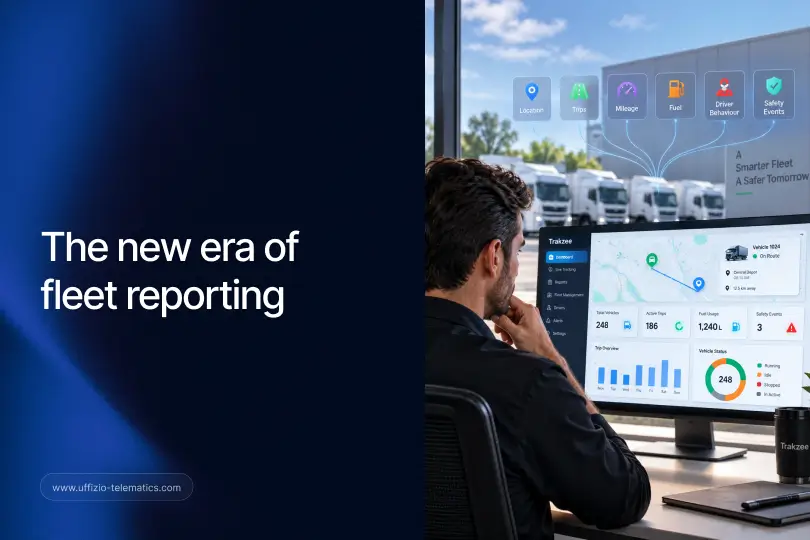
Dashboards act as the control center of fleet management software. They bring together all critical information on a single screen, allowing operators to have a quick overview of fleet activities. From real-time vehicle status, trip summaries, and driving behavior insights to pending tasks and upcoming service schedules — dashboards help in faster decision-making and keep day-to-day operations organized and transparent.
3. Alerts and Notifications
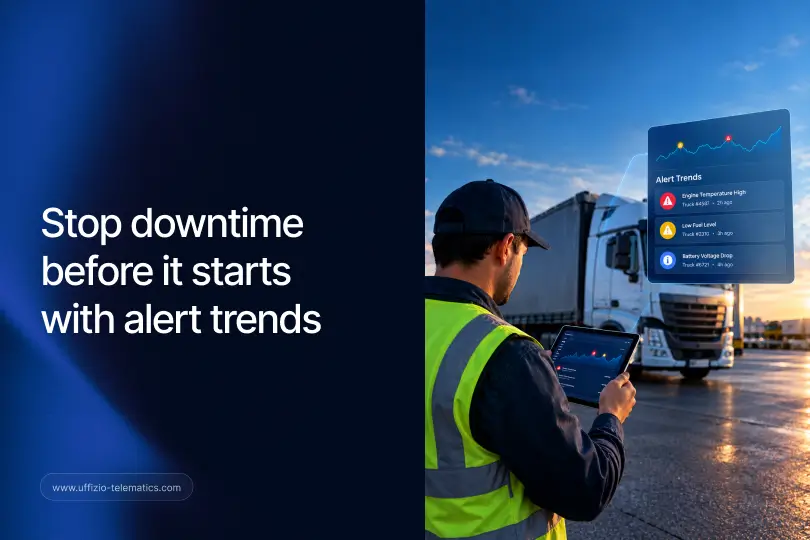
Real-time alerts are essential for ensuring operational safety and control. The software allows users to configure alerts for various scenarios like over-speeding, harsh braking, unauthorized vehicle usage, fuel theft, or vehicle entering/exiting geofenced areas. These alerts ensure that fleet managers are instantly notified about any irregular activity, enabling proactive measures to avoid risks and operational disruptions.
4. Reports and Charts
Reports and charts offer an analytical view of fleet performance and resource utilization. Operators can generate detailed reports on trips, fuel consumption, vehicle utilization, maintenance schedules, driver performance, and compliance status. These reports provide actionable insights and historical data analysis that help in auditing, regulatory compliance, and strategic planning for long-term operational improvement.
5. Fuel monitoring
Fuel monitoring has become a crucial module for fleets looking to reduce operational costs. The system tracks real-time fuel levels, records refueling or drainage activities, detects sudden drops indicating theft, and analyzes consumption patterns. With accurate fuel data available, operators can control wastage, prevent fraud, and ensure fuel efficiency across all vehicles.

6. Video telematics
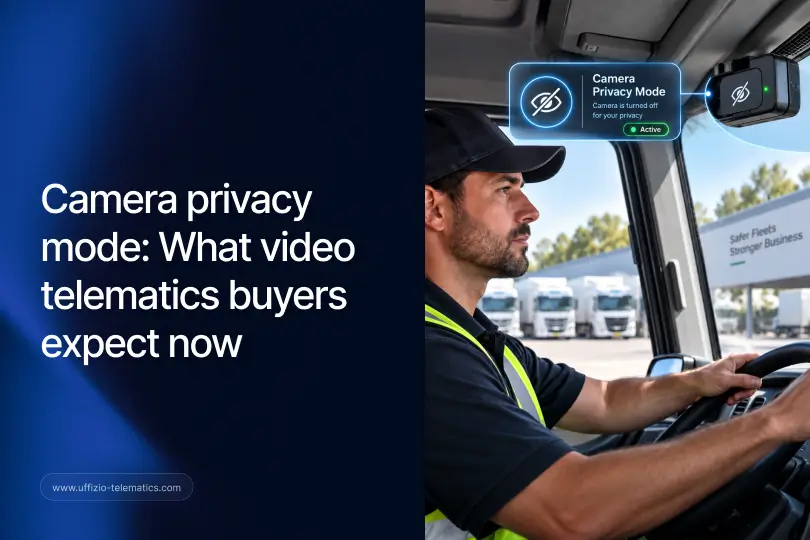
Video telematics provides visual proof and enhanced monitoring of fleet activities. It supports in-cabin and road-facing cameras that capture events like accidents, unsafe driving behavior, or external incidents. This module helps in ensuring driver safety, reducing false claims, and improving overall driving discipline through visual evidence.
7. Tyre management
Tyre management ensures better safety and optimized performance of vehicles by tracking tyre pressure, temperature, and tread depth. The system helps prevent accidents caused by tyre failures, increases the lifespan of tyres, and ensures cost-effective maintenance by monitoring tyre health in real time.
8. Job and Route management
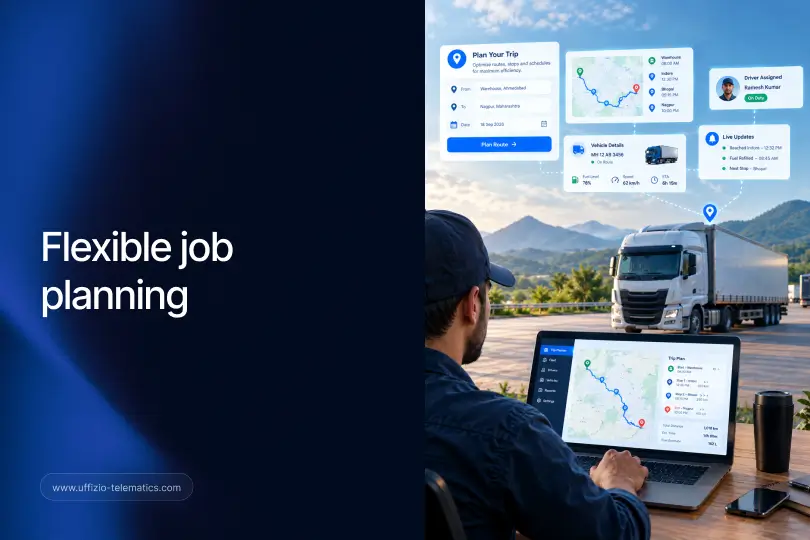
This module enables efficient task allocation and route optimization. It allows operators to assign jobs to drivers, plan delivery routes based on traffic or distance, and track job completion in real time. This feature supports better customer service, reduces delivery delays, and improves resource allocation across the fleet.
9. Temperature monitoring
Temperature monitoring is essential for fleets dealing with sensitive or perishable goods. The system records real-time temperature inside storage compartments, sends alerts for deviations, and ensures product safety during transportation — especially in industries like food, pharmaceuticals, or cold chain logistics.
10. Load monitoring
Load monitoring helps in managing vehicle weight and cargo safety. It records weight variations during trips, prevents overloading, and ensures compliance with legal weight limits. This module is critical for construction, mining, and logistics fleets where cargo management directly affects operational safety and regulatory compliance.
Modern GPS tracking software is packed with a range of additional features that go beyond the basics — offering fleet operators a complete toolkit for smarter operations. From expense management, maintenance scheduling, compliance reporting, to integration capabilities with external systems — the software is built to adapt to different industries and operational challenges. Every feature, whether visible on the dashboard or working silently in the background, plays a critical role in making fleet management more efficient, transparent, and future-ready.
Frequently Asked Questions
Is GPS tracking mandatory for commercial vehicles?
Yes, in most major markets. The USA, EU, India, UAE, and Indonesia all require GPS tracking for specific vehicle categories, usually commercial, public, or hazardous-goods fleets.
What is AIS 140 compliance?
AIS 140 is India’s mandatory GPS tracking standard for public transport vehicles. It requires a GPS device with a panic button and cloud connectivity, mainly for school buses, taxis, and emergency vehicles.
What is the FMCSA ELD mandate?
It’s a US requirement for commercial motor carriers to use Electronic Logging Devices. These digitally record driving hours to enforce work-hour limits.
Do all countries have the same GPS tracking rules?
No. Requirements vary by country and vehicle type. India focuses on public transport safety, the EU focuses on driver work-hours, and Indonesia ties tracking to taxation and route permits.
How can resellers use compliance mandates to close more deals?
Frame GPS tracking as a legal requirement your customer already has to meet, not an optional upgrade. This shortens sales cycles and reduces price objections, since the purchase is compliance-driven, not discretionary.
What should I look for in a white-label GPS tracking platform?
Look for compliance-ready features like panic buttons, audit reports, and geofencing, plus the ability to brand the platform as your own for stronger customer retention.
Key takeaway
GPS tracking mandates aren’t a compliance burden to work around — they’re a reason customers have to buy now. Lead with the regulation that applies to your customer’s market, and the deal sells itself.