Fuel is one of the biggest operating costs for fleet-based businesses. Whether it is transportation, construction, logistics, waste collection, or public services, companies across Kenya and East Africa are constantly looking for ways to control fuel expenses.
But fuel management is not only about tracking consumption anymore.
Today, businesses also want to stop fuel theft, monitor driver behavior, receive real-time alerts, and get complete visibility into fuel usage. This is where a modern fuel monitoring system becomes important.
For system integrators and resellers, this creates a strong business opportunity. Companies are actively searching for reliable fuel tracking solutions that can help them reduce losses and improve operational efficiency.
In this blog, we will explore why fuel monitoring systems are becoming essential in Kenya and how integrators and resellers can benefit from this growing market.
The Fuel Management Problem Businesses Face in Kenya
Fuel prices continue to fluctuate across East Africa. At the same time, operational costs are increasing for fleet owners.
Many businesses still rely on manual fuel tracking methods such as:
- Fuel receipts
- Driver logs
- Manual spreadsheets
- Basic fuel estimation
These methods often create problems like:
- Fuel theft
- False fuel claims
- Unnoticed fuel leakage
- Unauthorized fuel usage
- Inaccurate fuel reporting
In many cases, fleet managers do not realize fuel is being lost until expenses become too high.
This is why businesses are now investing in a fuel theft detection system in Kenya that provides real-time monitoring and accurate fuel data.
What Is a Fuel Monitoring System?
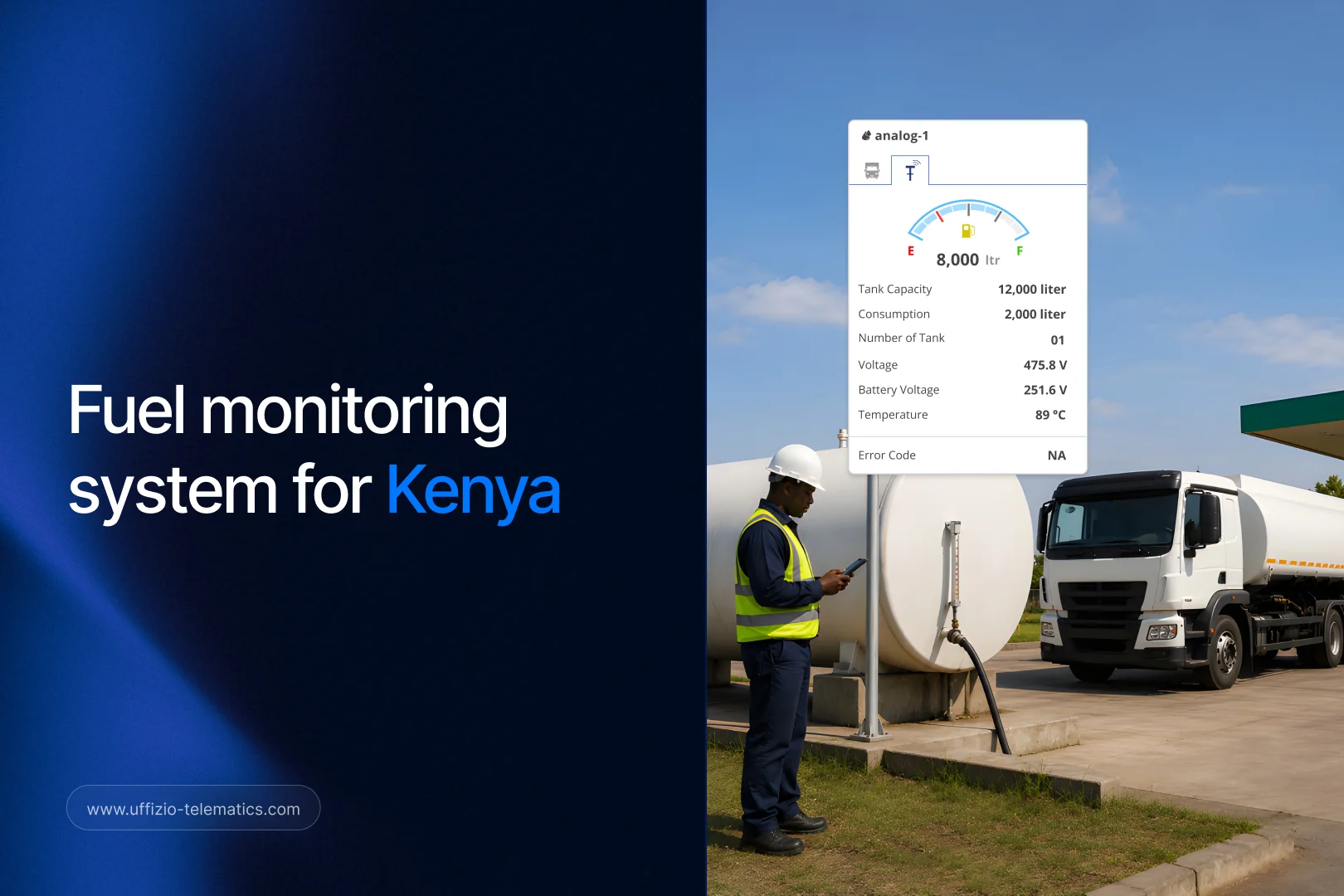
A fuel monitoring system helps businesses track and manage fuel consumption in real time.
The system usually combines:
- GPS tracking software
- Fuel sensors
- Telematics devices
- Analytics dashboards
- Reporting tools
The goal is simple: give businesses complete visibility into how fuel is being used.
Instead of depending on assumptions, fleet operators can see:
- Fuel filling events
- Fuel draining activities
- Sudden fuel drops
- Fuel consumption patterns
- Vehicle mileage
- Driver performance
This helps companies make faster and smarter decisions.
How a Fuel Theft Detection System Works
Fuel theft is one of the biggest concerns for fleet operators in Kenya.
It can happen in several ways:
- Fuel siphoning from parked vehicles
- Unauthorized fuel draining
- Fake fuel refill records
- Misuse of company vehicles
- Fuel station fraud
A fuel theft detection system in Kenya helps businesses identify these activities instantly.
Real-Time Fuel Monitoring
Fuel sensors installed inside the tank continuously measure fuel levels.
If the system detects:
- A sudden fuel drop
- Fuel removal while the vehicle is idle
- Unusual fuel consumption
an alert is immediately sent to the fleet manager.
This allows businesses to react quickly before major losses happen.
Instant Alerts and Notifications
Modern fuel tracking solutions can send:
- Mobile notifications
- SMS alerts
- Email alerts
These alerts help operators monitor suspicious fuel activity in real time.
Key Features Businesses Look for in a Fuel Monitoring System
Businesses across East Africa are no longer looking for basic tracking software. They want intelligent fuel management capabilities.
Here are the features that are driving demand.
Fuel Sensor Integration
Fuel sensors provide accurate fuel level readings directly from the tank.
This helps businesses:
- Monitor exact fuel usage
- Detect fuel theft
- Improve fuel efficiency
- Reduce manual calculations
Different sensor types can be integrated depending on vehicle requirements.
Fuel Analytics
Fuel analytics help businesses understand:
- Which vehicles consume more fuel
- Which routes are inefficient
- Which drivers waste fuel
- Overall fleet fuel trends
These insights help companies optimize operations and reduce unnecessary expenses.
For system integrators, analytics features add strong value during product demonstrations.
Real-Time Alerts
Real-time alerts improve response time during suspicious fuel activity.
Alerts can be configured for:
- Fuel draining
- Low fuel levels
- Fuel refilling
- Excessive idling
- Route deviation
This gives businesses better operational control.
Fuel Reports
Automated fuel reports simplify decision-making.
Managers can generate reports for:
- Daily fuel usage
- Vehicle-wise fuel consumption
- Fuel refill history
- Fuel theft incidents
- Mileage and efficiency
Instead of checking multiple spreadsheets, everything becomes available in one dashboard.
CAN Bus Integration
CAN bus integration allows businesses to collect vehicle data directly from the vehicle’s internal system.
This provides additional insights such as:
- Engine performance
- RPM
- Fuel consumption
- Engine hours
- Driver behavior
For advanced fleet operations, CAN bus integration adds another layer of visibility and accuracy.
Why Fuel Tracking Solutions Are Growing in East Africa
The demand for fuel tracking solutions in East Africa is increasing rapidly.
Several factors are driving this growth.
Rising Fuel Costs
Fuel expenses directly affect profitability. Businesses want better control over every liter consumed.
Expansion of Fleet Operations
Logistics and transportation sectors are growing across Kenya, Uganda, Tanzania, and nearby regions.
As fleets grow larger, manual monitoring becomes difficult.
Need for Operational Transparency
Businesses now expect real-time visibility into fleet activity.
They want systems that provide:
- Live tracking
- Fuel monitoring
- Driver accountability
- Performance analytics
Increased Focus on Theft Prevention
Fuel theft can create major financial losses over time.
Companies are now prioritizing fuel theft prevention technologies to protect profits.
A Strong Business Opportunity for System Integrators and Resellers
For system integrators and resellers, fuel management solutions are becoming a valuable addition to their offerings.
Businesses are actively searching for:
- GPS tracking providers
- Fuel monitoring systems
- Telematics solutions
- Fleet management platforms
This creates opportunities to:
- Offer complete fleet solutions
- Build recurring revenue
- Expand into new industries
- Increase customer retention
Fuel monitoring systems can also be bundled with:
- GPS tracking
- Video telematics
- Driver behavior monitoring
- Fleet maintenance solutions
This helps resellers create more value for customers while increasing project size.
Choosing the Right Fuel Monitoring System in Kenya
When businesses evaluate fuel management solutions, they usually look for:
- Accurate fuel data
- Easy sensor integration
- Real-time alerts
- User-friendly dashboards
- Scalability
- Reliable technical support
For integrators and resellers, choosing a flexible and scalable platform is important.
A solution that supports multiple sensor types, customization, and advanced reporting can help meet different customer requirements across industries.
Conclusion
Fuel management is no longer optional for fleet-based businesses in Kenya and East Africa.
Companies want better visibility, stronger fuel control, and protection against fuel theft. This is why the demand for fuel monitoring systems and fuel theft detection systems in Kenya continues to grow.
For system integrators and resellers, this is the right time to offer smart fuel tracking solutions that solve real operational problems.
With features like fuel sensor integration, real-time alerts, fuel analytics, CAN bus integration, and automated reporting, businesses can improve efficiency while reducing unnecessary fuel losses.
As fleet operations become more data-driven, fuel monitoring solutions will continue to play an important role in the future of fleet management across East Africa.
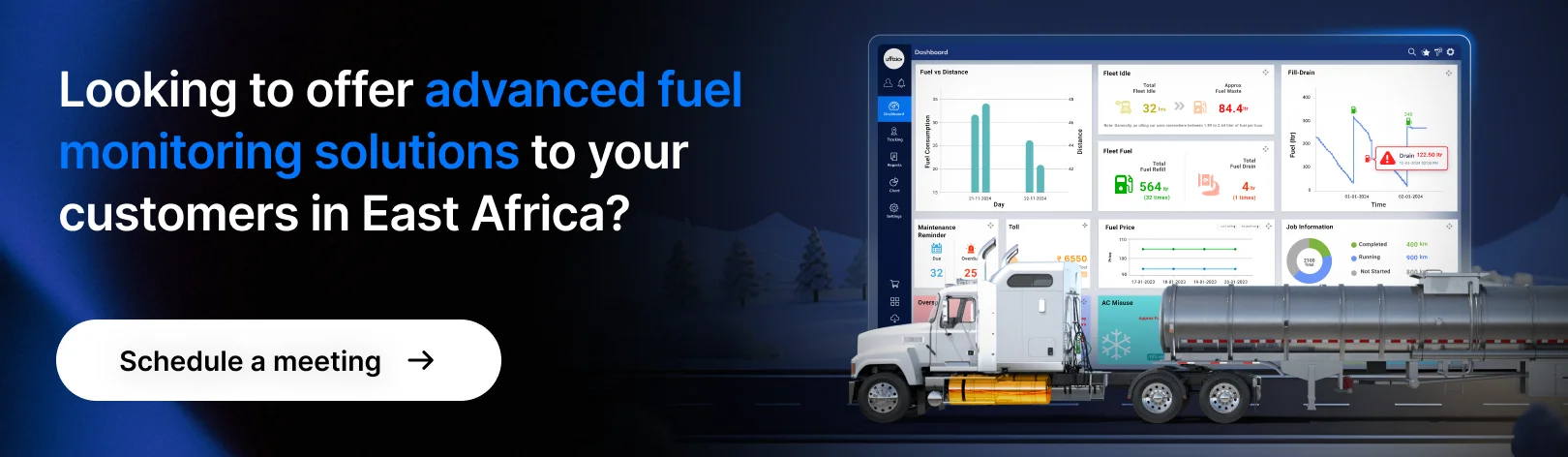
Explore intelligent fuel tracking software with real-time monitoring, theft detection, fuel analytics, and sensor integration capabilities designed for modern fleet operations.