GPS tells you where your truck is. It doesn’t tell you if the medicine inside is still cold enough, or if someone opened the cargo door three towns back.
Now, Trakzee does.
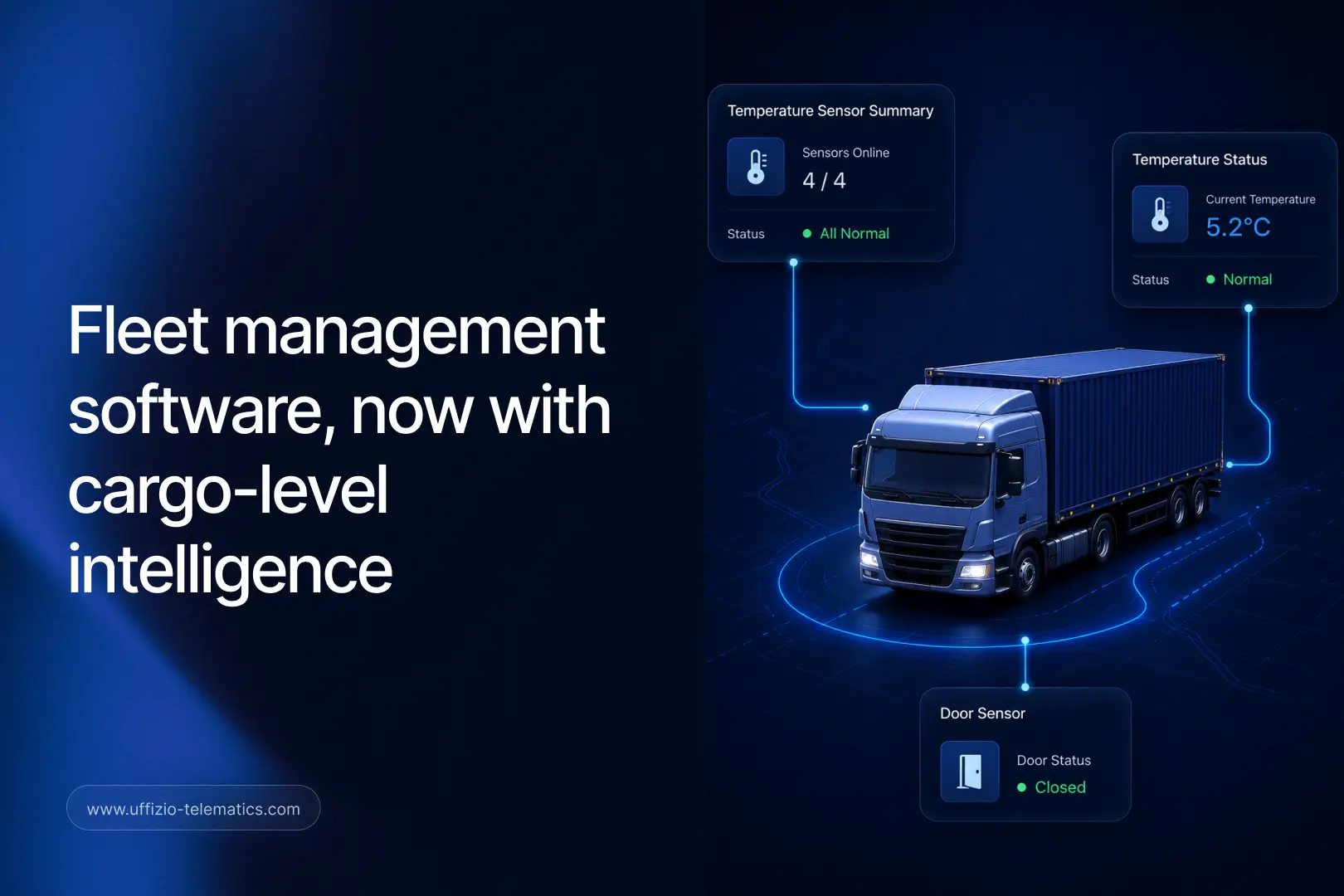
Three new BLE sensor reports bring temperature, humidity, and door activity data directly into your dashboard, turning Bluetooth Low Energy sensors into a genuine source of operational insight, not just a data point buried in a device log.
What GPS Alone Can’t Tell You
Modern fleets carry a lot more than boxes from one place to another. They carry temperature-sensitive medicine, fresh produce, dairy, and sensitive electronic equipment, often across long distances and multiple stops.
Location data alone can’t tell you if any of that cargo is actually safe. A truck can follow its route perfectly and still deliver a spoiled shipment if the refrigeration unit failed two hours into the journey. A secure-looking delivery can still involve an unauthorized door opening at a stop that wasn’t on the schedule.
For years, fleets working with this kind of cargo relied on separate systems, manual temperature logs, standalone sensor apps, or simply trusting that everything was fine until a customer complained otherwise. None of that gave fleet managers real, timely visibility.
BLE sensors, short for Bluetooth Low Energy sensors, close that gap. They’re small, low-power devices that monitor conditions like temperature, humidity, and door status inside a vehicle. The missing piece has always been getting that data into a usable, glanceable report. That’s exactly what Trakzee has now built.
Three New Reports, One Clear Picture
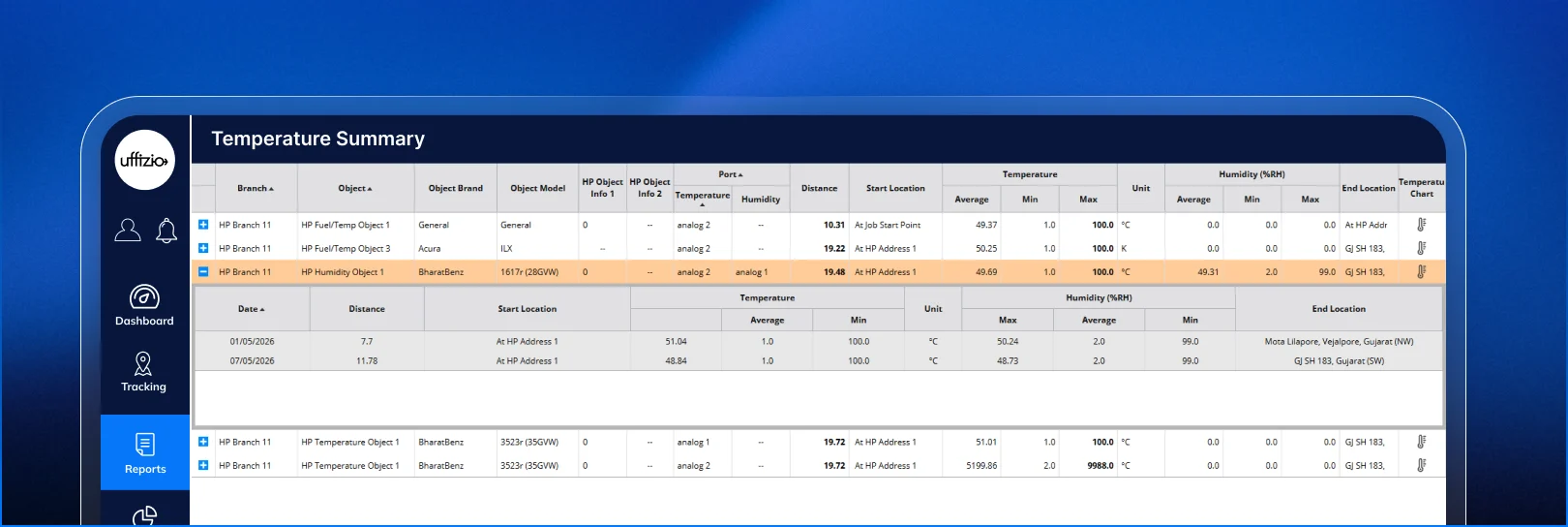
The Temperature Summary Report gives you the big picture for any vehicle: average, minimum, and maximum temperature readings, along with humidity trends over a chosen period. It includes an interactive temperature chart, so spotting a worrying trend takes seconds, not a manual scan through raw numbers.
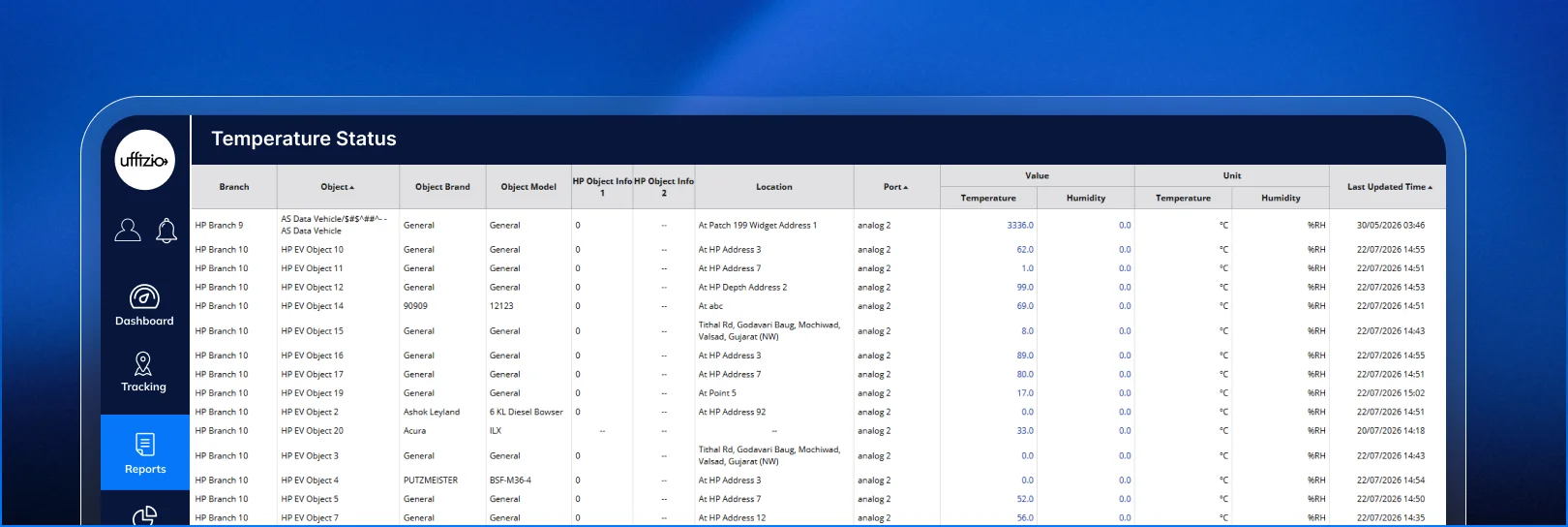
The Temperature Status Report focuses on right now. It shows the latest temperature and humidity readings from BLE sensors in near real time, helping your team catch an abnormal reading while there’s still time to act, rather than discovering it after the delivery is already complete.
The Door Report tracks every door open and close event, complete with timestamp, location, ignition status, and how long the door stayed open. This turns a simple sensor signal into a genuinely useful security and operational record.
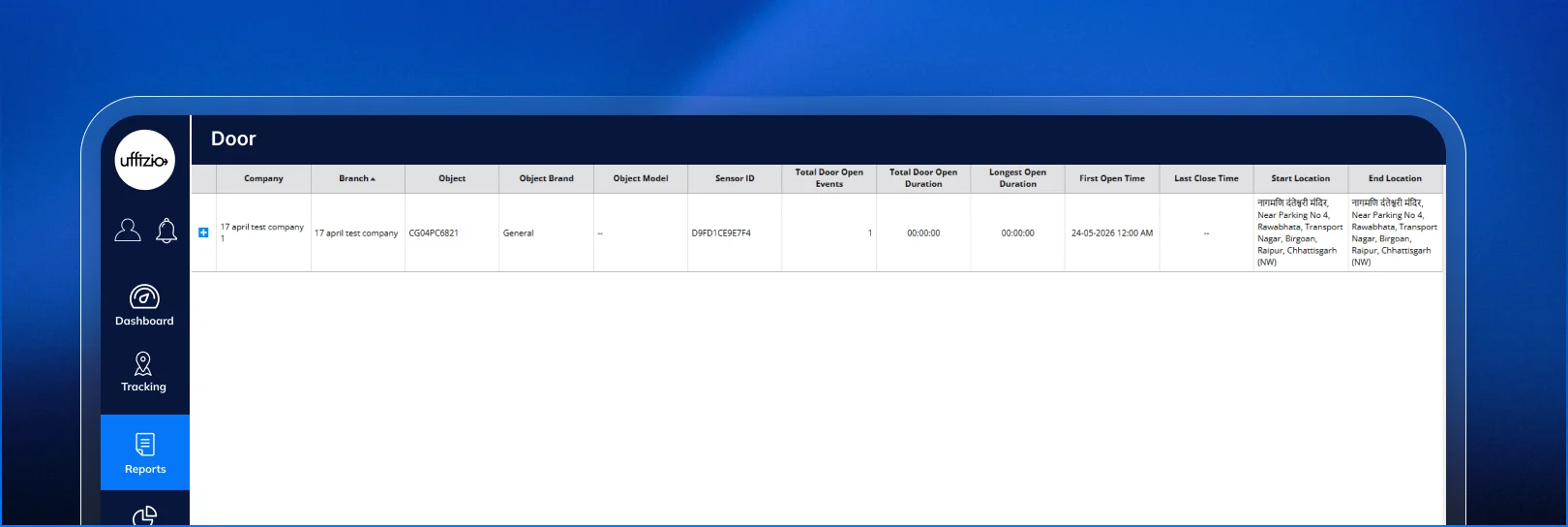
As part of this update, the older Port field used to identify BLE sensors has also been renamed Sensor ID, making it clearer and more consistent to identify exactly which sensor a reading belongs to, especially useful for vehicles carrying multiple sensors at once.
Built for the Industries That Need It Most
These reports weren’t built as a generic add-on. They’re aimed squarely at industries where the inside of the vehicle matters as much as its location.
Cold chain logistics operators can finally verify, report by report, that temperature-sensitive goods stayed within safe range for the entire journey, not just at pickup and drop-off. Pharmaceutical distributors gain the kind of documented temperature record that regulators and customers increasingly expect. Food distribution businesses can catch a failing refrigeration unit early, before an entire shipment is lost. And any business monitoring high-value or sensitive cargo gains a genuine security layer through the Door Report, with a clear timestamped record of every access point.

A Real Delivery, Before and After
Consider a regional distributor moving refrigerated dairy products across three states. Before these reports existed, the company relied on drivers manually checking a temperature display inside the cabin and noting it on a paper log at each stop. If a refrigeration unit started failing mid-route, nobody would know until the delivery arrived and the customer complained, or worse, rejected the shipment entirely.
Now, the operations team has the Temperature Status Report open during working hours. When one truck’s cargo temperature started climbing outside the safe range mid-morning, the near real-time reading flagged it well before the scheduled delivery. The team rerouted the truck to the nearest depot, salvaged most of the shipment, and avoided what would have been a complete loss and an unhappy customer.
That’s the real shift. Not just more data, but data early enough to actually change the outcome.
Getting Started With BLE Reports
If your vehicles already use BLE sensors, these three reports are ready to use right now, with no separate setup required. Simply navigate to your reports section in Trakzee to find Temperature Summary, Temperature Status, and Door reports listed alongside your existing report options.
If you’re new to BLE sensors, this is a good moment to explore adding them, particularly if your fleet handles any temperature-sensitive or high-value cargo. The sensors themselves are compact, low-maintenance, and designed to integrate directly with your existing Trakzee setup.
Why This Changes the Value of Your Reports
It’s worth stepping back and looking at what this actually means for reporting as a whole. Fleet reports have traditionally answered questions about the vehicle: where it went, how fast it moved, how long it idled. BLE sensor reports answer a different, equally important question: what was happening inside the vehicle the whole time?
For businesses whose cargo value depends entirely on conditions being maintained correctly, this shift matters enormously. A single spoiled cold-chain shipment can cost far more than the sensors themselves. A single undocumented door opening can turn into a costly dispute with no way to prove what actually happened. These reports turn both risks into something visible, trackable, and defensible.
For system integrators supporting customers in logistics, food distribution, or pharmaceuticals, BLE sensor reports are also a strong differentiator when competing for new business, since not every fleet platform offers this level of cargo-condition visibility out of the box.
One More Reason This Matters: Fewer Disputes, Faster Claims
There’s a quieter benefit worth calling out. Disputes over spoiled cargo or missing goods often come down to a simple, frustrating problem: nobody can prove what actually happened during transit.
With Temperature Summary, Temperature Status, and Door reports all timestamped and exportable, that problem mostly disappears. If a customer claims a shipment arrived warm, you can show the exact temperature curve for that trip. If an insurer questions a claim about a cargo door opening at an unscheduled stop, you have the timestamp, location, and duration on record.
This doesn’t just protect revenue in the moment. It builds a pattern of trust with customers and partners over time, since every disputed delivery becomes a quick, evidence-based conversation instead of a drawn-out back and forth.
Frequently Asked Questions
Do I need new hardware to use these reports?
You need BLE sensors installed in your vehicles to generate the data. If sensors are already installed, the reports are ready to use immediately with no extra setup.
How often does the Temperature Status Report update?
It reflects near real-time readings from your BLE sensors, so you’re seeing current conditions rather than a delayed summary.
Can I export these reports for compliance or customer documentation?
Yes. All three reports can be exported and scheduled, the same way your existing Trakzee reports work, making them suitable for compliance records or sharing with customers.
What’s the difference between the old Port field and the new Sensor ID?
They serve the same purpose, identifying a specific BLE sensor, but Sensor ID is clearer and more consistent, especially useful when a vehicle carries multiple sensors.
Are these reports available on both web and mobile?
Yes, BLE sensor reports are accessible through Trakzee’s standard reporting section on both the web platform and the mobile application.
Key Takeaway
Your reports don’t just tell you where your fleet is anymore. They tell you what’s happening inside it, giving cold chain, pharmaceutical, and high-value cargo operators the kind of visibility that used to require separate, disconnected systems.