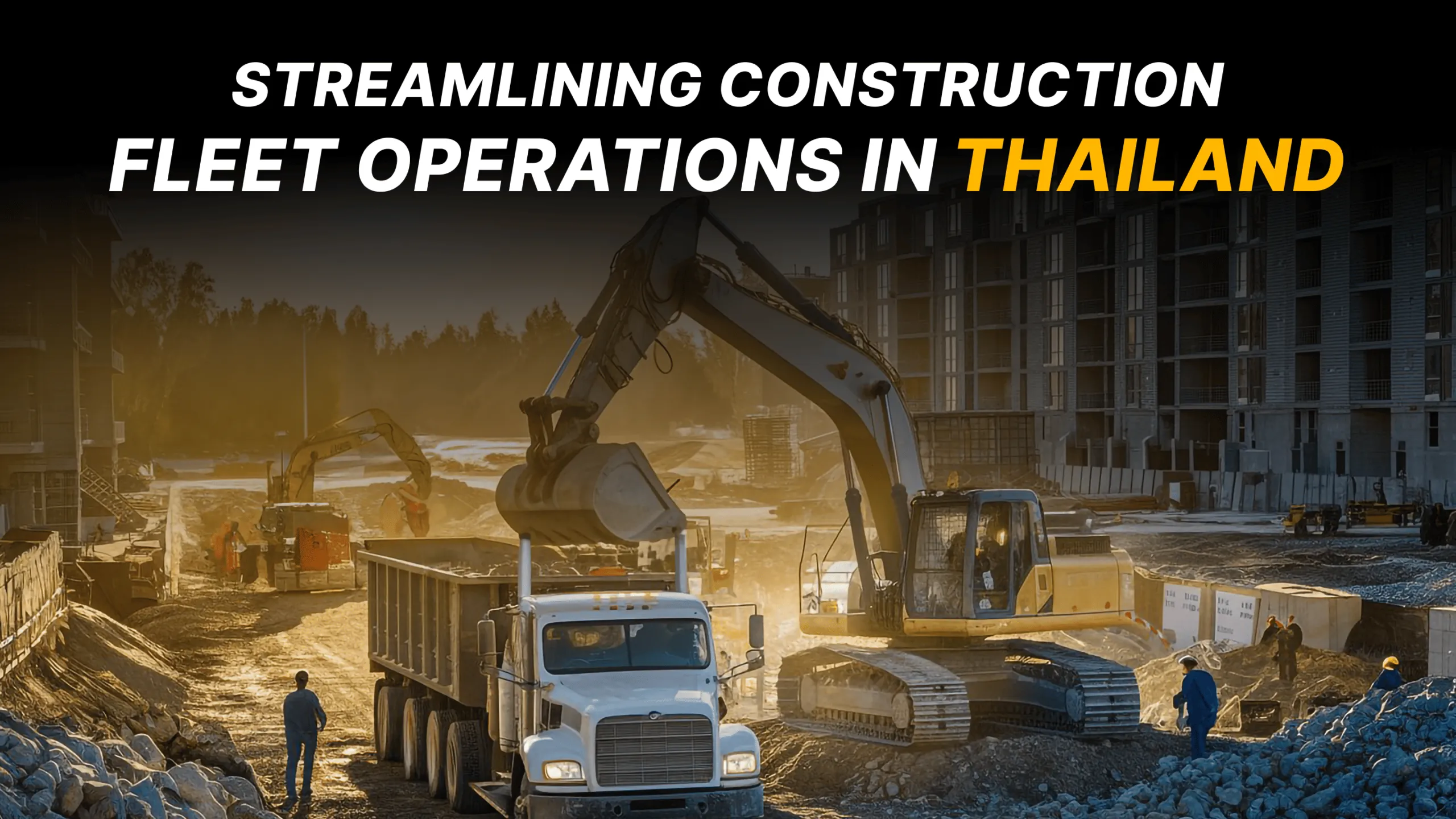
As Thailand’s construction industry grows, there is a greater need for new solutions to manage complex projects effectively. The construction sector is currently valued at over USD 42 billion. This plays a crucial role in infrastructure development across the country. However, with this growth comes the challenge of maintaining visibility over a fleet of vehicles and machinery whose condition or level of activity isn’t always clear. Construction fleet vehicles aiming to optimize resources, reduce costs, and improve project timelines need to take a step ahead. Implementing advanced vehicle monitoring systems can make a significant difference.
This blog explores how construction managers in Thailand can leverage work hour tracking, asset usage monitoring, and fuel management. This ensures managing efficient fleet operations and minimizing resource wastage.
Why Construction Fleets Are Hard to Track
Construction vehicles aren’t like delivery trucks. Cranes and cement mixers often sit still for long stretches, then run hard for short bursts. Without tracking, that idle time gets missed and costs pile up unnoticed. This is the exact gap you can pitch to a construction client: “You don’t know what your equipment actually costs you to run.”
The Need for Precise Tracking of Fleet Construction Vehicles
Construction projects require a wide range of vehicles and heavy machinery, many of which are semi-static, rarely moved, or dedicated to specific tasks. For instance, equipment like cranes or cement mixers often remains stationary for long durations, only used intermittently. Without a reliable way to track their exact operating hours, these assets may accumulate excessive idle time, leading to increased costs and reduced efficiency.
The Features That Sell in This Market
Work Hour Tracking Shows exactly how much each vehicle or machine is used. Helps clients spot underused equipment and redeploy it.
Location Monitoring with Beacons Confirms machinery stays within its assigned site. Reduces theft and unauthorized use, a real pain point on large sites.
Tilt Sensors Monitors the angle of cranes and lifting equipment. Sends an alert if a tilt becomes unsafe. This is a strong safety pitch, since safety failures are costly and highly visible for construction firms.
Fuel Monitoring Flags sudden drops in fuel level, which usually means theft or a leak. Fuel theft is a common, ongoing cost problem on construction sites.
Construction fleets waste money through idle time and fuel theft that no one is tracking. Pitch the cost story first, and the safety story second, to close deals in this vertical.
Optimizing Work Hours and Asset Utilization
By implementing a system that accurately records work hours, managers gain clear visibility into the usage patterns of each vehicle. This data helps in determining if equipment is being underutilized or overused, supporting more effective deployment across the project site. For example, equipment that remains idle can be reallocated to areas where it’s needed more, enhancing productivity and reducing unnecessary wear and tear.
Tracking work hours also assists in planning preventive maintenance, and ensuring machinery remains in optimal condition, which is essential for minimizing downtime and extending asset lifespan.
 Advanced Monitoring Solutions for Secure and Efficient Construction Operations
On construction sites, a wide range of vehicles and machinery are in use—from massive cranes and loaders to specialized equipment like excavators and concrete mixers. With such a diverse fleet, keeping track of each asset’s location and ensuring it remains within designated boundaries becomes crucial. Implementing advanced monitoring solutions can simplify this task, leveraging devices like beacons, tilt sensors, and fuel sensors, among others.
These technologies work together to enhance operational oversight. For instance, beacons provide precise location data, ensuring assets stay within their assigned areas, which is especially valuable on expansive and crowded sites. This helps prevent unauthorized movement and reduces the risk of asset misplacement or theft. Tilt sensors, meanwhile, monitor the angles of machinery, offering an additional layer of safety by detecting unsafe tilts that could lead to accidents. These insights, combined with work hour and fuel tracking, support both efficient resource management and enhanced safety compliance on construction sites.
Ensuring Safe Operation with Tilt Sensors
Tilt sensors, on the other hand, monitor the orientation of heavy equipment to ensure it remains within safe operating angles. This is especially beneficial for machinery that handles loads at heights, like cranes or forklifts, where even slight tilts can increase the risk of accidents. Real-time alerts for unsafe tilt angles allow for immediate corrective actions, keeping both equipment and personnel safe.
By combining beacons and tilt sensors with work hour tracking, construction companies in Thailand can foster safer work environments and avoid the costly disruptions that accidents or unauthorized equipment use can cause.
Reducing Operational Costs through Fuel Monitoring
Fuel expenses form a significant part of any construction budget. Even minor inefficiencies can accumulate into substantial costs over time. A comprehensive fuel monitoring system helps tackle this issue. By providing insights into fuel consumption patterns, it provides an ease to detect and prevent wastage.
Detecting and Preventing Fuel Theft
Theft or mismanagement of fuel is an issue many construction sites face. Fuel monitoring allows managers to track usage patterns and receive alerts. When there are sudden drops in fuel levels, indicating potential theft or leaks. This transparency in fuel consumption not only prevents wastage but also promotes accountability among operators. Moreover, it helps operators to control overall project costs.
With rising operational costs, fuel monitoring offers a practical way for construction managers to cut expenses without compromising productivity.
Benefits of Integrated Monitoring Solutions for Thailand’s Construction Sector
By adopting an integrated approach to vehicle and asset monitoring, construction companies in Thailand can achieve several key benefits:
Improve Productivity
Data-driven insights into equipment usage allow managers to deploy resources more effectively, reducing idle time and increasing project efficiency.
Improved Safety Compliance
From features like monitoring the asset activity through tilt sensors, the SOS feature along with location-based tracking fosters a safer work environment, ensuring that machinery operates within set parameters and adheres to safety guidelines.
Cost Savings and Optimized Resource Use
Accurate work hour tracking and fuel monitoring minimize resources to be wasted. It allows companies to save on fuel and maintenance costs while improving overall profitability.
Better Maintenance Planning
With work-hour data, managers can plan maintenance activities based on actual usage, reducing unexpected breakdowns and prolonging equipment lifespan.
How to Pitch This to a Construction Client
Lead with cost, not features. Construction managers respond to numbers, not tech specs.
Say: “This shows you which machines are sitting idle, so you stop paying for equipment you’re not using.”
Say: “This flags fuel theft the moment it happens, instead of finding out at month-end.”
Safety and cost control are the two angles that close deals in this vertical.
Why This Is a Good Vertical for Resellers
Construction fleets combine several revenue streams in one client: tracking, safety monitoring, and fuel management. That means a bigger deal size from a single account compared to a standard delivery fleet client.
It’s also a sticky client type. Once a construction company builds tracking into its site operations, switching vendors mid-project is disruptive, which supports strong renewal rates for you.
Frequently Asked Questions
1- Why do construction companies in Thailand need fleet tracking?
Construction fleets include equipment that sits idle for long periods, making it hard to track true usage and costs without a monitoring system.
2- What features matter most for construction fleet tracking?
Work hour tracking, location monitoring with beacons, tilt sensors for safety, and fuel monitoring are the features construction clients ask about most.
3- How big is the construction fleet tracking opportunity in Thailand?
Thailand’s construction sector is valued at over USD 42 billion, with ongoing demand for tools that improve fleet visibility and cut operational waste.
4- What’s the best way to sell fleet tracking to a construction company?
Lead with cost savings and safety outcomes, such as reduced fuel theft and safer crane operation, rather than listing technical features.
As the construction industry in Thailand advances, the integration of these technologies offers a strategic advantage. Moreover, it supports sustainable growth and efficient project completion. By leveraging monitoring solutions that provide real-time data and actionable insights, companies can build a competitive edge, ensuring that their resources are used wisely and projects remain on schedule and within budget.
In an industry where delays and wastage can heavily impact profitability, the ability to track, analyze, and optimize operations through smart technology proves invaluable. Construction managers who invest in these solutions can look forward to streamlined workflows. It helps in creating safer work environments. Additionally, it is said to be a more sustainable approach to resource management. Eventually benefiting by setting new standards for excellence in Thailand’s construction sector.