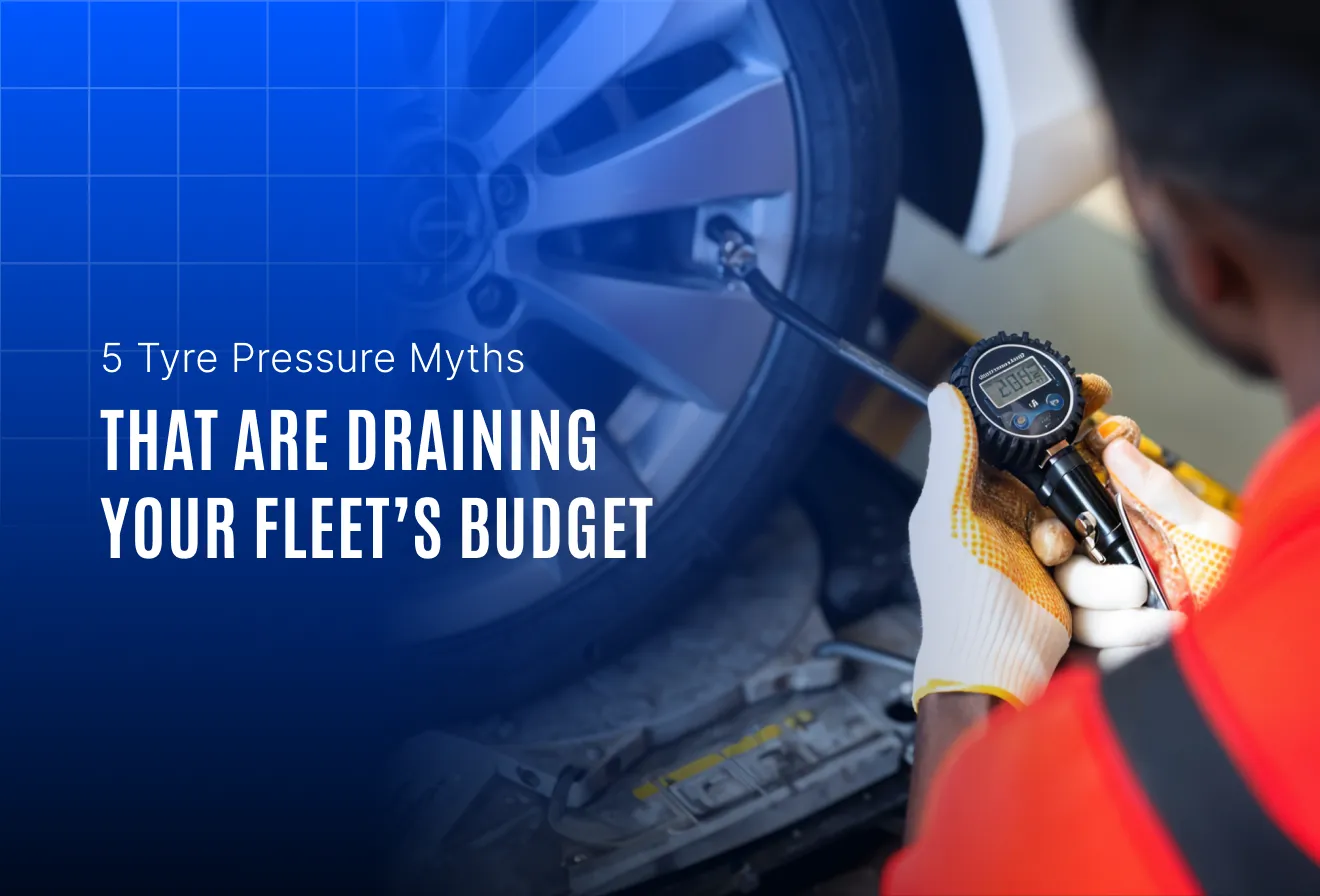
Your customers are probably losing money on tyres right now, and they don’t know it. Five common beliefs about tyre pressure are quietly costing them fuel, tyre life, and unplanned downtime — and each one is an opening for you to sell TPMS as the fix.
Most fleet managers still run on outdated tyre pressure habits. That’s not a knock on them it’s an opportunity for you. Here are the five myths costing your customers money, the real data behind each one, and how to position TPMS (Tyre Pressure Monitoring System) as the answer.
In this blog, we’ll break down 5 major myths about Tyre Pressure Management—and explain the truth behind them using real experience, expert knowledge, and proven data. If you’re responsible for fleet performance, this article can help you save money, improve safety, and build a more efficient fleet.
Myth 1: “Checking tyre pressure once a month is enough”
The reality: Tyre pressure needs frequent monitoring especially in commercial fleets.
Tyre pressure fluctuates due to temperature, load, and usage. Even under normal conditions, tyres can lose pressure slowly over time. A monthly check may not be enough to catch sudden drops caused by weather or heavy loads.
Real-world insight:
A fleet operating in North India saw increased fuel consumption during winter. After installing TPMS (Tyre Pressure Monitoring System), they discovered tyre pressure dropped overnight due to cold temperatures something they couldn’t catch with monthly checks.
Why this matters:
- A 6 psi drop can reduce fuel efficiency by 3%
- Under-inflation increases tyre wear by 25%
- Low pressure increases the risk of tyre blowouts
Pro tip: TPMS solutions offer real-time alerts and help detect pressure issues before they cause damage.
Myth 2: “Overinflated tyres improve fuel efficiency”
The reality: Overinflation leads to uneven wear and poor grip.
While it’s true that overinflated tyres may reduce rolling resistance, they don’t offer long-term benefits. In fact, they wear faster—especially at the center—and reduce vehicle control.
Expert explanation:
When tyres are overinflated, they become too stiff. This reduces the contact area with the road. As a result, vehicles experience less traction, longer braking distances, and a bumpier ride—all of which are dangerous, especially for cargo vehicles.
Common issues caused by overinflation:
- Shorter tyre lifespan
- Reduced grip on wet surfaces
- Higher chance of damage from road impact
Industry tip: Stick to the manufacturer’s recommended tyre pressure for best results.
Myth 3: “TPMS is too expensive for small fleets”
The reality: Modern TPMS is affordable, scalable, and delivers ROI quickly.
Many small fleet owners avoid TPMS thinking it’s only for large fleets. But that’s not true anymore. Entry-level systems are now available at low prices, with flexible integration options.
Case in point:
A regional delivery company with just 15 vehicles installed a basic TPMS. Within 3 months, they reported:
- A 10% improvement in fuel economy
- Two avoided tyre replacements
- One incident of overheating detected early
These savings covered the TPMS cost within the same quarter.
ROI breakdown:
- Lower fuel expenses
- Fewer tyre replacements
- Less vehicle downtime
- Safer operations and fewer accidents
Tip for integrators: Offering tiered TPMS packages helps smaller clients get started easily.
Myth 4: “Tyre blowouts are unpredictable”
The reality: Most tyre failures show warning signs—if you track them.
Blowouts are often seen as accidents without warning. But data says otherwise. Most tyre failures happen due to slow leaks, pressure imbalance, or overheating. With digital tools, you can catch these early signs and avoid unexpected breakdowns.
Experience from the field:
A food transport company used a TPMS solution with temperature tracking. One vehicle’s sensor showed a sudden temperature rise—indicating internal tyre damage. The driver stopped immediately, and a potential blowout was prevented.
Warning signs to track:
- Rapid pressure drop
- High tyre temperature
- Constant underinflation alerts
Tip: Use a TPMS with both pressure and temperature sensors for complete protection.
Myth 5: “Manual inspection is more reliable than digital tools”
The reality: Manual inspections are essential—but limited.
No doubt, human inspection is important. But it’s not always practical for every trip or every vehicle in large fleets. Drivers may forget, use faulty gauges, or miss small leaks.
Example:
Manual checks usually happen once a day. But pressure can drop due to road debris or weather after just a few kilometres. Without real-time monitoring, this goes unnoticed until the next check, by which time it’s too late.
Manual checks vs. TPMS: side-by-side
Use this table in client conversations to make the gap concrete.
| Factor | Manual Check | TPMS |
|---|---|---|
| Real-time updates | None — pressure issues go unnoticed until the next check | Live pressure data, all the time |
| Monitoring coverage | Limited to scheduled inspections | Continuous, 24/7 |
| Alerts | None until the next manual check | Instant notification of pressure drops |
| Human error risk | High — depends on timing and accuracy of the check | Low — automated, no manual step to miss |
What the data actually says
- NHTSA has found that vehicles with tyres underinflated by more than 25% are three times more likely to be in a tyre-related crash than properly inflated vehicles. (NHTSA / Consumer Reports summary)
- NHTSA also estimates that properly inflated tyres can save drivers up to 11 cents per gallon in fuel costs — a smaller, more precise claim than “11% better fuel economy,” which the previous version of this post stated incorrectly. (NHTSA TireWise)
Note for publishing: I couldn’t verify the “$1,000–$3,000 per breakdown” figure against a specific source. Either find the original citation for it, or soften it to “industry estimates suggest tyre-related breakdowns can cost fleets over $1,000 per incident” so it isn’t presented as a hard NHTSA number.
How tyre pressure monitoring adds value to your fleet
Whether you’re a fleet operator or a system integrator selling software solutions, TPMS adds long-term value:
Benefits for system integrators:
- Enhanced product offerings: Add advanced tyre monitoring to your solution portfolio to meet modern fleet demands.
- Better customer satisfaction: Deliver real-time insights that help clients improve safety and performance.
- Higher client retention through measurable ROI: Show proven savings on fuel and maintenance to keep clients engaged long-term.
- Opportunities for cross-selling with temperature/fuel sensors: Bundle tyre monitoring with other IoT solutions for increased value and revenue.
Benefits for fleet managers:
- Reduced maintenance costs: Catch pressure issues early and avoid expensive tyre replacements or repairs.
- Fewer breakdowns and service calls: Prevent on-road failures with real-time tyre health alerts.
- Safer vehicles and happier drivers: Maintain optimal pressure for better vehicle handling and reduced accident risk.
- Longer tyre life: Keep tyres in ideal condition and extend their usable lifespan.
Frequently Asked Questions
Is checking tyre pressure once a month enough for a commercial fleet?
No. Pressure changes with temperature, load, and daily use, so a monthly check can miss drops that happen in between — often the ones that cause the most damage.
Does overinflating tyres improve fuel efficiency?
No. Overinflation reduces a tyre’s road contact, which lowers grip and causes uneven wear, especially at the center tread. Staying at the manufacturer’s recommended pressure works better than exceeding it.
Is TPMS too expensive for a small fleet?
Not anymore. Entry-level TPMS options are priced for small fleets and integrate without a major system overhaul.
Can tyre blowouts be predicted?
Most tyre failures show warning signs first, like a slow pressure leak or a temperature spike. TPMS with both sensor types can catch these before they become a blowout.
Is manual tyre inspection reliable enough on its own?
Manual checks matter, but they only capture a single point in time. Pressure can change within kilometres of a check, which TPMS catches continuously and manual inspection can’t.
Final thoughts: Don’t let myths hold you back
Tyre pressure management is no longer just a maintenance task it’s a strategic move that affects fuel, safety, and performance. Believing in outdated ideas may be costing your business more than you know.
With modern, affordable, and scalable TPMS solutions, there’s no reason to delay.