
Remote Tracking for Inter-Island Logistics Fleets in Indonesia

Introduction

Indonesia’s logistics sector depends on inter-island transport, where trucks move through highways, ports, and ferries. It is one of Southeast Asia’s largest logistics markets—valued at about USD 131 billion in 2025 and expected to reach nearly USD 178 billion by 2030.

Since many routes pass through low-network or remote areas, logistics companies need steady and reliable tracking to keep visibility across islands.
Challenges

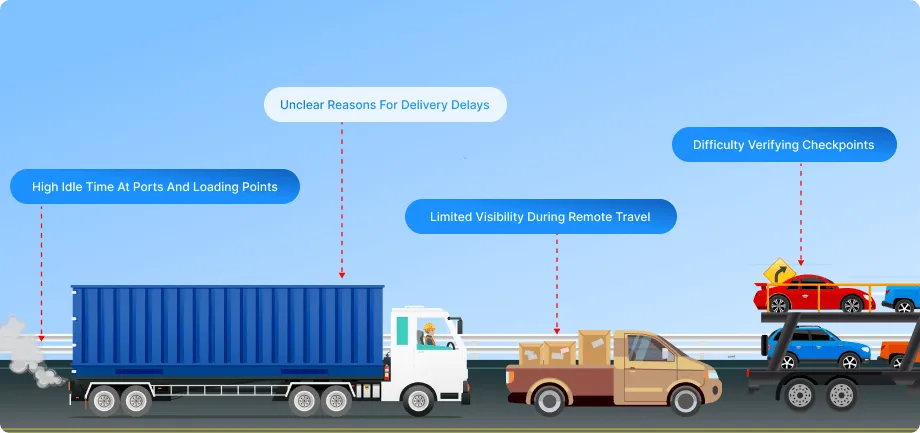
  • Limited Visibility During Remote Travel
    Vehicles often lose coverage on rural highways and during island-to-island crossings, reducing real-time monitoring.
  • Unclear Reasons for Delivery Delays
    Managers rely on driver calls for updates, making it difficult to determine the cause of delays—traffic, breakdowns, or prolonged stops.
  • Difficulty Verifying Checkpoints
    Ports, warehouses, and inter-island hubs require frequent arrival/departure verification, where manual logging is time-consuming and error-prone.
  • Frequent Route Deviations
    Drivers may take unplanned roads or detours without notifying managers, affecting schedule accuracy and route compliance.
  • High Idle Time at Ports and Loading Points
    Trucks often spend long periods waiting during ferry queues, loading, and unloading, increasing idle time and fuel consumption.

Solution with Telematics Software

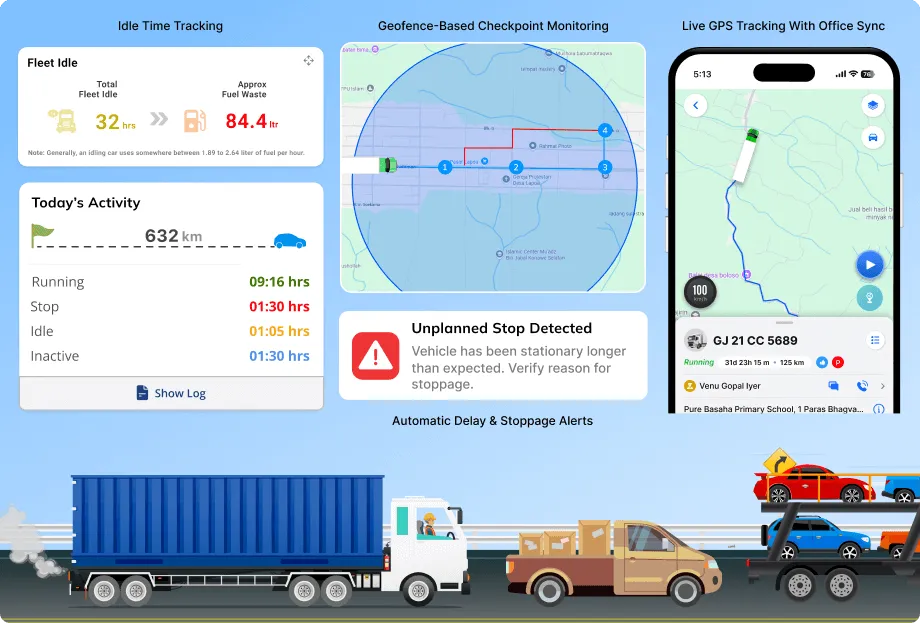
  • Live GPS Tracking with Offline Sync
    Vehicle movement continues to be recorded in low-signal areas and updates automatically when connectivity returns.
  • Automatic Delay & Stoppage Alerts
    Alerts notify teams when a vehicle stops unexpectedly, slows for too long, or exceeds planned dwelling time.
  • Geofence-Based Checkpoint Monitoring
    Entry and exit at ports, ferry terminals, warehouses, and hubs are logged automatically through geofenced checkpoints.
  • Route Deviation Alerts
    The system flags whenever a vehicle moves away from its assigned route during long-distance or inter-island travel.
  • Idle Time Tracking
    Idle durations at ports, loading bays, and inland checkpoints are recorded to help reduce unnecessary engine running.

Results Achieved

  • Higher Delivery Accuracy Across Islands
    Improved visibility helps logistics teams coordinate multi-island trips with fewer disruptions.
  • Better Control Over Delays
    Real-time alerts allow faster response when vehicles face sudden stoppages or slow movement.
  • Accurate Verification at All Checkpoints
    Automated entry/exit logs ensure reliable tracking across ports, hubs, and warehouses.
  • Reduced Fuel Wastage From Excessive Idling
    Idle monitoring helps reduce avoidable engine running, lowering fuel expenses.
  • Improved Route Compliance
    Deviation alerts help maintain planned routes, improving the consistency and reliability of deliveries.
  • Stronger Operational Planning
    Better visibility across long and remote routes supports more accurate scheduling and resource allocation.

By Uffizio
95 views

Let’s Move Forward, Together

Share your details and we’ll guide you from here.

Let’s Connect!