Um alerta é acionado. Um veículo se move. Ninguém reage a tempo. Essa é uma história que se repete em frotas todos os dias. E custa aos operadores de frotas mais do que eles imaginam.
A lacuna entre um alerta e uma ação.
A maioria das plataformas de gestão de frotas é eficiente na detecção de problemas. Um veículo pega fogo fora do horário autorizado. Um motorista desconhecido assume o volante. O sistema registra o ocorrido. Um alerta é emitido.
Mas e depois?
Alguém precisa ver o alerta. Alguém precisa decidir o que fazer. Alguém precisa agir.
Nesse momento, o veículo já está em movimento. A janela de oportunidade para intervir já se fechou.
Essa lacuna — entre detecção e resposta — é onde a segurança da frota falha. Não é um problema de tecnologia. É um problema de fluxo de trabalho. E é um problema que a resposta automatizada pode resolver.
O que a imobilização automática de veículos realmente faz
A imobilização automatizada de veículos elimina o fator humano da equação.
Em vez de esperar pela resposta de um operador, o sistema age por conta própria. No momento em que um alerta crítico é acionado, um comando predefinido é enviado diretamente para o veículo. Sem intervenção manual. Sem espera.
O veículo é imobilizado antes que a situação se agrave.
Não se trata apenas de imobilização remota como a maioria das pessoas a conhece — onde um gerente aciona manualmente uma parada a partir de um painel de controle. Trata-se de automação baseada em regras. A plataforma detecta o gatilho, avalia a condição e executa a resposta. Tudo em questão de segundos.
Dois cenários em que isso muda tudo.
Cenário 1: Ignição fora do horário autorizado
Um veículo de entrega está autorizado a operar entre as 8h e as 18h. Às 21h, a ignição é ligada.
Em uma configuração tradicional, o sistema envia um alerta. Se não houver ninguém observando, o veículo se afasta.
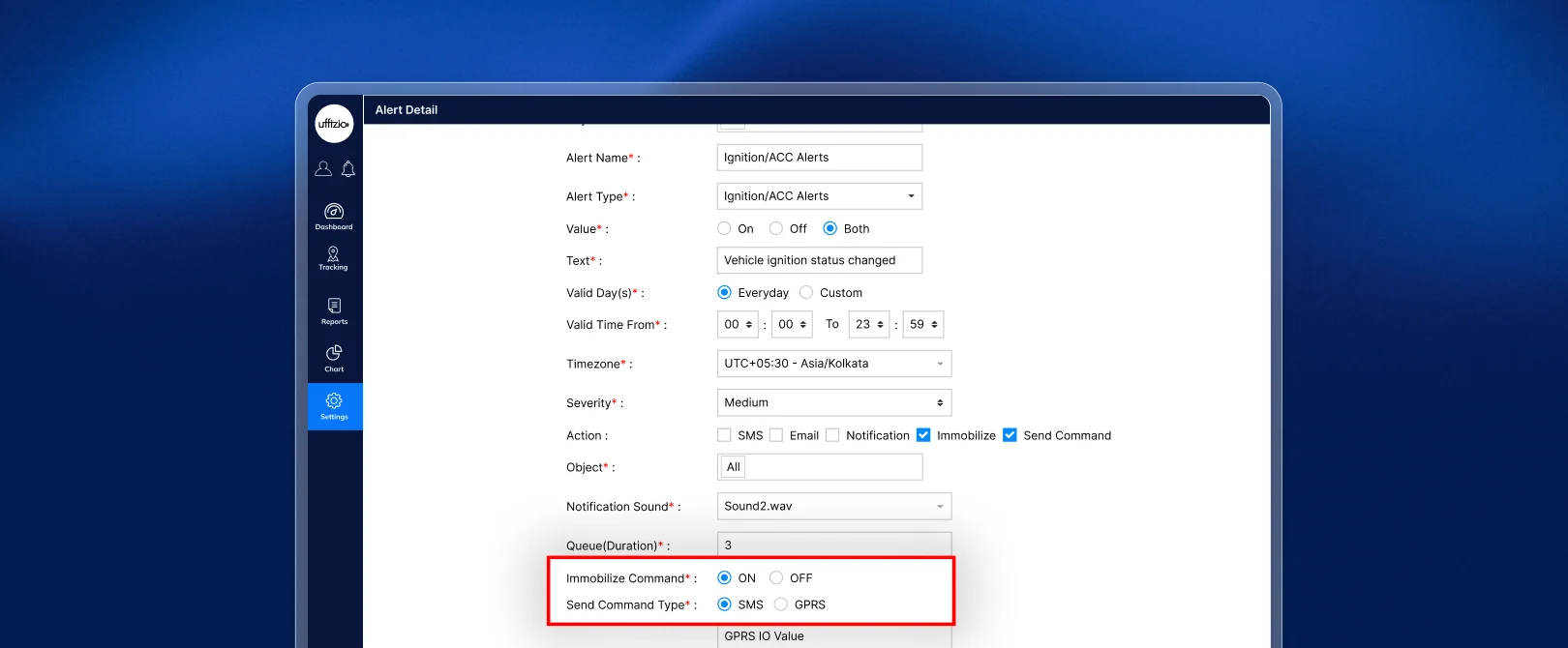
Com a imobilização automática, a regra já está em vigor. O alarme de ignição dispara. O sistema responde imediatamente. O veículo não pode se mover.
Sem necessidade de operador. Sem intervenção manual. Sem atrasos.
Cenário 2: Motorista não autorizado detectado via beacon
Cada condutor autorizado possui um dispositivo Bluetooth de localização. O veículo verifica a presença do dispositivo antes de entrar em funcionamento.
Se um condutor sem um dispositivo de sinalização registrado ligar o veículo, o sistema o sinalizará como acesso não autorizado. Com a resposta automática ativada, a imobilização ocorre instantaneamente.
O veículo permanece parado. O incidente é registrado. O operador é notificado — depois que a ameaça já foi controlada.
Por que isso é importante para integradores de sistemas
Como integrador de sistemas, seus clientes confiam em você para construir soluções de frota completas e confiáveis. Alertas são um bom começo. Mas a resposta automatizada é o que realmente agrega valor.
Eis o que essa funcionalidade permite que você ofereça:
Aplicação de políticas mais rápida. Clientes com horários de funcionamento rigorosos ou restrições de motoristas podem aplicar as regras sem precisar manter uma equipe de resposta 24 horas por dia, 7 dias por semana.
Redução da responsabilidade. O uso não autorizado de veículos representa um risco legal e financeiro. A automatização da resposta reduz drasticamente o período de exposição.
Menor dependência do monitoramento humano. Nem todas as empresas de gestão de frotas possuem uma sala de controle. A automação permite que equipes menores sejam igualmente capazes de gerenciar riscos.
Segurança reforçada como diferencial de vendas. A segurança da frota é uma prioridade global. A imobilização remota é um recurso solicitado pelos clientes. A imobilização automatizada representa um avanço em relação ao que a maioria dos concorrentes oferece.
Essa é uma funcionalidade que ajuda a diferenciar uma solução, e não apenas a descrevê-la.
De reativo a proativo — a mudança para a qual os clientes estão preparados.
O modelo tradicional de segurança de frotas é reativo. Algo dá errado. Alguém descobre. Alguém reage.
O problema é que a reação sempre vem depois do fato.
O melhor modelo é o proativo. As regras são definidas antecipadamente. O sistema monitora continuamente. Quando uma condição é atendida, a resposta é instantânea e automática.
Essa mudança não é apenas uma atualização tecnológica. É uma mudança na forma como os clientes pensam sobre o controle de frotas. Eles param de perguntar "Conseguimos detectar a tempo?" e começam a perguntar "O sistema lidou com a situação?".
Essa é uma pergunta muito melhor.
Plataformas que oferecem fluxos de trabalho automatizados de alerta à ação — incluindo imobilização automática ao ligar o veículo e alertas de sinalização — tornam essa mudança possível para qualquer frota, independentemente do tamanho.

Ofereça aos seus clientes mais do que visibilidade.
A visibilidade é um requisito básico na gestão de frotas hoje em dia. Todas as plataformas rastreiam. Todas as plataformas enviam alertas.
O que diferencia uma boa solução de gestão de frotas de uma excelente é o que acontece depois.
Se você está desenvolvendo ou expandindo soluções de gestão de frotas para seus clientes, a imobilização automática de veículos é o tipo de recurso que conquista a confiança a longo prazo. É concreto, mensurável e resolve um problema que os clientes enfrentam diariamente.