You know the store is on the second floor. You know the gate is in Terminal B. But knowing where something is and actually getting there are two very different things.
Large Buildings Have a Navigation Problem
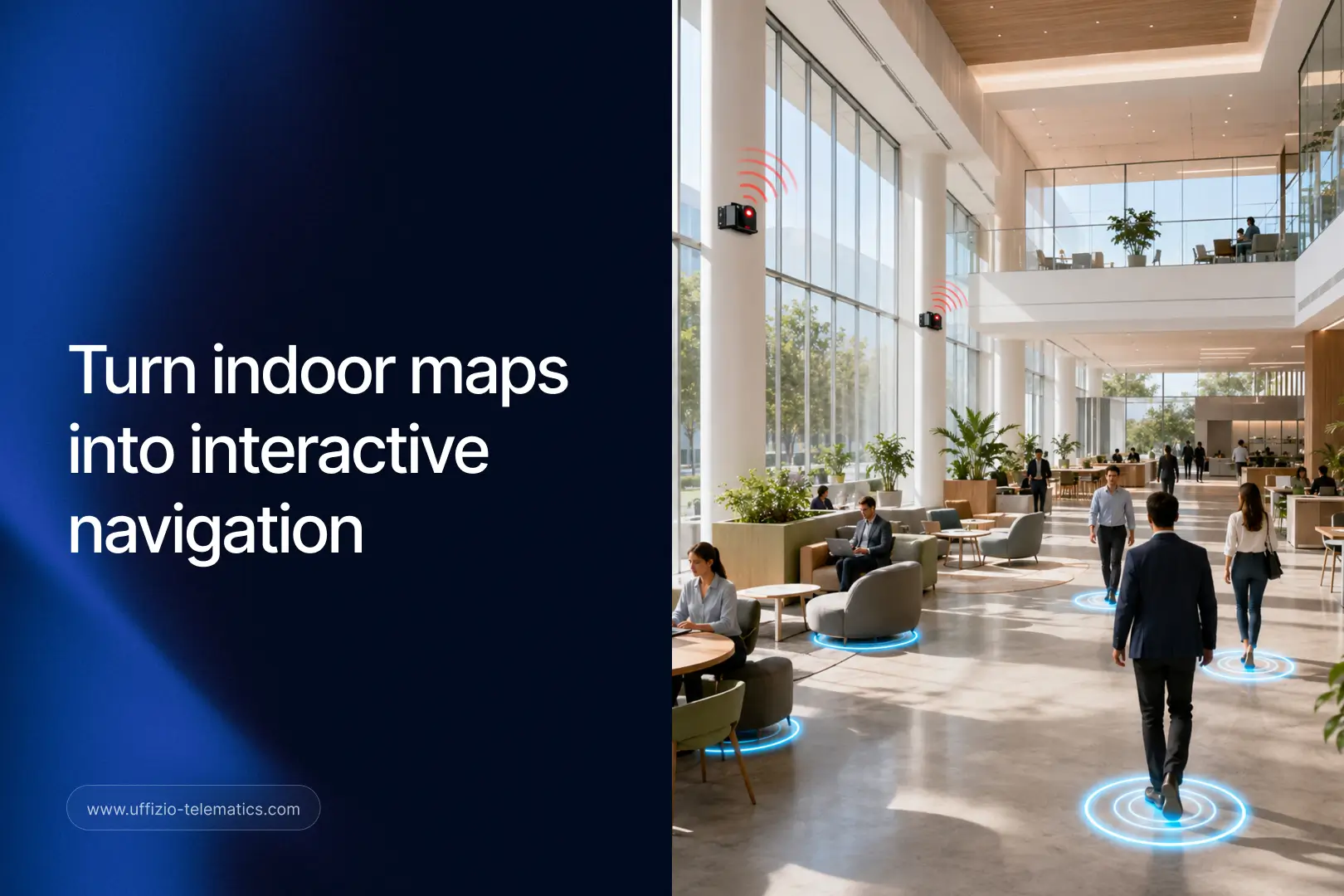
Shopping malls, airports, corporate campuses, warehouses, and hospitals are complex spaces. Multiple floors. Dozens of zones. Elevators, escalators, stairways. Long corridors that look identical.
Visitors get confused. Employees lose time. Contractors walk in circles.
In a mall, a lost shopper gives up and leaves. In an airport, a confused passenger misses a gate. In a corporate campus, a contractor wastes twenty minutes finding the right floor.
The cost of poor indoor navigation is real. And it happens every single day in large facilities around the world.
Seeing a Location Is Not the Same as Finding It
Most indoor mapping tools solve half the problem.
They show you a map. They mark the destination. They let you zoom in and explore the floor plan.
But then they stop. The rest is up to you.
You have to figure out the route yourself. You have to decide which stairway to take. You have to guess which corridor leads where. On a single floor, that is manageable. Across three floors with two building wings, it is not.
This is the gap that Gridzee’s new wayfinding module closes.
What Gridzee’s Wayfinding Module Does
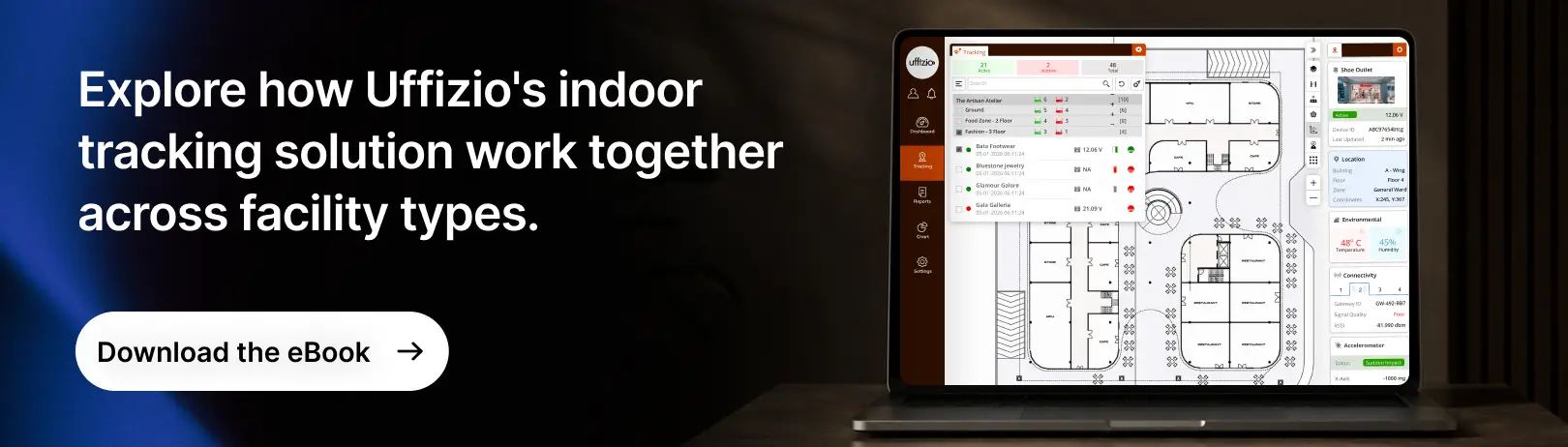
Gridzee now offers turn-by-turn indoor navigation directly within the platform.
A user selects where they are and where they want to go. The system calculates the best route instantly. Then it guides them step by step all the way to their destination.
Here is what the navigation includes:
Route visualization — the full path is shown on the indoor map, clearly marked from start to finish.
Turn-by-turn instructions — users receive directional guidance at every point, just like outdoor GPS navigation.
Distance and travel time — so users know exactly how far they are and how long it will take.
Floor-by-floor guidance — the system tracks and guides across multiple floors without interruption.
Transition information — whether a user needs to take an elevator, escalator, or stairway, the system tells them which one and where.
Shareable navigation links — routes can be generated as links and shared instantly, useful for guiding visitors before they even arrive.
The system works across single-floor and multi-floor environments. It always shows building and floor context throughout the journey, so users never feel lost.
Where This Makes the Biggest Difference
Shopping Malls
Malls are designed to be explored. But when a shopper needs to find a specific store, food court, or exit quickly, exploration becomes frustration.
Turn-by-turn navigation guides shoppers directly to their destination. It reduces wandering, saves time, and improves the overall experience. For mall operators and retailers, that means higher satisfaction and more time spent shopping not searching.
Airports
Airports are arguably the most stressful navigation environments in the world. Terminal changes. Multi-level departures. Gate reassignments. Long security queues.
Indoor navigation helps passengers move from check-in to gate with confidence. It factors in floor transitions — escalators, elevators, walkways and adjusts in real time. For airport operators, this reduces confusion at information desks and improves passenger flow across terminals.
Other Large Facilities
The same logic applies to corporate campuses, warehouses, convention centres, and office complexes. Any facility where people regularly struggle to find their way is a facility where indoor wayfinding creates immediate, visible value.

Why System Integrators Should Pay Attention
Facility managers are under constant pressure to improve visitor experience and operational efficiency. Indoor navigation is one of the clearest, most tangible ways to do both.
As a system integrator, this is a capability that sells itself in a demo. You show a client the map. You show them the route. You show them the step-by-step guidance. The value is immediately obvious.
Here is what Gridzee’s wayfinding module gives you to work with:
A visible, demonstrable feature. Navigation is something you can show not just describe. That makes pitches shorter and conversions easier.
Cross-vertical applicability. Malls, airports, campuses, warehouses, the use case fits any large facility. One capability, many client types.
A genuine differentiator. Most indoor mapping tools stop at showing a location. Turn-by-turn guidance is a step most competitors have not taken yet.
Operational value beyond visitors. Staff navigation, contractor routing, emergency response guidance the feature has depth beyond the obvious visitor use case.
From Indoor Maps to Indoor Navigation
There is a meaningful difference between a map and a navigation system.
A map tells you where things are. A navigation system tells you how to get there.
Until now, indoor mapping tools have largely been maps. Gridzee’s wayfinding module makes it a navigation system one that works across floors, across buildings, and across the complex layouts that define large modern facilities.
For facilities that manage high volumes of visitors every day, that shift matters. It reduces friction, saves time, and turns an indoor map from a reference tool into an operational asset.
Help Your Clients Navigate What Comes Next
Indoor navigation is no longer a nice-to-have in large facilities. It is quickly becoming an expectation from shoppers, passengers, employees, and facility managers alike.
Gridzee’s wayfinding module gives you the capability to meet that expectation today.