Introduction
Modern school campuses are becoming larger and more complex. A single campus can include multiple buildings, classrooms, laboratories, libraries, sports areas, and activity zones.
Students and teachers move between these areas throughout the day. This makes it important for school authorities to have a simple way to manage movement across the campus while keeping everyday operations organised.
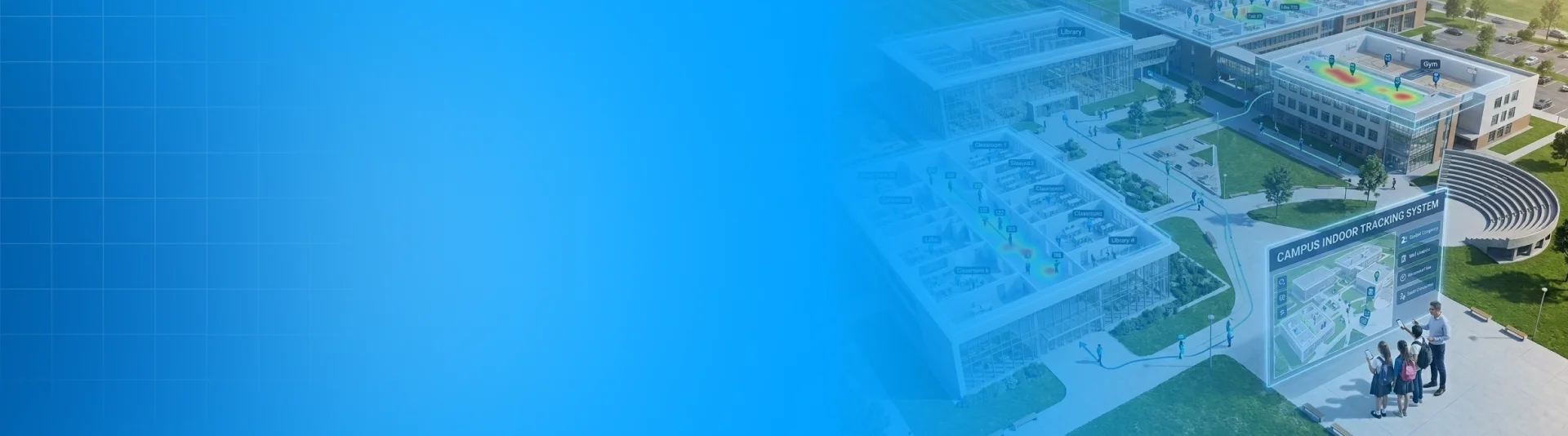
With indoor tracking, schools can connect people, places, and movement on a single digital map.
Challenges
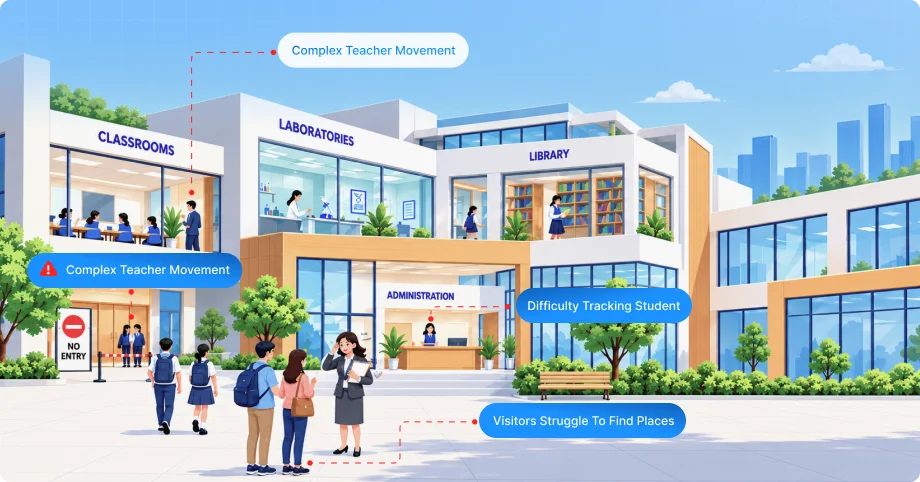
- School authorities cannot easily see where students are: Students move between classrooms, labs, libraries, sports areas, and other parts of the campus. Checking their location manually takes time.
- Teachers move between different rooms and floors: Teachers may have classes in different rooms throughout the day. It can be difficult for administrators to know where a teacher is without calling or asking other staff.
- Students may be in the wrong area: During free periods, breaks, or class changes, a student may be in a different area than expected. Staff may need to spend time locating them.
- Large campuses make quick location checks difficult: When buildings and floors are spread across a large premises, finding a particular student, teacher, or staff member can take several calls or messages.
- Managing movement during events is difficult: School events, examinations, assemblies, and activities can move students and teachers away from their regular classrooms. Authorities may need a quick way to understand where people are.
- Parents and visitors may need help navigating the campus: New students, parents, and visitors may not know where classrooms, offices, labs, or event areas are located.
Solution
Gridzee Indoor Tracking Software can combine beacon-based ID cards with indoor maps to help schools monitor the location of students, teachers, and staff across the campus.
- Beacon-based ID cards: Students and teachers can be provided with ID cards containing beacons. Each ID can be linked to the person’s relevant details in the system. As the person moves around the campus, the system can update their location based on the detected beacon.
- Live floor-wise location: School authorities can view the indoor map and check which floor or area a student or teacher is currently in. This provides a quick view without having to contact them individually.
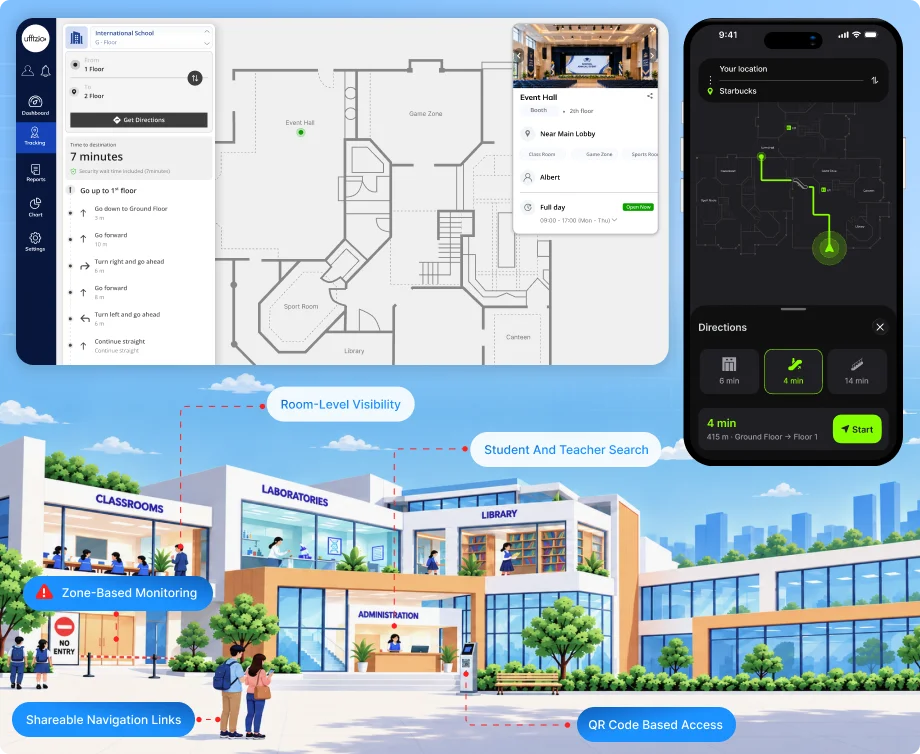
- Room-level visibility: When supported by the school’s beacon setup, the system can show the relevant classroom, lab, library, office, or other mapped area where a person is located. Authorities can use this to check whether students and teachers are in their expected locations.
- Student and teacher search: Administrators can search for a particular student or teacher and view their latest detected location on the indoor map. This can help staff locate people faster across large school premises.
- Movement monitoring: The system can provide location history to help authorities understand movement between mapped areas. For example, they can review when a student moved from a classroom to a lab or when a teacher moved between floors.
- Zone-based monitoring: Schools can define areas such as classrooms, laboratories, staff rooms, restricted zones, and activity areas. Authorities can use these zones to understand movement and identify when a person enters or leaves a defined area.
- Multi-floor tracking: Gridzee can display people across different floors on the indoor map. Authorities can quickly see whether a student or teacher is on the ground floor, first floor, second floor, or another mapped area.
- Attendance and presence checks: Location data can support classroom or zone-level presence checks. Schools can use it as an additional source of information alongside their existing attendance process.
- Indoor navigation: Students, teachers, parents, and visitors can use individual location navigation, interactive routes, and turn-by-turn directions to find classrooms, offices, labs, and other facilities.
- QR Code Based Access: QR codes can be placed at key locations across the campus. Users can scan them to quickly access the indoor map and find their destination.
- Shareable Navigation Links: Schools can send parents or visitors a direct navigation link to a classroom, auditorium, meeting room, or event area before they arrive.
- Location information during events: During examinations, assemblies, sports events, or school functions, authorities can use the indoor map to understand where tagged students and teachers are located across the campus.
Results
- Faster location checks: School authorities can find the latest detected location of students, teachers, and staff without making repeated calls or physically checking different areas.
- Better campus coordination: Administrators can get a clearer view of people across different floors, classrooms, and activity areas.
- Quicker response when someone needs to be located: Staff can use the indoor map to narrow down where a student or teacher was last detected.
- Simpler movement management: Schools can understand movement between classrooms, labs, activity areas, and other defined zones.
- Better navigation for visitors: Parents and visitors can find classrooms, offices, and event areas without depending entirely on school staff for directions.
- Illustrative impact: Depending on campus size and beacon coverage, schools could target 30–50% less time spent locating people manually and 20–30% fewer routine location-related queries. These are illustrative estimates, not verified Gridzee customer results.