Le carburant représente l'un des postes de dépenses les plus importants pour toute flotte de véhicules. Pourtant, pour la plupart des gestionnaires de flottes, comprendre la consommation de carburant implique de jongler entre différents rapports : les pleins d'un côté, les vidanges de l'autre, les données de trajet ailleurs, et les chiffres de consommation sur un autre écran.
Les données existent. Le problème, c'est de les assembler.
Le problème des rapports fragmentés sur les carburants
La gestion du carburant d'une flotte ne se limite pas au simple suivi des quantités de carburant consommées.
Il s'agit d'avoir une vision d'ensemble. Quelle quantité de carburant a été consommée à chaque trajet ? Y a-t-il eu des consommations inhabituelles ? La consommation correspond-elle au kilométrage ? Qui conduisait lors des pics de consommation ?
Lorsque les réponses à ces questions sont dispersées dans plusieurs rapports, les gestionnaires de flottes consacrent plus de temps à la collecte des données qu'à leur analyse. Ils passent à côté de tendances. Ils détectent les problèmes tardivement. Et lorsqu'un événement suspect se produit, comme une consommation de carburant anormale, relier les informations entre elles demande un travail manuel et du temps.
C'est une source de frustration quotidienne pour les équipes d'exploitation des flottes. Et c'est une lacune qui donne l'impression que le suivi de la consommation de carburant est réactif plutôt que proactif.
Que contient le rapport consolidé sur les carburants ?
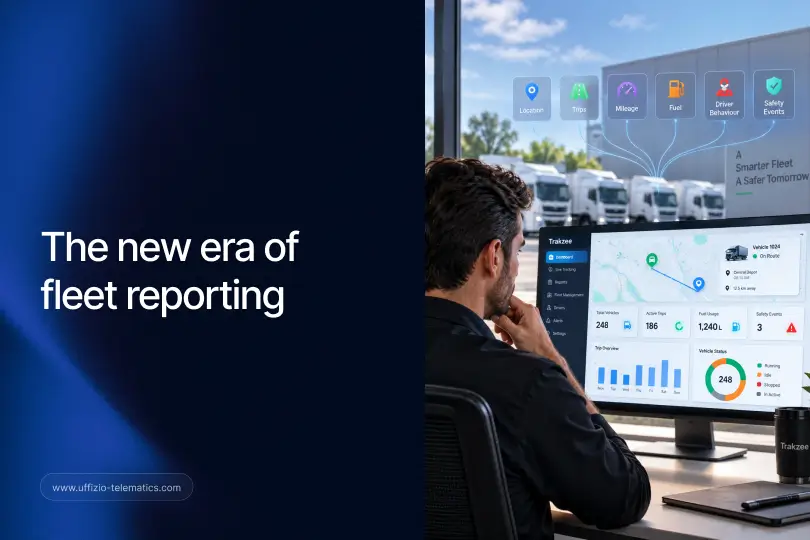
Trakzee regroupe désormais toutes les données critiques sur le carburant dans un seul rapport téléchargeable.
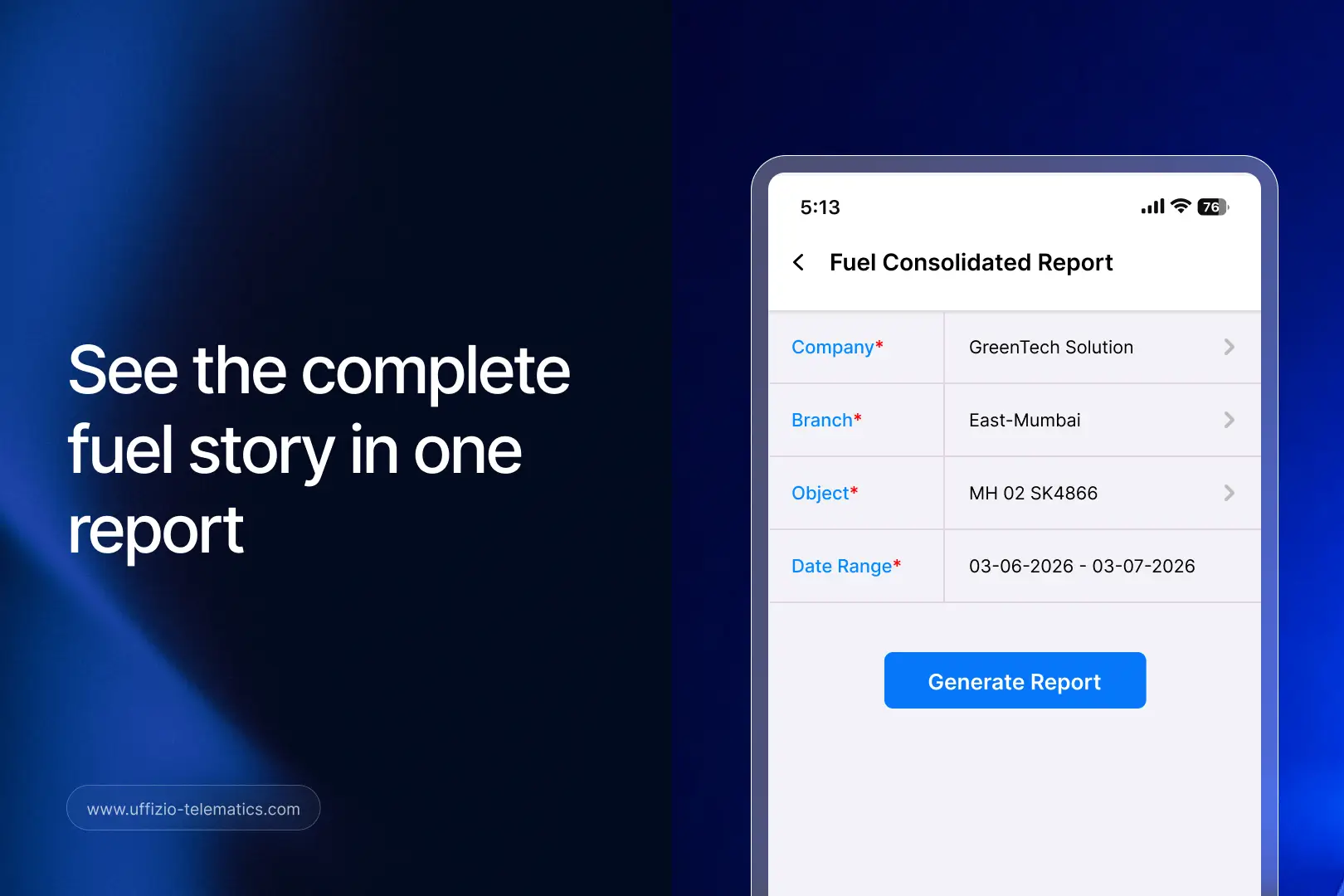
Grâce à des filtres simples (entreprise, agence, véhicule et période), les gestionnaires de flotte peuvent générer un rapport unique comprenant :
- événements de remplissage de carburant — chaque fois que du carburant a été ajouté à un véhicule
- événements de vidange de carburant — baisses inattendues ou enregistrées des niveaux de carburant
- Détails du voyage — les données de voyage sont directement liées à l'activité liée au carburant
- Kilométrage — distance parcourue par trajet et par véhicule
- consommation de carburant — la quantité de carburant consommée au cours des différents trajets
- Métriques de vitesse — données sur le comportement de conduite liées à la consommation de carburant
- Informations sur le conducteur — qui conduisait le véhicule lors de chaque événement
- Graphiques de carburant — Résumés visuels des tendances en matière de carburants sur la période sélectionnée
- Statistiques récapitulatives — Les chiffres clés en un coup d'œil pour une consultation rapide
Le rapport est disponible sur le web et sur mobile. Il se télécharge au format PDF et peut être partagé lors de revues, d'audits ou de réunions clients.
Tout est regroupé au même endroit. Plus besoin de faire de recherches manuelles.
Qu'est-ce qui change quand tout est réuni au même endroit ?
Ce changement paraît simple. Mais son impact est considérable.
Lorsque les remplissages, les vidanges, les trajets et la consommation de carburant sont visibles simultanément, des tendances auparavant cachées deviennent évidentes.
Une consommation de carburant anormale, survenant alors que le véhicule est stationné et qu'aucun trajet n'a été effectué, attire immédiatement l'attention. C'est un signal d'alarme pouvant indiquer un vol de carburant, et il est facile de passer à côté lorsque les données sont dispersées dans des rapports distincts.
Une consommation apparemment élevée sur un trajet donné s'explique par la consultation des données de vitesse. Une vitesse élevée implique une consommation plus importante. La vue consolidée permet de faire ce lien instantanément.
Un conducteur présentant une consommation de carburant constamment élevée est facilement repérable lorsque ses informations de conduite figurent à côté de ses données de consommation dans le même rapport. Cela permet d'engager des discussions de coaching basées sur des données concrètes, et non sur des suppositions.
En résumé, le rapport consolidé sur les carburants ne se contente pas de faire gagner du temps. Il révèle des informations que les rapports fragmentés masquent.
Pourquoi cela est important pour les intégrateurs de systèmes
La gestion du carburant est une priorité absolue pour vos clients, notamment dans les secteurs du transport routier, de la logistique, de la construction et de toute activité impliquant des véhicules lourds ou de grande taille.
Lors de la présentation d'une solution de gestion de flotte, la visibilité sur la consommation de carburant est presque toujours un point essentiel. Les clients veulent savoir : votre plateforme peut-elle nous aider à réduire nos coûts de carburant ? Peut-elle détecter les vols ? Peut-elle nous indiquer où le carburant est gaspillé ?
Le rapport consolidé sur les carburants vous apporte une réponse concrète et démontrable à ces trois questions.
Voici ce que cela signifie pour votre entreprise :
Argumentaire plus convaincant pour les clients grands consommateurs de carburant. Les entreprises de transport routier et de logistique considèrent le carburant comme un poste de dépense majeur. Un rapport unique regroupant les pleins, les vidanges, la consommation et les trajets constitue un argument de vente convaincant lors d'une démonstration.
Intégration client plus rapide. Le rapport, basé sur des filtres, est simple à générer. Les clients n'ont pas besoin de formation pour l'utiliser, ce qui réduit votre charge de travail après le déploiement.
Rapports prêts pour l'audit. Le format PDF téléchargeable permet aux clients de partager les données de performance du carburant lors des revues opérationnelles et des réunions avec les parties prenantes sans aucune préparation supplémentaire.
Une réponse claire à la question du vol de carburant. L'affichage des consommations de carburant avec les données de trajet facilite les enquêtes en cas de vol. C'est une fonctionnalité particulièrement demandée par les clients des régions à haut risque.
Accessibilité mobile. Le rapport est disponible sur mobile. Les gestionnaires de flottes sur le terrain peuvent accéder aux données de consommation de carburant sans avoir besoin d'être à leur bureau. C'est un atout majeur pour les clients qui gèrent des opérations décentralisées.
Des informations sur les carburants que vos clients peuvent réellement utiliser
La plupart des plateformes de gestion de flottes collectent des données sur la consommation de carburant. Mais toutes ne les rendent pas faciles à interpréter.
La différence entre les données brutes et les données de consommation réside dans le contexte. Les pleins sont plus significatifs lorsqu'on peut observer les trajets suivants. Les vidanges sont plus significatives lorsqu'on sait si le véhicule était en mouvement ou stationné. La consommation est plus significative lorsqu'on sait qui conduisait et à quelle vitesse.
Le rapport consolidé sur la consommation de carburant de Trakzee offre toutes les informations nécessaires en un seul endroit. Plus besoin de jongler entre différents écrans. Plus besoin de faire des calculs manuels. Plus besoin de reconstituer un tableau à partir de sources disparates.
L'histoire complète de Fuel, enfin réunie en un seul endroit
La gestion des coûts de carburant ne devient pas plus facile lorsque les données sont dispersées. Au contraire, elle devient plus difficile.
Vos clients ont besoin d'une visibilité rapide, complète et exploitable. Le rapport consolidé sur la consommation de carburant leur fournit précisément cela : un seul rapport contenant toutes les données, prêt à l'emploi.
C’est ce genre de fonctionnalité qui justifie le renouvellement d’une solution de gestion de flotte.