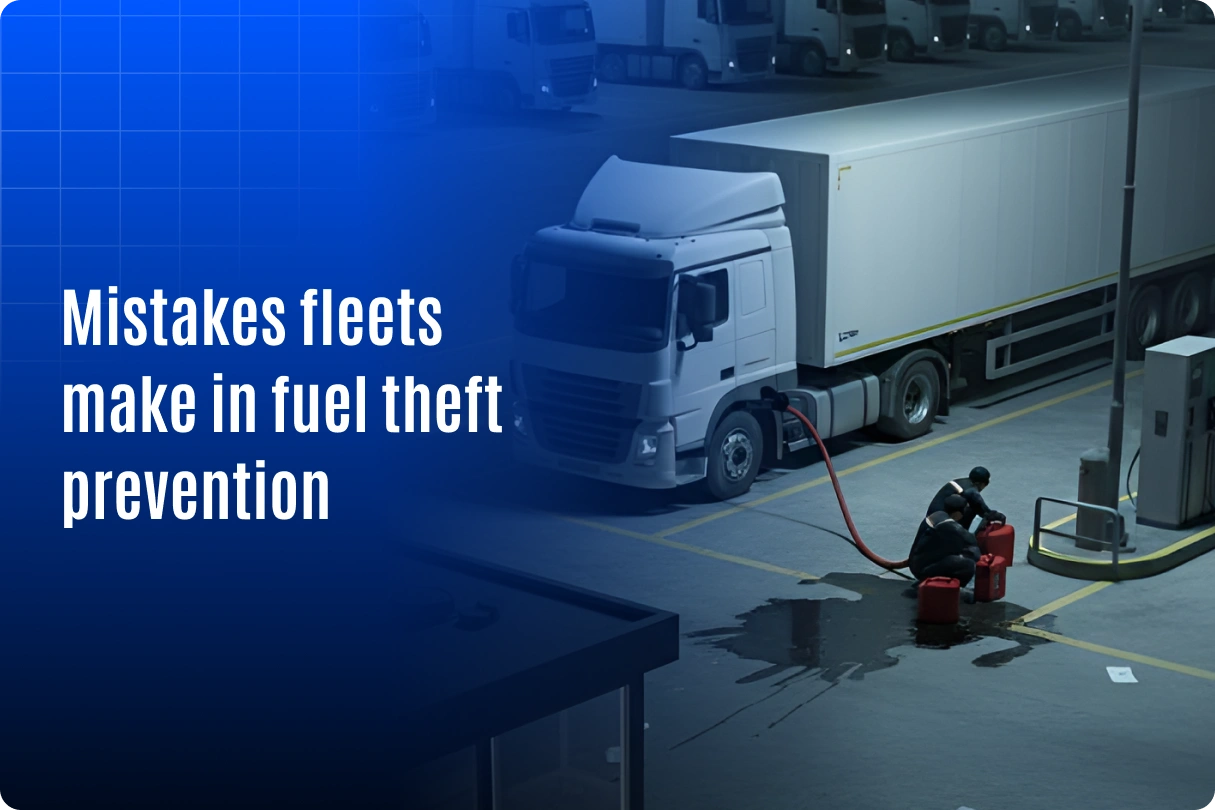
Imagine managing a fleet of 200 trucks. Every morning, the fuel reports look normal, but monthly costs keep rising. Drivers deny misuse. Routes look clean. No one knows where the fuel is going. This is how fuel theft usually works—silent, invisible, and costly. Fuel theft prevention can uncover the real problem—but only when fleets avoid the missteps that weaken the entire process.
Here Are the Top 10 Mistakes Fleets Commonly Make in Fuel Theft Prevention
1. Relying only on manual fuel entries
Even today, many fleets depend on manual logs for fuel consumption.
This leads to:
- Errors in recording
- Manipulated or inflated entries
- Missing timestamps
- No real-time visibility
Manual tracking makes fuel theft detection almost impossible. Fleets need real-time fuel tracking to identify sudden drops instantly.
2. Choosing low-accuracy fuel sensors
Low-quality or incompatible sensors are one of the biggest reasons fuel monitoring fails.
Cheap sensors may show:
- Wrong fuel levels
- False drops
- Incorrect refill amounts
- Unreliable data
Fuel tanks vary in shape, size, and volume. Without precise calibration, even the best fuel monitoring system cannot detect theft accurately.
3. Ignoring driver behaviour insights in fuel theft prevention
Fuel theft isn’t always external. Misuse can happen during:
- Unauthorised stops
- Over-idling
- Route deviations
- Hidden siphoning
Integrating driver behaviour monitoring with fuel insights helps identify misuse patterns and improves accountability.
4. No Real-time alerts for sudden drops
Fuel theft often occurs in minutes. If your system doesn’t send instant alerts, you miss the chance to act.
Delayed notifications mean:
- No exact location of theft
- No time-stamped event
- Difficult investigation
Real-time alerts are the backbone of effective diesel theft detection.
5. Not integrating fuel data with GPS movement
Fuel data without GPS tells only half the story. GPS data without fuel insights also tells nothing about theft.
When fleets combine both, they understand:
- Where the fuel drop happened
- Whether the vehicle was moving or stationary
- The exact timestamp
- The route context
This correlation makes fuel theft detection 10x easier.
6. Skipping tank calibration and testing
One tank ≠ another tank. Even identical vehicles have tank variations.
Skipping calibration leads to:
- Incorrect readings
- Misinterpreted fuel drops
- Faulty reports
- Wrong theft conclusions
A calibrated fuel level sensor ensures trustworthy data.
7. Not training staff to use fuel management software
Many fleets deploy a good system but don’t train their teams.
As a result:
- Alerts are ignored
- Reports are not reviewed
- Theft patterns are missed
- Fuel disputes remain unsolved
Training fleet managers and supervisors ensures the fuel management software delivers ROI.
8. Monitoring only vehicles, Not other fuel-dependent assets
Fuel theft happens beyond trucks.
Commonly ignored assets include:
- Tankers
- Generators
- Loaders & excavators
- Heavy machines
- Construction equipment
Mixed fleets need a unified fuel monitoring system, otherwise gaps become easy targets for theft.
9. Failing to investigate repeated fuel anomalies
Many fleets notice drops but don’t follow up.
This allows repeat theft because:
- Drivers assume alerts aren’t monitored
- Misuse continues
- Fuel loss becomes “normal”
Every drop must be investigated—location, driver, time, refill logs, and GPS history.
10. Not using analytics to uncover hidden patterns
Fuel theft is not always a one-time event.
It often shows patterns like:
- Theft on specific routes
- Particular shift timings
- Certain drivers
- Weekend siphoning
- High-risk parking areas
Analytics inside modern fuel monitoring systems reveal long-term trends that fleets miss manually.

Conclusion
Fuel theft prevention fails when fleets rely on guesswork, poor hardware, or untrained staff. By avoiding these mistakes and using accurate sensors, real-time alerts, and proper investigation, fleets gain visibility they can trust. This allows them to detect theft quickly, reduce losses, and maintain stronger control over fuel expenses.