Introduction
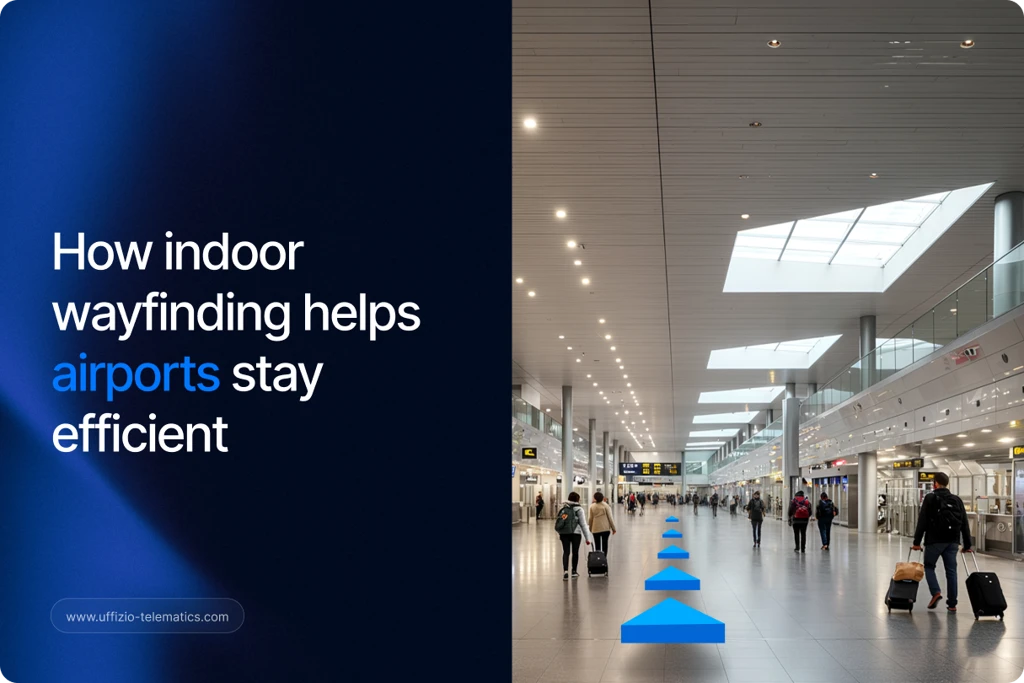
Airports operate in a constant state of motion. Passengers, staff, and equipment move simultaneously across terminals, gates, lounges, and service areas. Managing this complexity manually leads to congestion, delays, and operational stress. This is where indoor way finding software becomes essential.
An effective system helps airports manage movement, improve coordination, and reduce inefficiencies inside terminals. For airport authorities and operators, this technology is no longer about convenience alone. It is about operational control, scalability, and measurable efficiency.
This blog explains 10 ways indoor wayfinding software helps airports stay efficient.
1. Managing Passenger Movement Across Airport Terminals
An airport has multiple areas where travellers move across different terminals before reaching their boarding gates. With this software it navigates movement easily inside the indoor space.
It helps airports:
- Guide passengers to the right direction which reduces time waste.
- Balance foot traffic across multiple zones
- Avoid unnecessary crowd buildup
This improves overall flow and reduces confusion during peak hours.
2. Reducing Congestion at Critical Airport Touchpoints
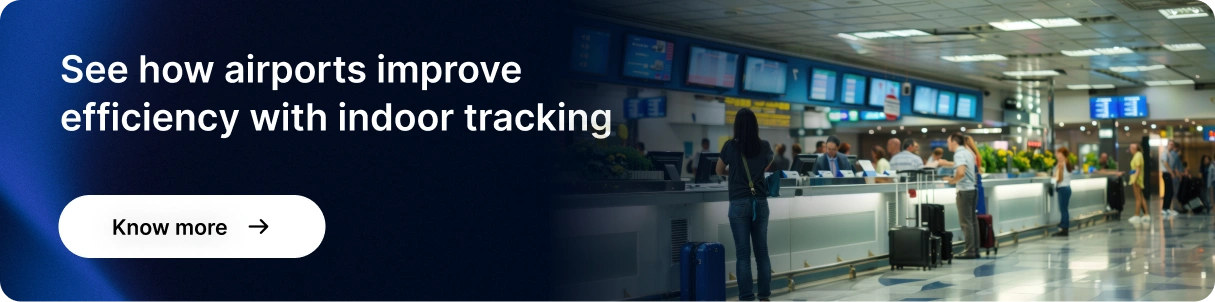
Congestion often occurs mostly at check-in-counters, security areas, immigration desks and boarding gates. When a large volume of people gather in one location, managing movement becomes difficult. An indoor wayfinding balances the movement in airports.
Operational benefits include:
- Shorter queues
- Faster processing
- Less pressure on frontline staff
This directly improves terminal efficiency.
3. Improving Staff Navigation and Task Execution
Airport staff move continuously between terminals, service corridors, and restricted zones. Indoor wayfinding software simplifies staff navigation.
It enables:
- Faster access to work locations
- Reduced time spent asking for directions
- Improved task completion speed
Better navigation leads to higher staff productivity.
4. Improving Coordination Between Airport Departments
Airports involve multiple departments working in parallel. Poor coordination often leads to delays and miscommunication.
An indoor wayfinding system supports better coordination by:
- Providing a shared view of indoor locations
- Reducing movement confusion between teams
- Supporting smoother handoffs during operations
This improves overall operational harmony.
5. Preventing Asset Misplacement Within Airport Facilities
Asset misplacement is a hidden cost for airports. Wheelchairs, baggage trolleys, cleaning machines, and maintenance tools often move between zones.
Indoor wayfinding software helps by:
- Tracking asset movement indoors
- Showing last known locations
- Reducing time spent searching
This prevents unnecessary asset loss and replacement.
6. Ensuring Easy Accessibility of Airport Equipment
Having assets is not enough. They must be accessible when needed. Indoor wayfinding systems improve equipment availability.
Key advantages:
- Faster identification of nearby equipment
- Better distribution across terminals
- Reduced service delays
This supports smoother passenger and staff operations.
7. Supporting Faster Emergency and Safety Response
In emergencies, delays can be critical. Indoor wayfinding software provides precise indoor location clarity.
It supports:
- Faster access to incident zones
- Better navigation for emergency teams
- Improved coordination with safety staff
This strengthens airport preparedness and response.
8. Optimizing Airport Space and Zone Utilization
Not all airport spaces are used evenly. Indoor wayfinding systems generate insights into movement patterns.
Airports can:
- Identify underutilized areas
- Reduce overcrowding in specific zones
- Plan layouts more effectively
This leads to better space utilization without expansion.
9. Reducing Dependency on Manual Directions and Assistance
Airport staff spend a significant amount of time guiding people manually. Indoor wayfinding software reduces this dependency.
Benefits include:
- Fewer directional queries
- More focus on core operational tasks
- Consistent navigation experience
This improves staff efficiency and service quality.

10. Scaling Airport Operations with Terminal Expansion
Airports constantly expand terminals and facilities. Indoor wayfinding software scales easily with growth.
It allows:
- Quick updates to indoor maps
- Easy addition of new zones
- Minimal operational disruption
This makes the airport navigation system future-ready.
Summary
Airports work best when movement is organized and predictable. This software helps airports manage daily complexity by improving visibility and control inside terminals. It supports smoother operations by reducing congestion, preventing asset misplacement, and adapting to airport expansion. As airports continue to grow, indoor wayfinding software becomes an essential part of a modern airport navigation system.