
To address these challenges, construction companies can implement load monitoring software tailored to their specific needs:
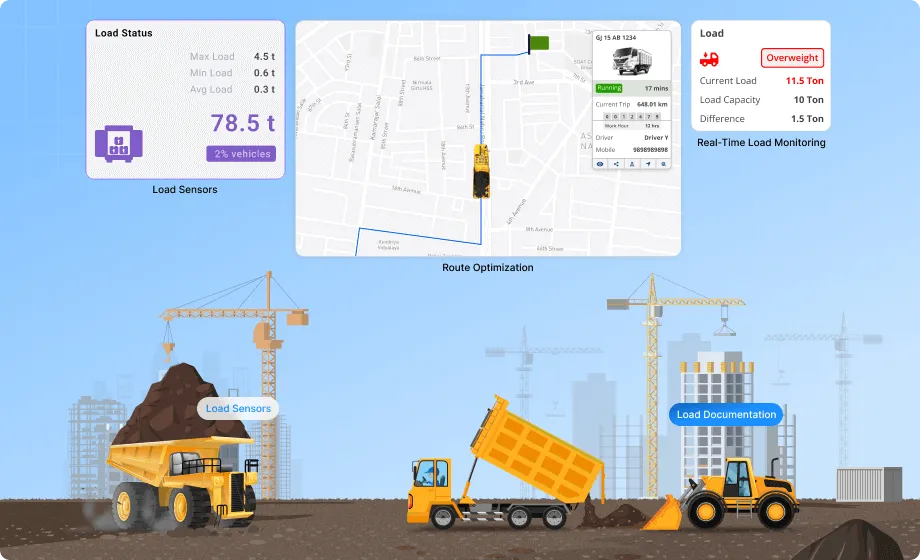
- Load Sensors: Load sensors are installed on construction vehicles to measure the weight of the load in real-time. These sensors are designed to withstand rugged construction environments.
- Real-time Load Monitoring: The load monitoring software collects data from the sensors, providing real-time visibility into load weights and distribution. Fleet managers can access this information remotely through a user-friendly interface.
- Load Compliance Alerts: The software is configured to generate alerts when a vehicle approaches or exceeds weight limits defined by regulations. These alerts are sent to fleet managers, allowing them to take immediate action to prevent compliance issues.
- Route Optimization: Construction fleet managers can use the software to optimize routes and schedules based on real-time load data. This helps in efficient load distribution and minimizes unnecessary trips.
- Load Documentation: Load monitoring software often includes the capability to store load documentation, such as load tickets, bills of lading, and weight certificates. This ensures proper record-keeping for regulatory compliance.