How Asset Tracking Software Helps Hospitals Manage Medical Assets Effectively
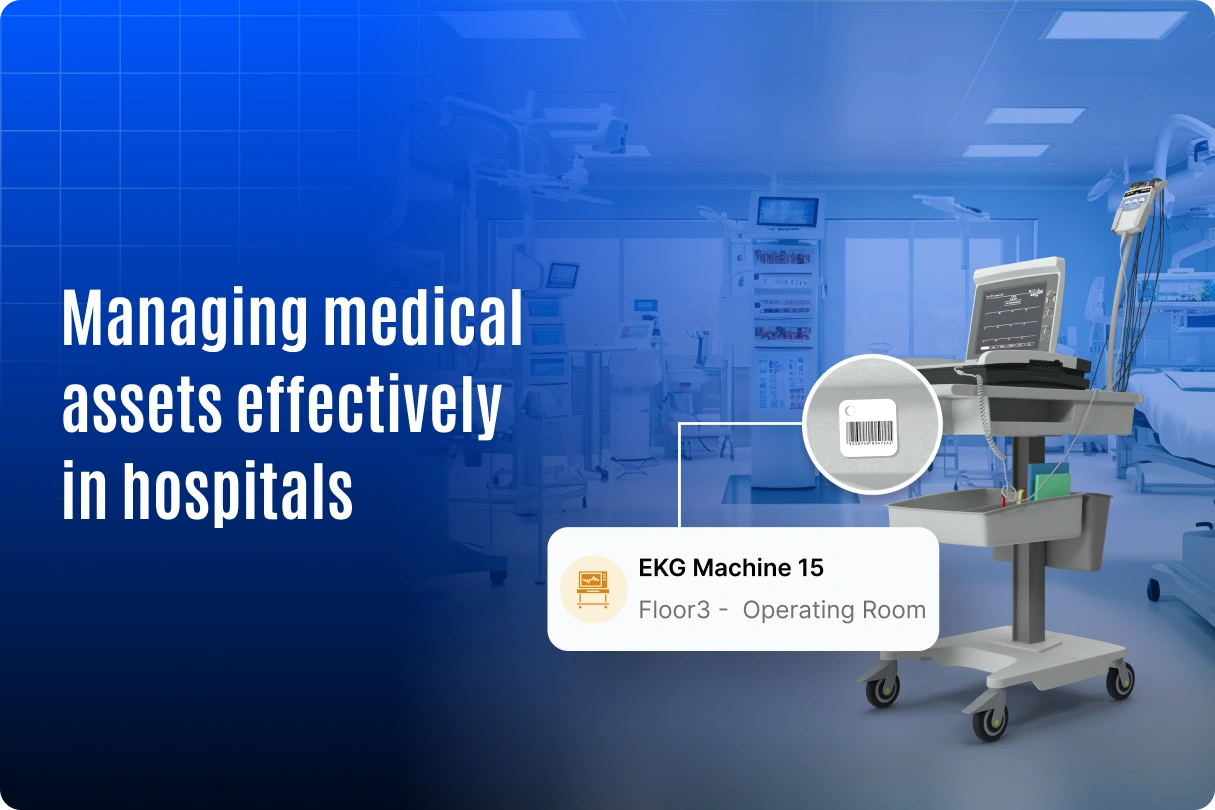
Imagine a hospital during peak hours. Corridors fill up, staff move quickly between departments, and medical assets end up wherever space is available. When an emergency strikes, locating a wheelchair or an oxygen cylinder becomes difficult. This is exactly where asset tracking software plays a critical role in maintaining control and visibility.
Most of the time, hospitals do not lose equipment. They misplace it. Staff rely on manual checks or assumptions to locate assets, which slows down response time and disrupts workflows. When hospitals gain real- time visibility into asset movement and availability, these clarity helps respond faster, avoid unnecessary purchases and keep the workflow moving smoothly.
The growing challenge of medical asset management in hospitals
Modern hospitals are more complex than ever. They have larger spaces and medical equipment is shared by various departments. The number of patients changes throughout the day. And during emergencies hospitals need to be ready to respond quickly.
Common challenges hospitals experience include:
- Medical equipment being misplaced across departments.
- Healthcare teams spend unnecessary time finding devices
- Assets are over-purchased due to lack of poor visibility
- Many devices remain idle or underused
- Maintenance schedule are missed or delayed
- No clear visibility which departments is responsible
These challenges directly affect costs, staff productivity, and patient outcomes. Manual tracking methods and disconnected systems are no longer sufficient.
What is asset tracking software in a hospital environment?
Hospital asset tracking software serves as a platform that helps to monitor where the assets are, whether used properly and how they move inside.
Unlike basic tracking methods, this software provides live and actionable asset information . It uses location and movement data to improve asset visibility across hospital operations.
- Where is this asset right now?
- Has it moved into a restricted area?
- When is it due for maintenance?
An effective asset tracking system becomes the intelligence layer that connects physical assets with operational decision-making.
How asset tracking system works inside hospitals
Hospital-focused asset tracking software typically works in layers:
- Tracking layer
Hospitals attach indoor tracking tags to medical assets so their movement can be monitored with technology such as Bluetooth low energy.
- Location intelligence layer
The system identifies zones, wards, floors, and departments instead of relying only on coordinates.
- Software platform layer
A centralized dashboard displays real-time asset locations, movement history, and usage patterns.
- Decision layer
Insights such as idle time, utilization trends, and alerts support operational decisions.
The result is not just tracking, but meaningful visibility that supports daily hospital workflows.

Why indoor asset tracking is critical for hospitals
Hospitals are complex indoor environments. Assets move frequently between wards, operating theatres, ICUs, and diagnostic areas. GPS alone cannot provide the accuracy needed in these conditions.
An indoor-enabled asset tracking system allows hospitals to:
- Track assets at room, ward, or zone level
- Monitor movement across floors and buildings
- Maintain visibility even in enclosed or restricted areas
Indoor tracking ensures that asset location data is reliable and usable in real clinical situations.
Key ways asset management software improves hospital operations
Real-time visibility of critical medical equipment
With asset tracking software, staff no longer need to physically search for equipment. A quick dashboard check shows where assets are located and whether they are available. This improves response times and reduces delays in patient care.
Improved asset utilization and cost control
Understanding usage insight helps hospitals teams to identify use of existing devices. Helps to reduce unnecessary purchase and cost expenditure.
Faster response during emergencies
In emergency situations, time is crucial. Knowing the exact location of equipment helps staff to respond quickly.
Better maintenance planning and compliance
Asset tracking software maintains movement and usage history for each device. This supports timely maintenance, reduces equipment downtime, and helps hospitals stay audit-ready.
Reduced workload for clinical staff
When staff spend less time searching for equipment, they can focus more on patient care. This improves productivity and reduces operational stress.
Use cases across hospital departments
Emergency and ICU departments
Ensures immediate availability of ventilators, monitors, and emergency equipment.
Operation theatres
Tracks surgical tools and mobile equipment, reducing delays between procedures.
General wards
Improves visibility of shared assets such as infusion pumps and wheelchairs.
Diagnostics and laboratories
Helps manage portable diagnostic devices and ensures availability during peak demand. Each department benefits from improved coordination and accountability.
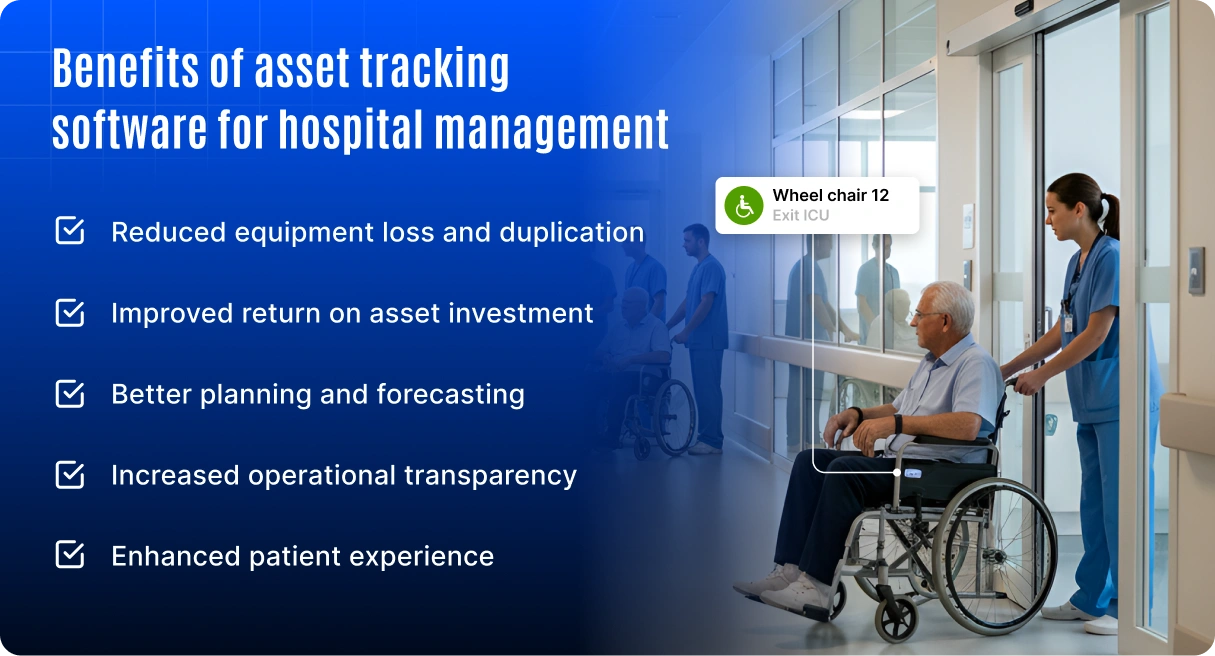
What hospitals should look for in an asset tracking solution
When evaluating hospital asset tracking software, you must consider:
- Strong indoor tracking capabilities
- Scalability across departments and facilities
- Role-based dashboards for different teams
- Integration with existing hospital systems
- Accurate, real-time data and reporting
The right solution should adapt to hospital workflows, not disrupt them.

Conclusion
Managing medical assets is now a priority for hospitals handling high patient volumes and complex operations. With real-time visibility and clear movement data, teams can reduce delays, avoid unnecessary purchases, and keep workflows running smoothly. Asset tracking software, supported by a reliable asset tracking system and integrated asset management software, helps hospitals move from guesswork to confident, everyday decisions.