Vehicle Health Monitoring

Give your clients better visibility into vehicle performance, engine health, and maintenance needs with real-time vehicle health monitoring.

Spotlight

Highlights of
Vehicle Health Monitoring

Monitor vehicle condition, detect faults early, and improve fleet reliability with real-time vehicle health insights. The system helps businesses track important vehicle parameters and reduce unexpected breakdowns through better maintenance visibility.

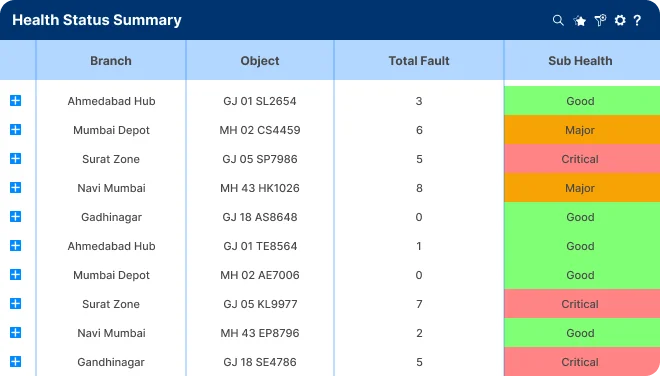
Vehicle Health Status Report

Get a complete overview of vehicle health from one screen. Monitor fault levels, vehicle condition, and overall health status to identify vehicles that need immediate attention.

The system helps businesses reduce manual checks and improve maintenance planning with better visibility into vehicle conditions.

  • Vehicle-wise health status
  • Fault severity visibility
  • Early fault identification
  • Better maintenance planning
  • Centralized health monitoring
  • Improved fleet reliability

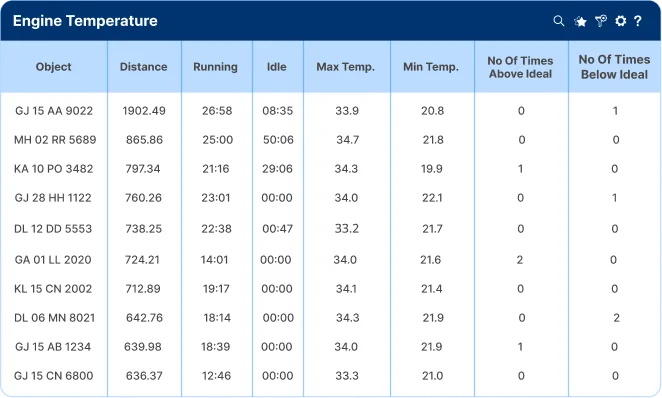
Engine Temperature Report

Monitor engine temperature continuously and identify overheating conditions during operations. Early temperature visibility helps businesses reduce engine-related failures and improve vehicle performance.

Temperature Threshold Alerts
Receive alerts when engine temperature crosses safe operating limits.

Running & Idle Monitoring
Track engine temperature during running and idle conditions separately.

Reduced Engine Stress
Detect overheating issues early and reduce unnecessary engine damage.

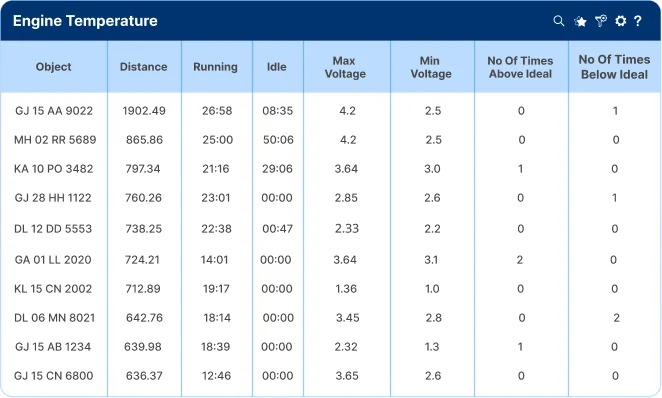
Battery Voltage Report

Track battery voltage conditions and identify abnormal voltage fluctuations before they affect vehicle availability. The system helps businesses reduce unexpected vehicle starting issues and battery-related downtime.

Voltage Performance Tracking
Monitor maximum and minimum voltage levels across operations.

Abnormal Voltage Detection
Identify unstable battery conditions early with real-time monitoring.

Better Vehicle Availability
Improve fleet uptime with proactive battery health monitoring.

Built for smarter vehicle health monitoring

0 +
Countries

Lorem Ipsum is simply dummy text.

0 K +
Happy Customers

Lorem Ipsum is simply dummy text.

0 +
Supported Trackers

Lorem Ipsum is simply dummy text.

Features

Expand your knowledge on
vehicle health monitoring

Real-time Monitoring
Vehicle health monitoring significantly involves continuous tracking and analysis of key performance parameters and diagnostic data for immediate detection of potential issues and prompt intervention.
Vehicle Health Parameters
Define thresholds specifically for parameters based on vehicle models, catch potential issues early, and prioritize repairs with detailed fault code identification and descriptions.
Fault Code Identification
When a fault code is generated, the software straightaway provides a clear and concise symptom and cause of the issue, including the affected system or component and the severity of the issue.
Engine Fault Alerts
Engine Fault Alerts
These alerts straightaway notify the fleet manager when the software detects any engine-related issues, such as abnormal performance, misfires, or sensor failures.
Battery Alerts
Battery Alerts
Get notified with this alert when the battery voltage falls below or exceeds a preset threshold. It significantly indicates a potential problem with the vehicle’s electrical system.
Coolant Temperature Alerts
It certainly notifies the fleet manager when the coolant temperature of a vehicle exceeds or falls below the recommended threshold.
Ebook

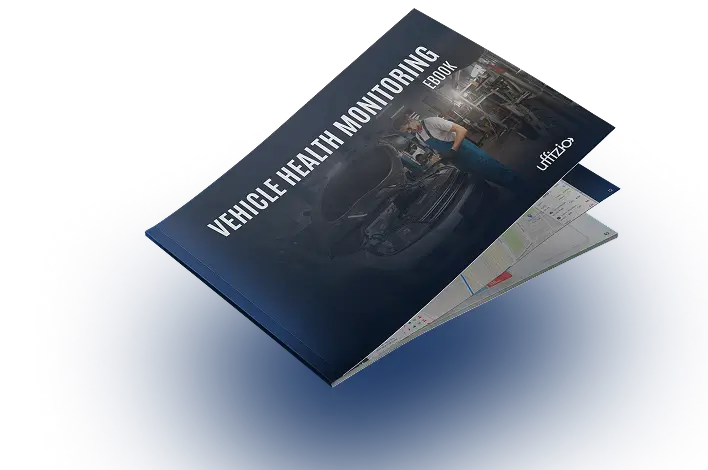
Explore the Complete Guide to Vehicle Health Monitoring

Download our ebook to learn how businesses monitor vehicle condition, reduce unexpected breakdowns, improve maintenance planning, and keep fleet operations running more efficiently.

Use Cases

Real-world implementation

Discover how our platform is significantly increasing profits and productivity for companies in this field!

Questions

Frequently asked Questions

Frequently asked Questions

What OBD parameters does Uffizio display ?

Uffizio’s GPS tracking platform can evidently display a variety of OBD (On-Board Diagnostics) parameters, including:
Vehicle Speed: This is the speed of the vehicle in kilometers per hour (km/h) or miles per hour (mph).
Engine RPM: This is the speed at which the engine is spinning in revolutions per minute (RPM).
Fuel Level: This is the amount of fuel in the vehicle’s fuel tank.
Engine Coolant Temperature: This is the temperature of the engine coolant in degrees Celsius or Fahrenheit.
Battery Voltage: This is the voltage of the vehicle’s battery in volts (V).
Engine Load: This is the percentage of the maximum engine load.
Malfunction Indicator Lamp (MIL) Status: This is the status of the MIL or Check Engine Light.
Diagnostic Trouble Codes (DTCs): These are codes that indicate faults or malfunctions in the vehicle’s systems.

Is Fuel displayed from OBD devices?

Surely, fuel level is one of the parameters that can be displayed and monitored through OBD devices.

Do you get to know the health status of the vehicle?

Surely, Uffizio’s OBD module provides fleet managers with access to important information about the health status of the vehicle.

What reports does Uffizio offer under vehicle health monitoring module?

Uffizio offers several reports under its vehicle health monitoring module, including the Fuel consumption report, engine health report, vehicle health report, and also diagnostic trouble code (DTC) report, among others.

Which OBD devices are integrated with the platform?

Certainly, our software is hardware agnostic and can work with any device of your choice. We can integrate the device of your choice.

What alerts do we get under Uffizio's vehicle health monitoring module?

Certainly some of the common alerts provided by Uffizio’s vehicle health monitoring module include:
Diagnostic Trouble Codes (DTCs) Alert: This alert is generated when the OBD-II device detects a diagnostic trouble code, indicating a problem with one of the vehicle’s systems. Additionally, the alert provides information on the DTC, its severity, and recommended actions.
Battery Voltage Alert: This alert is generated when the battery voltage falls below or exceeds a preset threshold, indicating a potential problem with the vehicle’s electrical system.
Engine Temperature Alert: This alert is generated when the engine coolant temperature rises above or falls below a preset threshold. It certainly indicates a potential problem with the engine’s cooling system.
Engine RPM Alert: This alert is generated when the engine RPM exceeds a preset threshold, indicating potentially aggressive or unsafe driving behavior.
Fuel Level Alert: This alert is generated when the fuel level falls below a preset threshold. This further indicates a potential fuel leakage or fuel theft.
Speeding Alert: This alert is generated when the vehicle exceeds a preset speed limit. This furthermore indicates potentially unsafe driving behavior.

Let's Connect !

Loading...